

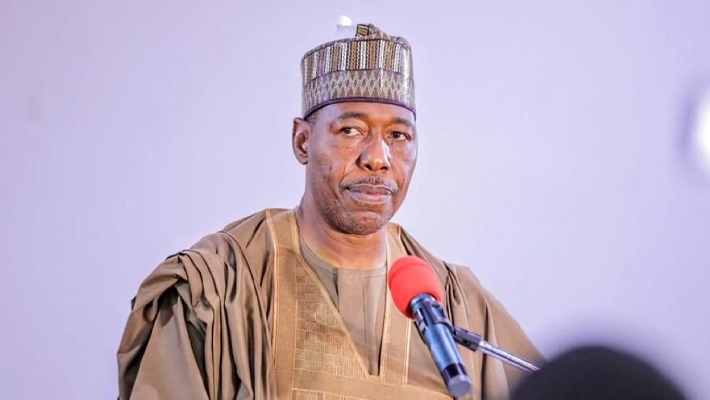
Borno State Governor, Babagana Zulum, has convened a high-level security retreat in Maiduguri, bringing together representatives from Sahelian countries and ambassadors to forge a coordinated response to terrorism, insurgency, and the deepening security crisis across the region.
The retreat, held on Saturday at the Musa Usman Secretariat conference hall, underscored Maiduguri’s growing stature as a focal point for regional counter-terrorism dialogue.
Governor Zulum, a longstanding advocate for a comprehensive approach to insecurity, used the occasion to rally regional stakeholders behind a unified front against terrorist groups, including Boko Haram and the Islamic State of West African Province (ISWAP). Speaking against the backdrop of Borno’s protracted experience with insurgency, he stressed that a purely military strategy had proven inadequate, and that the terrorism and displacement afflicting the Sahel could not be resolved through kinetic means alone.
The governor has consistently championed a multifaceted strategy that pairs robust military offensives with non-kinetic interventions, including deradicalisation, reintegration, and humanitarian development.
“While our armed forces continue their brave operations, we must enhance intelligence sharing, community-based border management, and joint stabilisation initiatives alongside the Multinational Joint Task Force (MNJTF),” Zulum said.
Earlier, the Minister of State for Foreign Affairs, Sola Enikanolaiye, called for stronger regional cooperation to tackle terrorism in the Sahel, urging governments across the region to address the root causes of the crisis.
The Permanent Secretary of the Ministry of Foreign Affairs, Dunoma Umara, noted that the Sahel’s historical, cultural, and economic ties with Nigeria make regional stability vital to the country’s national security and prosperity.
Also speaking, the Ambassador of Chad to Nigeria, Brah Mahamat, called for collective resolve in addressing insecurity in the Sahel.
“Although we belong to different institutional groupings, this should in no way impede our common security. Let us be clear: the enemy cares little whether we belong to CEMAC, ECOWAS, or the AES. It aims to continue slipping across our borders, exploiting the operational limitations we have imposed upon ourselves,” he said.