

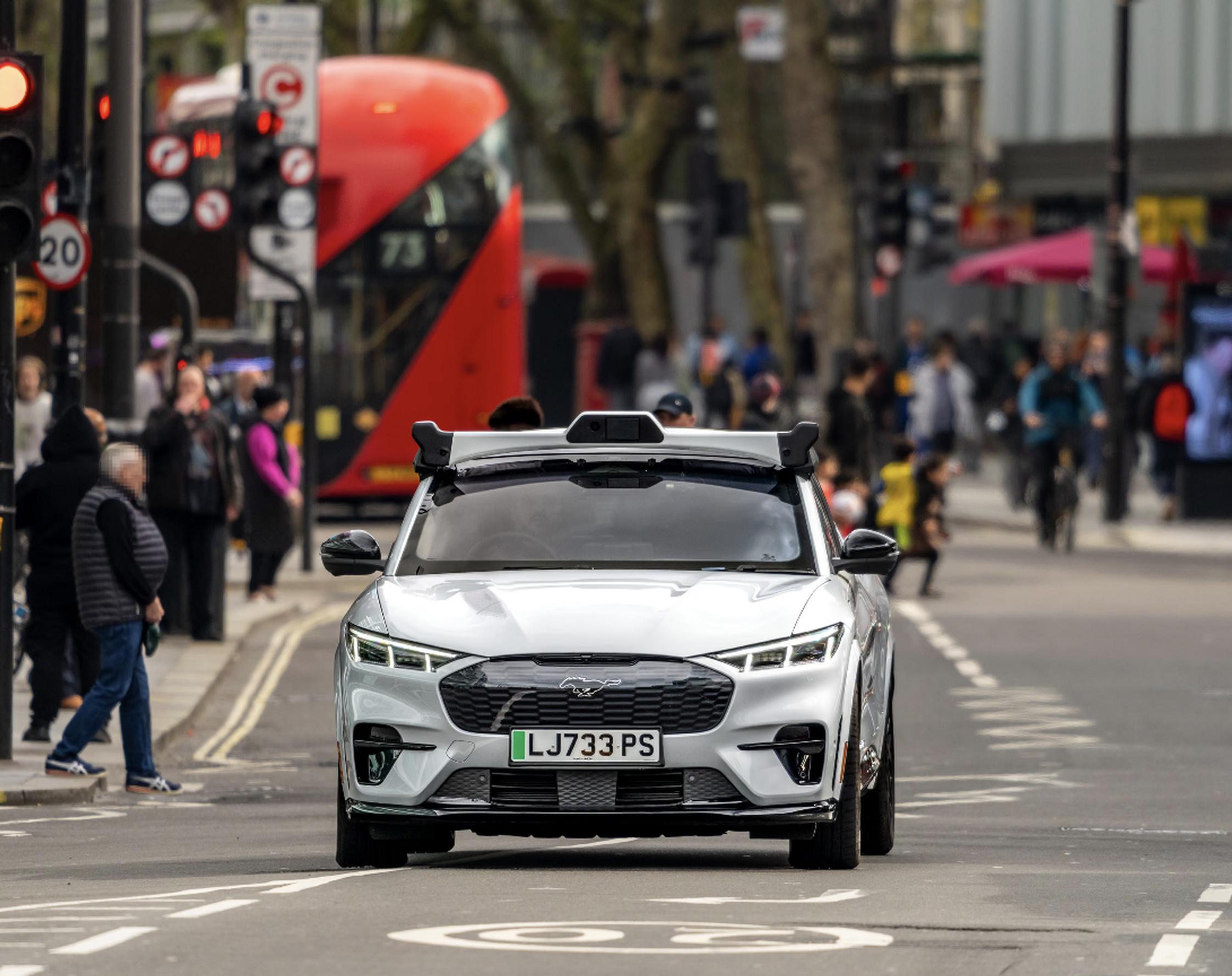
Uber has begun offering autonomous rides in London through a partnership with British artificial intelligence company Wayve, expanding its robotaxi operations into another European market.
The launch comes after Uber ended its ride-hailing operations in Nigeria, where it had provided services for more than 12 years.
London becomes the second European city where Uber has introduced autonomous rides, following the launch of its robotaxi service in Zagreb, Croatia.
For the initial rollout, fewer than 20 Ford Mustang Mach-E vehicles equipped with Wayve’s autonomous driving technology will be deployed across the city.
Passengers booking UberX, Uber Comfort or Uber Electric could be assigned one of the autonomous vehicles without paying an additional fee.
However, the vehicles will not initially operate without human supervision. A licensed operator will sit inside each car to monitor the journey and intervene if necessary.
Uber said the eventual goal is to introduce fully driverless operations, although that will depend on receiving the necessary regulatory approvals.
Uber seeks confidence in autonomous technology
Uber’s Global Head of Autonomous Mobility, Sarfraz Maredia, said the London deployment is expected to help demonstrate the technology to both passengers and government authorities.
He said putting the vehicles into real-world operation would help build confidence in autonomous mobility.
British Transport Secretary Heidi Alexander also described the launch as an important development for London’s transport system, saying the technology would give passengers additional travel options while showcasing British innovation.
Wayve’s autonomous driving system, known as the Wayve AI Driver, is designed to learn through experience and adjust to different road environments, vehicles, weather conditions and cities.
Wayve Chief Executive Officer and co-founder Alex Kendall said London was a suitable location for the company’s first public deployment because of the complexity of its roads and driving conditions.
Driverless operation still faces regulatory hurdles
Despite the launch, London passengers will not immediately have access to completely driverless Uber journeys.
Regulatory requirements still need to be satisfied, including processes involving Transport for London and other relevant authorities.
Until the necessary approvals are secured, a trained human operator will remain in the vehicle to oversee the autonomous system.
Uber and Wayve began working together in 2024, with Uber also investing in the British technology company as part of a broader plan to introduce Wayve-powered autonomous vehicles in different markets.
The London deployment represents another step in Uber’s move towards autonomous transportation as the company continues exploring technology that could reshape how its ride-hailing services operate in major cities.
While Uber’s Nigerian chapter has ended, its expansion into autonomous mobility shows the company is continuing to invest heavily in technologies it sees as central to the future of transportation.