
Could you prove that bag is yours? The precautions that could protect you from a travel nightmare

By Elizabeth Nta
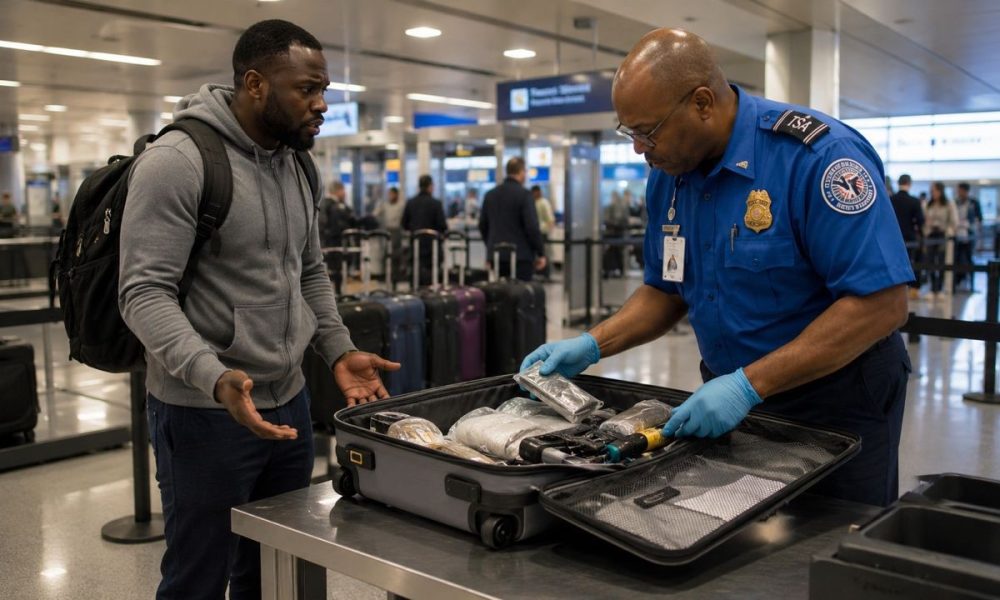
For many travellers, what begins as a routine journey can quickly turn into a legal nightmare if their luggage becomes linked to criminal activity they know nothing about. Around the world, documented cases have shown that innocent passengers have been arrested, detained, and investigated after baggage checked in under their names was allegedly tampered with or fraudulently switched within airport systems.
Investigations in Canada, Nigeria and other parts of the world have revealed how organised criminal networks exploit weaknesses in airport baggage handling systems by attaching legitimate passengers’ baggage tags to suitcases containing illicit drugs. In many cases, travellers only discover the problem after arriving in another country, where they face arrest and lengthy investigations before authorities determine they were unaware of the contents of the luggage.
The consequences can be devastating. In several countries across Asia and the Middle East, drug trafficking offences carry severe penalties, including life imprisonment and, in some jurisdictions, the death penalty. In such situations, proving innocence may take weeks or even months.
Canadian Investigation Exposed Baggage-Tag Fraud
One of the most widely reported investigations into this form of baggage fraud was carried out by W5, the investigative journalism programme of CTV News, one of Canada’s largest national television networks.
In a 2024 investigation, W5 reported that at least 17 innocent passengers travelling on flights originating from Canada had been detained overseas after their baggage tags were allegedly switched onto suitcases loaded with narcotics. According to the investigation, several travellers were handcuffed, arrested, jailed and interrogated in foreign countries before authorities eventually established they had no knowledge of the drugs.
The investigation highlighted concerns about vulnerabilities within airport baggage systems and demonstrated how criminal syndicates can manipulate baggage-tag processes to move illegal drugs across international borders.
Nigeria’s Zainab Aliyu Case
Nigeria has experienced a similar incident.
In December 2018, Zainab Aliyu, a Nigerian university student travelling to Saudi Arabia for Umrah, was arrested shortly after arriving in the country when banned substances were discovered inside luggage checked in under her name.
Subsequent investigations by Nigerian security agencies found that the drugs had allegedly been planted through a baggage-tag swapping syndicate operating at Mallam Aminu Kano International Airport. Several airport workers were arrested during the investigation, and Saudi authorities eventually released Aliyu after accepting evidence that she had been wrongly implicated.
The case received widespread national and international attention in 2019 and prompted renewed calls for tighter security and stricter oversight of baggage handling procedures at Nigerian airports.
The UN Warns Criminal Networks Continue to Adapt
The case is consistent with warnings issued by the United Nations Office on Drugs and Crime (UNODC), the United Nations agency responsible for combating illicit drugs, organised crime, corruption and terrorism.
In its reports on transnational organised crime and global drug trafficking, the UNODC has consistently warned that criminal organisations continue to develop increasingly sophisticated methods of smuggling drugs, often exploiting weaknesses in transport and logistics systems, including airports.
The agency also notes that many countries maintain extremely harsh penalties for drug trafficking offences, making it critical for travellers to understand that even an innocent mistake—or becoming the victim of criminal manipulation—can lead to prolonged detention while investigations are carried out.
These documented cases demonstrate why travellers should not rely solely on airport security procedures to protect them. While the overwhelming majority of journeys end safely, creating a personal record of your luggage before and during travel may provide valuable evidence should questions ever arise.
With that in mind, National Daily News has compiled practical steps travellers can take to create a personal chain of proof before and during every journey.
Record Your Packing Process
Record Your Packing Process
Before leaving for the airport, use your phone to record a clear video of yourself packing your luggage. Show the contents of the bag, each compartment, and the overall condition of the suitcase before sealing it.
Capture identifying features such as the colour, brand, stickers, ribbons or luggage tags attached to the suitcase. A time-stamped recording can help establish exactly what was inside the bag before it left your possession.
Just before departing for the airport, open the luggage one final time and record another short video showing its contents and condition. This creates a more recent record confirming the bag remained unchanged before check-in.
Use a Luggage Tracking Device
Use a Luggage Tracking Device
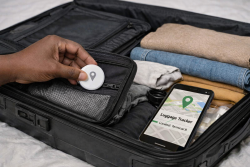
Consider placing a tracking device inside every checked bag before departure.
If your luggage is misplaced, diverted or separated from you, location data may provide valuable information about where it travelled and when it moved. Although a tracking device cannot prevent tampering, it adds another layer of accountability.
Weigh and Document Your Luggage
Weigh and Document Your Luggage
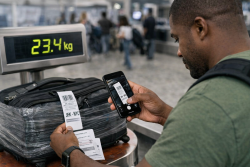
If possible, weigh your suitcase before arriving at the check-in counter and record the process.
A significant change in luggage weight could become an important point of reference if questions later arise about its contents. Keep your baggage receipt and any documentation showing the recorded weight.
Immediately after checking in, take clear photographs of your baggage tags, boarding pass and luggage receipt. These documents help establish the identity and movement of your luggage throughout the journey.
Secure Your Luggage Properly
Secure Your Luggage Properly
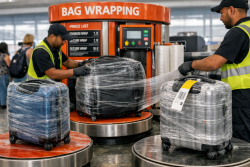
Where available, use official airport luggage-wrapping services or other tamper-evident security measures.
A securely wrapped suitcase is more difficult to access without leaving visible signs of interference. If the wrapping appears damaged upon arrival, report it immediately before leaving the baggage claim area.
Never Carry Items for Strangers
Security agencies around the world continue to advise travellers never to accept packages, gifts, envelopes or luggage from people they do not know. Even seemingly harmless requests can expose passengers to serious legal consequences if prohibited items are discovered during security screening or after arrival.

Never Carry Items for Strangers
This advice extends beyond airports. Whether within your community, travelling between cities or assisting a friend, acquaintance or stranger, it is important to know exactly what you are carrying. If you cannot personally verify the contents of a package, it is safer to decline.
The danger is not merely theoretical. In April 2026, 28-year-old Mene Ogidi was reportedly killed in Effurun, Delta State, in circumstances linked to a package allegedly containing a firearm and ammunition. Reports indicated that he maintained he was unaware of its contents and had merely agreed to transport it for someone else. While the circumstances differ from airport baggage fraud, the incident serves as a reminder that accepting responsibility for items you have not personally verified can have serious and sometimes tragic consequences.
When in doubt, decline the request and encourage the sender to use a recognised courier or delivery service instead.
The Bottom Line
Cases from Canada, Nigeria and other countries demonstrate that baggage fraud and luggage tampering are real risks, even though they remain relatively uncommon.
A few minutes spent documenting your luggage, securing your belongings and preserving key travel records could provide crucial evidence if questions ever arise.
Whether travelling internationally or simply helping someone transport an item within your community, the principle remains the same: always know what you are carrying, maintain control of your belongings, and be prepared to account for them if necessary.
References
W5, CTV News (2024): Investigation into baggage-tag switching involving passengers travelling from Canada.
Nigerian government investigations and official statements on the release of Zainab Aliyu (2019).
Reports and publications by the United Nations Office on Drugs and Crime (UNODC) on organised crime and international drug trafficking.