

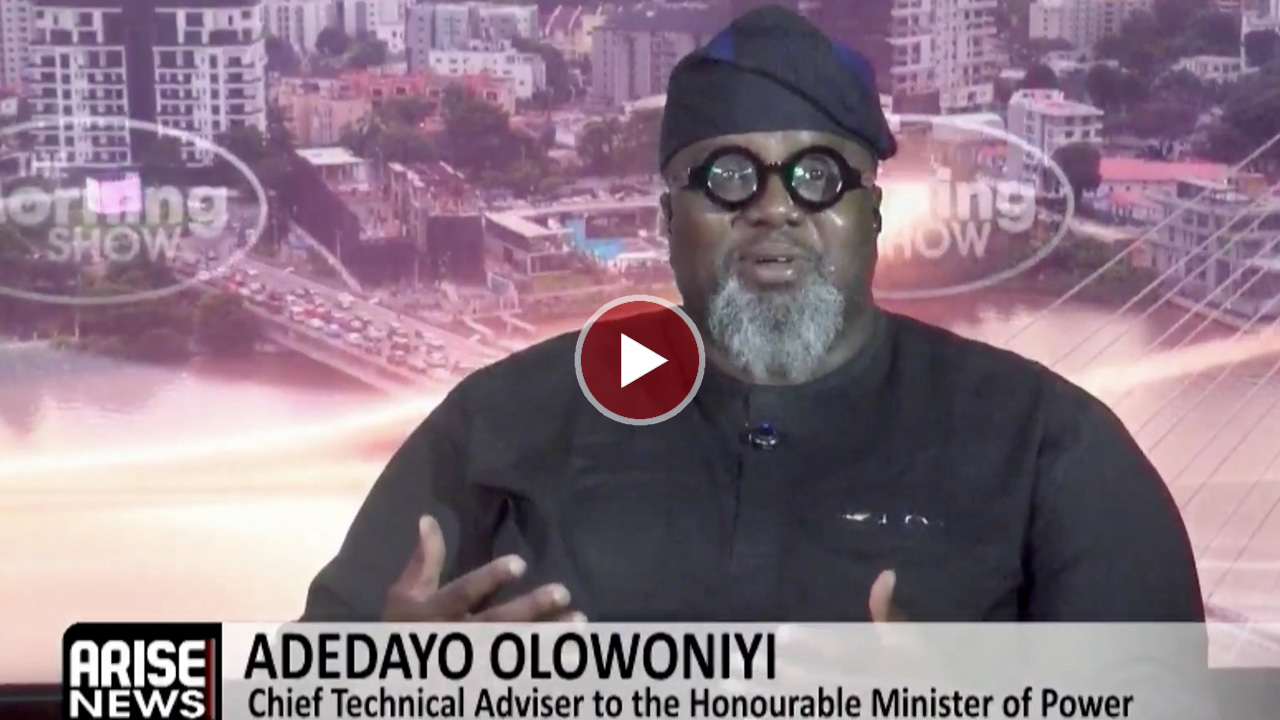
Nigeria’s energy era is anticipated to rebound to earlier ranges inside two weeks as fuel provide constraints ease, Chief Technical Adviser to the Minister of Energy, Adedayo Olowoniyi, has stated.
Talking throughout an interview on ARISE Information on Thursday, Olowoniyi linked the current nationwide outages to upkeep work on a significant fuel pipeline, stressing that restoration efforts have been already underway.
He stated, “Inside the subsequent two weeks, full fuel stress will probably be again on the fuel pipelines and the ability plant will be capable to get sufficient fuel a minimum of to return to their stage of era that that they had within the final two to a few weeks.”
Olowoniyi famous that the ability disruptions had prompted the Minister of Energy, Adebayo Adelabu, to publicly apologise to Nigerians, describing the transfer as an act of management somewhat than an admission of non-public fault.
He defined, “There’s been some particular challenges within the final two, three weeks and it was simply necessary to take a management perspective and recognize the truth that the poor provide is definitely impacting the lives of Nigerians.”
In response to him, fuel stays the dominant gas for electrical energy era within the nation, making pipeline upkeep a crucial consider provide stability.
He stated, “75% of energy era in Nigeria is fuel and one of many main fuel pipelines in Nigeria is oil and wind upkeep. And step by step that course of is being accomplished.”
The technical adviser added that early indicators of enchancment have been already being recorded as stress step by step returned to the system.
He acknowledged, “We’d have step by step began to see some enchancment because the stress on the pipeline step by step begins to construct up and we’ll see steady enchancment over the following couple of weeks.”
Responding to considerations about repeated grid collapses, Olowoniyi argued that the frequency of such incidents had lowered beneath the present administration, citing enhancements in era and distribution efficiency.
He stated, “When you go by knowledge, and really take a look at the variety of grid collapses yearly earlier than the Honorable Minister took over, it’s truly lowered the speed of grid collapse.”
He additional maintained that current disruptions ought to be seen within the context of broader progress recorded within the sector over the previous two years.
Olowoniyi stated, “Within the final two years, we’ve recorded the very best peak of era. We’ve recorded the very best common era. We’ve recorded the very best common distribution consumption of vitality.”
On the broader structural challenges dealing with the electrical energy business, he emphasised that resolving Nigeria’s lengthy standing energy disaster would require sustained reforms somewhat than fast fixes.
He famous, “There isn’t a single bullet to fixing the vitality points in Nigeria. It is going to be a course of. These challenges have been constructed over time and will probably be resolved over time.”
The adviser additionally highlighted the affect of legacy money owed and tariff imbalances on sector sustainability, explaining that customers at the moment pay solely a fraction of the particular price of electrical energy.
He stated, “There may be nonetheless a structural problem of the truth that customers solely pay 40% of the vitality price they devour.”
Olowoniyi disclosed that the Federal Authorities had begun steps to handle excellent liabilities owed to era firms, following approval of a ₦4 trillion cost plan.
He acknowledged, “Mr. President accredited the 4 trillion cost, and an preliminary bond issuance has been achieved, which is about 500 billion, which goes to be disbursed within the subsequent week.”
Addressing fuel provide dynamics, he clarified that Nigeria exports somewhat than imports fuel, however insufficient business incentives and infrastructure constraints proceed to restrict home availability for energy era.
He defined, “We aren’t importing fuel. Really, we’re exporting fuel.”
He added that and not using a commercially viable framework, fuel producers would stay reluctant to develop investments wanted to spice up provide to the electrical energy sector.
Regardless of the present setbacks, Olowoniyi expressed optimism that improved fuel stress and ongoing coverage interventions would stabilise electrical energy provide within the coming weeks whereas laying the groundwork for long run reforms.
Faridah Abdulkadiri
Times Nigeria