

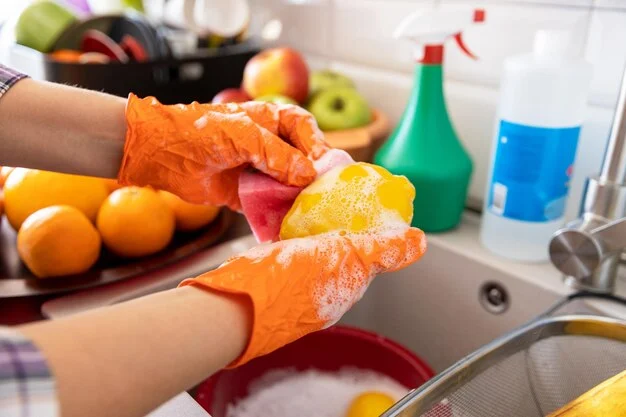
Nutritionists have warned fruit traders against using laundry detergents, dishwashing liquids, soaps and other household cleaning products to wash fruits, saying chemical residues left on produce could pose health risks to consumers.
The experts said detergents were designed for cleaning clothes, dishes and household surfaces, rather than food, stressing that their use on fruits could introduce a chemical hazard instead of making the produce safer.
They advised traders to wash fruits thoroughly with clean, running water, gently rub the surfaces and maintain proper hand hygiene, while ensuring that containers, storage areas and display surfaces are kept clean.
Assistant Director of Nutrition and Dietetics, Dr Olufunmilola Ogunmiluyi, said traders should avoid using household cleaning products on fruits because residues could remain on the surface and become trapped in cracks, bruises, cuts, stems or irregular areas, particularly on rough or porous fruits.
“Detergent may make a fruit appear cleaner, but it is not meant to be eaten and can leave residues behind. Traders don’t need detergent to wash our fruits. Clean, safe running water, proper hand hygiene and good handling practices are safer ways to prepare fruits for consumers,” she said.
READ ALSO: NAFDAC seals shops at Lagos Trade Fair over suspected unregistered cosmetics
Ogunmiluyi explained that rinsing fruits after washing them with detergent did not guarantee complete removal of the chemical, particularly where residues had become lodged in damaged or textured areas.
She added that swallowing detergent residue could cause health problems depending on the type and quantity consumed.
“Detergent can irritate the mouth and throat and may cause a soapy taste, burning or discomfort. It can also irritate the lining of the digestive tract, potentially causing nausea, abdominal pain, vomiting or diarrhoea,” she stated.
The nutritionist urged traders to remove rotten or badly bruised portions of fruits before washing them thoroughly under clean, running water and gently rubbing their surfaces.
She also advised them to wash their hands before handling produce and keep all containers and surfaces used for storage and display clean.
Similarly, the Assistant Director of Dietetics at the Lagos State Health Service Commission, General Hospital, Badagry, Olusola Malomo, warned against washing fruits with laundry or household detergents, noting that such products were not formulated for food.
Malomo said detergent residues left on fruits could be swallowed when the produce was consumed, with the potential effects depending on the type and quantity of detergent ingested.
“Cleaner-looking does not necessarily mean safer. Detergent can introduce a chemical hazard. Use clean running water and good hygiene practices rather than household cleaning products,” he said.
According to Malomo, although rinsing could remove much of the residue, it might not eliminate all traces, especially from rough, textured or damaged fruit surfaces.
“Detergent residue can irritate the digestive tract. The exact effect depends on the detergent and the amount swallowed,” he explained.
He recommended that traders wash fruits under clean, potable running water and gently rub the surfaces, stressing that there was no need to use laundry detergent, dishwashing liquid or bleach.
Malomo also urged traders to use clean containers, maintain proper hand hygiene and prevent fruits from coming into contact with contaminated surfaces during storage and display.
Consumers, he advised, should also wash fruits thoroughly under clean running water before eating, cutting or peeling them.
He noted that washing produce before peeling was important because dirt and bacteria on the outer surface could otherwise be transferred to the edible portion during peeling or cutting.
The warning comes amid concerns over food-handling practices among produce traders in Nigeria.
A 2025 study involving 166 vegetable traders across nine markets in Ogun State found gaps in hygiene practices, with only 52 per cent of traders routinely changing their washing water within four hours and fewer than one per cent having received formal food-safety training.
The researchers warned that inadequate hygiene practices could increase the risk of microbial contamination of fresh produce.
The United States Food and Drug Administration similarly advises consumers against washing fresh fruits and vegetables with soap, detergent or commercial produce washes, recommending instead that produce be thoroughly washed under running water.
The World Health Organisation also identifies chemicals and toxins among food-safety hazards and stresses the importance of using potable water and safe raw materials when handling food.
The nutritionists therefore stressed that clean water, clean hands, clean containers and proper storage and display conditions—not household detergents—are the safer approach to preparing fruits for consumption.