

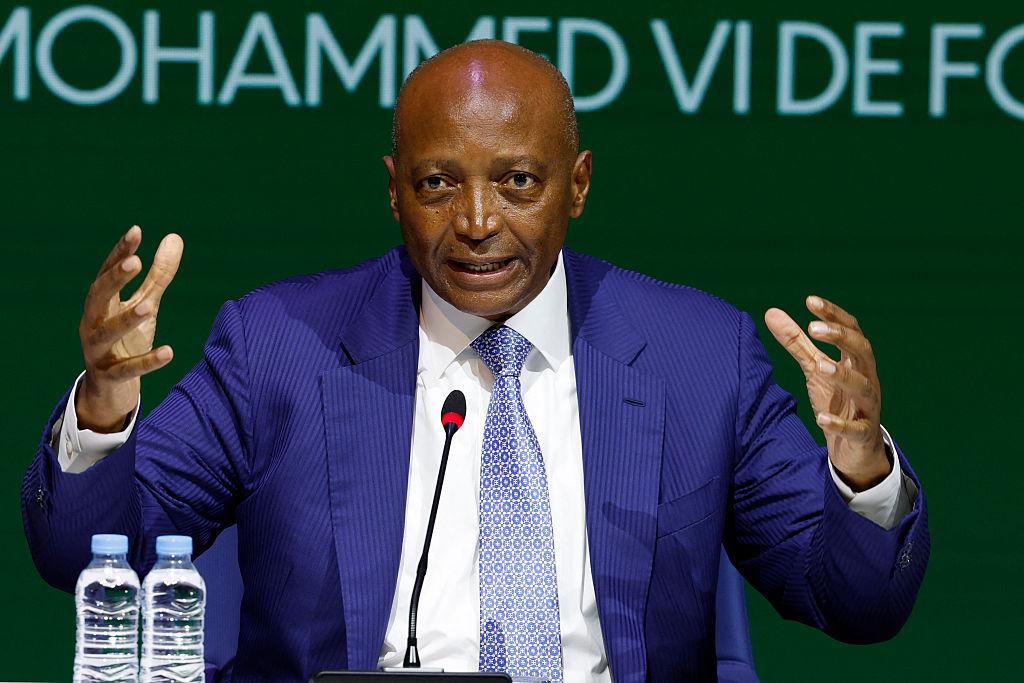
Confederation of African Football (CAF) President Patrice Motsepe has revealed that the organisation is reconsidering the possibility of holding the Africa Cup of Nations (AFCON) every two years, months after announcing plans to move the competition to a four-year cycle.
Motsepe made the disclosure at the CAF Strategy Conference in Santa Maria, Sal Island, Cape Verde, where football administrators, national team coaches and representatives of CAF’s 54 member associations gathered to discuss the future of the game on the continent.
He said the governing body had revisited the AFCON schedule in recent discussions and was examining different options, including a return to the tournament’s traditional two-year format.
According to Motsepe, the review does not mean that CAF has already reversed its earlier decision. He did not announce a new schedule or provide a timeline for a final decision.
In December 2025, CAF announced plans to stage AFCON every four years after the 2028 edition. The proposed change formed part of a wider restructuring of African national team competitions, which also included plans to introduce an African Nations League from 2029.
The changes were presented as an effort to reorganise the international football calendar and create more regular opportunities for national teams to compete.
However, moving AFCON to a four-year cycle would represent a significant departure from the tournament’s established format, which has traditionally been held every two years.
Motsepe also used his address to reject claims that CAF makes decisions primarily to satisfy European football authorities.
He insisted that the organisation’s responsibility was to protect and advance African football’s interests, while acknowledging the importance of maintaining working relationships with international governing bodies.
The CAF president said cooperation with European football remained necessary, given the number of African players competing for clubs across the continent, but maintained that CAF would stand firm whenever it needed to defend Africa’s interests.
The latest remarks indicate that the future scheduling of AFCON remains under consideration. Until CAF announces a formal decision, however, the proposed four-year cycle and the possibility of returning to a biennial tournament should be treated as separate stages of the discussion.
.
advertisement
For African national teams, players and supporters, the outcome could have important implications for international preparation, player availability and the frequency of the continent’s flagship football competition.