

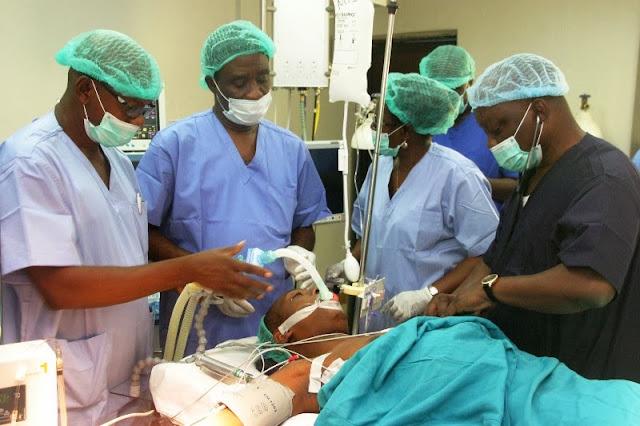
A Consultant Plastic Surgeon, Dr Torngee Malu, has urged Nigerians to recognise kidney donors and medical professionals involved in transplant procedures rather than subjecting them to public condemnation.
Malu made the call on Tuesday during an interview on Channels Television’s Morning Brief, while discussing the arrest and public parade of two doctors and other suspects by the Nigeria Police Force over an alleged organ-harvesting syndicate in Nasarawa State.
The surgeon argued that legitimate organ donation should be encouraged within a properly regulated medical system, particularly in a country where blood donation remains inadequate.
He said people who voluntarily donate organs, as well as doctors who perform transplant procedures lawfully, should not automatically be treated as criminals because of allegations circulating on social media.
“I think that these people should be celebrated and not victimised,” Malu said, describing both donors and medical professionals involved in the procedures as heroes.
Malu cites kidney transplant cases
According to Malu, six kidney transplant procedures had reportedly been performed during the year, with all the procedures said to have been successful.
He argued that Nigeria should develop a coordinated system that encourages safe and voluntary organ donation rather than allowing social media claims to shape public opinion about medical procedures.
Malu also pointed to the burden of kidney disease in Nigeria, saying the country should focus on expanding access to legitimate transplant procedures while ensuring appropriate safeguards are maintained.
What the law says about organ donation
Addressing the legal side of organ donation, Malu said Nigeria’s legal framework permits kidney and other forms of organ donation under specified conditions.
He referred to the Nigerian Health Care Act of 2014 and said the framework covers more than kidney donation, noting that other forms of biological donation are also subject to legal provisions.
According to the surgeon, one of the requirements is that organ donors must be adults aged 18 or above. He also said procedures should be performed in a standard hospital after the donor has given informed consent.
Applying those conditions to the case currently under investigation, Malu said the individuals involved were adults and had reportedly consented to the procedures.
He said information he had heard indicated that one of the individuals was at least 23 years old and that the people involved had signed consent documents.
Malu further claimed that affidavits had been sworn by the individuals involved, which he said went beyond simply giving consent and indicated that they understood and voluntarily agreed to the procedures.
He also maintained that the procedure took place in a standard hospital and was carried out by qualified doctors, surgeons and other members of a medical team.
Surgeon questions social media allegations
Malu criticised what he described as “social media mob action” against medical professionals and argued that allegations involving organ harvesting should be thoroughly investigated before suspects are publicly condemned.
He said the controversy began with a social media post alleging that people’s kidneys were being harvested before the police subsequently paraded doctors who, according to him, had spent more than two decades practising medicine.
The surgeon said the medical profession operates within procedures and standards that may not always be understood by the wider public.
His comments come as investigations continue into the alleged organ-harvesting syndicate in Nasarawa State. The outcome of the police investigation and any subsequent legal proceedings will determine whether the allegations against the suspects are substantiated.