

Mike Fox is a legal fellow at the Cato Institute’s Project on Criminal Justice.
Those who travel internationally know the routine. Whether at an airport terminal or a land border crossing, returning home means having your bags scanned to ensure you aren’t bringing contraband, illicit drugs or invasive species onto U.S. soil. But what happens when the government demands access to your phone?
A smartphone is fundamentally different from a suitcase. It’s not merely a container for physical goods; it’s a digital repository of our lives. It holds our private thoughts, political expressions, digital calendars, personal photos, contact lists, shopping habits, credit card numbers and travel logs. Yet U.S. customs officers routinely assert the authority to demand passcodes and search these digital life-capsules without a warrant — and often without a shred of reasonable suspicion to believe a crime has been committed.
The rationale? Simply that you are presenting yourself at a port of entry.
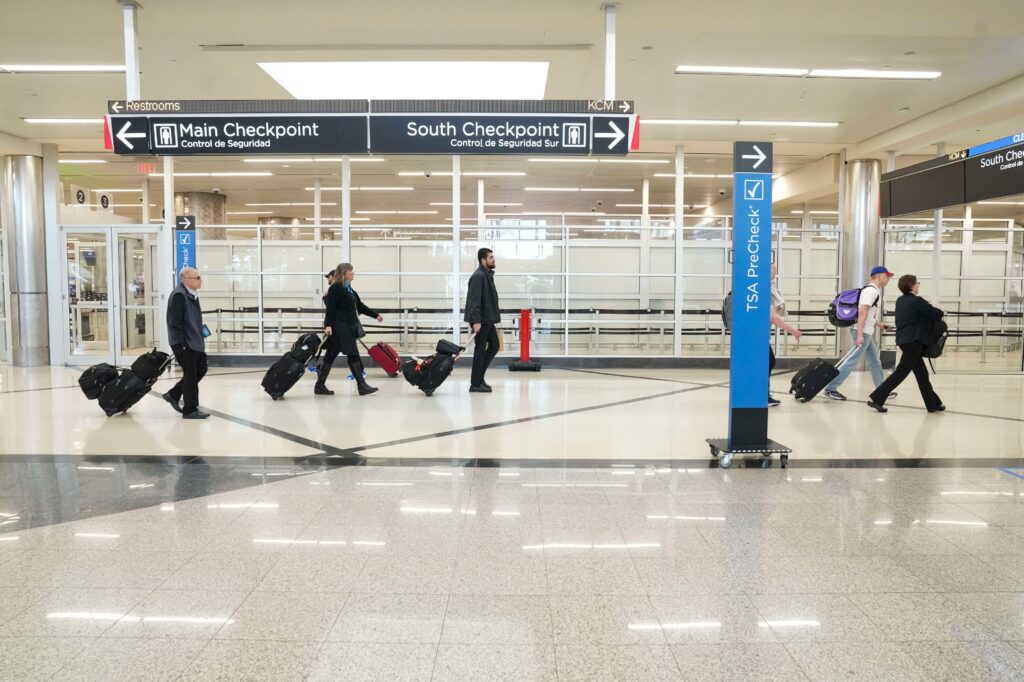
The legal and ethical perils of this aggressive practice are on full display in the federal prosecution of Samuel Tunick, whose January 2025 encounter highlights the extreme lengths to which federal agents will go to access people’s devices. Returning from a vacation in the Dominican Republic through the Atlanta airport, Tunick was pulled aside by Customs and Border Protection officers cooperating with the FBI. The agents employed high-pressure tactics — including falsely alleging the possible presence of child pornography on his device — to coerce the disclosure of his password.
Tunick didn’t fall for the ploy. Instead, he invoked his rights, refused to answer questions and presented his lawyer’s business card. Finally, he provided a code that wiped the device’s contents when the agents tried to use it to open the phone, leading to his eventual indictment on a count of destroying property to prevent seizure.
Tunick was already known to authorities for his involvement in the left-wing “Stop Cop City” movement, which had fought to prevent the construction of the Atlanta Public Safety Training Center. Tunick and his lawyer believe that he was targeted for this political action — that with no probable cause to believe he had committed a crime (making a judicial warrant out of the question) and no reasonable suspicion to justify a warrantless search, agents used the border search exception to bypass the Fourth Amendment entirely. If true, this is a prosecution brought in bad faith. The Constitution strictly forbids charging a person not for what he did but for who he is.
Border searches are an insidious trap. Handing over a password under duress can yield self-incriminating evidence. Resisting, however, exposes the traveler to escalation: physical detention, device confiscation or criminal charges. For noncitizens, the threat is blunt: Provide your passcode or be denied entry. For U.S. citizens — who cannot be turned away — the options available to customs agents are more limited but still menacing.
Clarity is needed from the courts. The U.S. Supreme Court unanimously recognized in its landmark 2014 decision in Riley v. California that mobile phones are modern, highly sensitive portals requiring robust Fourth Amendment protections. Yet the court has not explicitly defined how the border search exception applies to digital technology. Though some lower courts have acknowledged that phones are distinct from standard luggage, they remain deeply divided on border searches.
Thankfully, the jury trial offers one more constitutional safeguard against this kind of prosecution. The framers deliberately placed 12 citizens between a criminal defendant and the state because officials cannot always be trusted to police themselves. A jury asked to convict Tunick should consider not just the weight of the government’s evidence but the manner in which the prosecution came about. I suspect that prosecutors will have trouble meeting the standards of basic fairness and common sense that any group of Americans would bring to this case.
As the Trump administration’s war on immigrants moves into the nation’s airports, the prosecution of Samuel Tunick must serve as a wake-up call. Allowing federal agents to turn international travel into an automatic forfeiture of constitutional rights sets a dangerous precedent. The “border” must not be a legal black hole where privacy dies, and it is high time the judiciary — or how about you, Congress? — draws a firm line: Get a warrant or leave our phones alone.