

Normal days in Spain can suddenly turn otherworldly. On a trip to Málaga in April, for instance, during Semana Santa, my friends and I happened upon a midnight procession of about 50 men in hoods who were carrying a 1,000-pound sculpture of a crucified Jesus Christ on their shoulders, lit by hundreds of candles that swayed with every step they took. But starting tomorrow, Spain’s regular drumbeat of fairs, street parties, and patron-saint festivals will be accompanied by improbable astrological luck.
After a century of no total solar eclipses over the Iberian Peninsula, and none in mainland Europe in the 21st century so far, three solar eclipses will be observable from Spain in the next 500 days or so. This is “very, very unusual,” Sandra Benitez Herrera, the head of science communication and education at the European Space Agency, told the German broadcaster DW last month. It will also probably be a lot of fun.
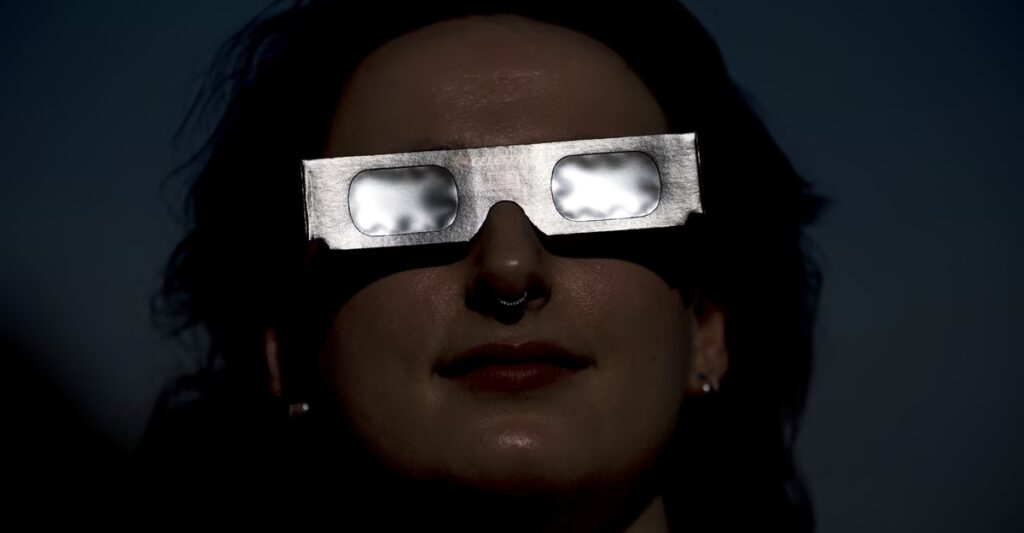
The Spanish government expects hundreds of thousands of astrotourists—including me—for Eclipse Number One this week. In most places on the path of totality, the sun will be fully eclipsed for about a minute or two, which makes this the shortest of the three celestial events. But totality will hit at sunset, a coincidence that amplifies the experience of the eclipse and occurs only about once in a decade globally, Kelsey Johnson, an astrophysicist and the former president of the American Astronomical Society, told me. The shadows will feel strange, she said: Sunset already makes shadows long, and the eclipse will add its own distortions, including the white squiggles of light that sometimes coat the ground just before totality. Then, after the sun has set, people can gawk at the 60 to 100 meteors that are expected an hour, as the Perseid meteor shower peaks against the blank slate of a new moon.
Madrid and Barcelona will see 99 percent totality, but, as Annie Dillard wrote in her classic 1982 essay, “seeing a partial eclipse bears the same relation to seeing a total eclipse as kissing a man does to marrying him.” So eclipse chasers are traveling to smaller towns that will go completely dark, where visitors are liable to encounter the particularities of Spanish August. This is the month when Spaniards return from cities to their hometowns, and the heat makes people nocturnal. They throw summer festivals, put on put on concerts, and release the bulls. The eclipse only adds to a general sense that this is a time to cast routine aside.
Take A Coruña, the first major city in Spain that will experience totality. The city’s minute of total darkness will end at 8:29 p.m.; half an hour later, A Coruña’s professional football team, Deportivo, plays Real Madrid for the first time in nearly a decade after clawing its way back from a lower-tier league. “A bunch of people are going to be looking at the eclipse right outside the stadium and then going straight to the game,” Pablo Gomez-Garcia, a University of Virginia law student who returns to A Coruña every August to see family, told me. Others might chase the eclipse with a concert: The city is in the midst of a monthslong festival that is named for María Pita, a woman who stabbed an English captain with his own spear after her husband was mortally wounded defending the city, and that features daily outdoor performances in the evenings. The performer tomorrow will be an orchestra called the Satellites. The city is expecting so many visitors—20,000 are supposed to enter by cruise ship alone today and tomorrow—that its government decided to close one popular viewpoint, a Roman-era lighthouse on the northwest coast, to avoid trampling.
In Briviesca, a town in the north of Spain, the eclipse overlaps with the weeklong patron-saint festival. On the day of the eclipse, the city will host, among many free activities, a fishing contest, performances by local bands, a parade of “giants and big heads”—a tradition from the Middle Ages that involves people donning 13-foot papier-mâché costumes depicting royals and monsters—and a toro de fuego, a metal bull filled with fireworks that will shoot sparks at people in the town square. In Tarragona, where I’m viewing the eclipse, there will also be a showcase of human-tower making, during which people stack themselves into six-to-10-person-tall monuments, a Catalan tradition.
These local practices are meant to be outlandish visual spectacles that eject you from the everyday. The weirdness of witnessing an eclipse can conjure a similar sense of awe and delight—and the eclipse fervor that has gripped many visitors suggests a hunger for that sense. The colors change. The shadows get very sharp. “You sound like a crazy person, but the feeling is like, I must not be on Earth anymore,” Jesse Tomlinson, an eclipse chaser and the creator of a popular app that helps people choose eclipse viewpoints, told me. The wind direction shifts, and the temperature suddenly drops. You grow giddy to see another. Johnson, the astrophysicist, said that her flight from Virginia to Barcelona was full of eclipse chasers chatting across rows.
Like any massive party, these eclipse celebrations have the potential to get out of hand. The population of Mallorca, for instance, already swells in August, and eclipse tourists are heaping onto the island’s temporary population. The regional government of the Balearic Islands has decided to not promote the eclipse to avoid creating an even larger surge in visitors, and is papering the area with reminders to avoid engaging in dangerous observation practices, going drunk boating, and lighting fires. On the podcast Majorca Mallorca, Nick Brown, a Brit living in Mallorca, predicted that “this is going to be the colapso to end all colapsos.” In the days leading up to the eclipse, local Spanish governments have denied permits to eclipse festivals marketed to Anglophone ravers.
But for the most part, Spain’s central government has gone all-in on promoting this eclipse and has called the Iberian Peninsula “the only populated place in the world where the total solar eclipse of August 12 can be fully enjoyed.” (This is a bit of a snub to Iceland’s capital of Reykjavík, where totality is more likely to be marred by bad weather.) The setting you experience an eclipse in does matter, Johnson said. She is leading a tour group off the coast of Mallorca from a boat that seats 80; natural settings, she said, can help establish the transcendent connection to Earth you want to find during the brief window where the moon blocks the sun.
Still, anyone in the path of totality has a chance to experience something out of the ordinary, even if there are no human towers for miles around. And this eclipse is really just a rehearsal for the one to come. Spain’s next eclipse, in August 2027, is already being billed as “the Eclipse of the Century” for the six minutes of totality it will bring.