

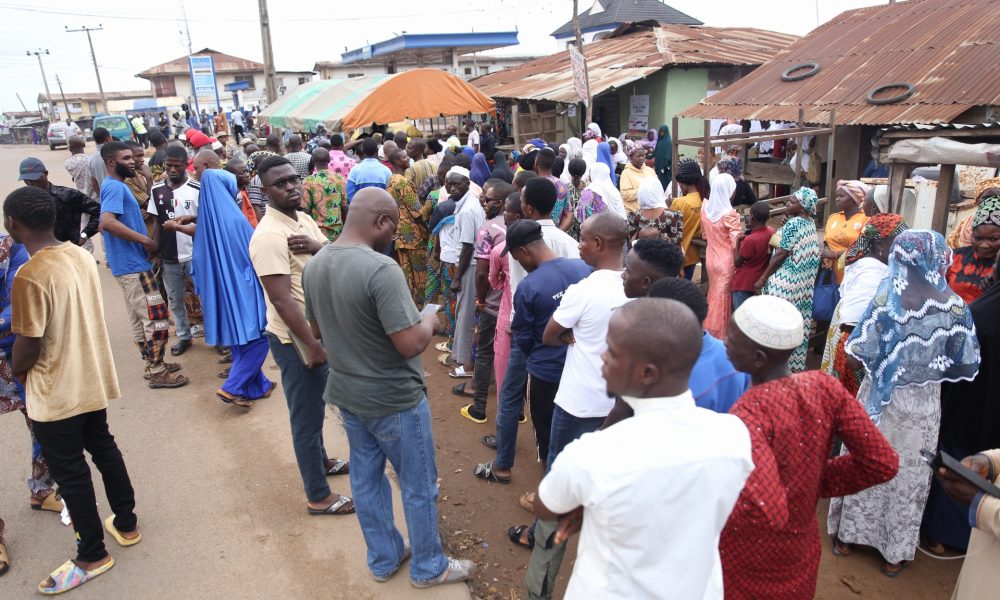
Fear, political tension and concerns over recent killings are casting a shadow over Saturday’s governorship election in Osun State, with some residents considering staying away from polling units over fears for their safety.
Interviews with residents across parts of the state indicate growing anxiety ahead of the poll, as voters, civil society voices and community members call on political parties and security agencies to prevent violence and protect citizens before, during and after the election.
For some residents, the concern is no longer simply about choosing a candidate but whether exercising that constitutional right is worth the perceived security risk.
A civil servant, Seun Akinboboye, said the heightened political atmosphere could discourage voters from turning out.
He urged candidates and their supporters to respect the rules of the electoral contest and called on security agencies to provide adequate protection at polling units and across communities.
For business owner Demilola Olasunkanmi, the reported activities of political thugs have created an atmosphere requiring urgent intervention.
She appealed to security agencies to strengthen their presence and security arrangements to reassure residents that they can vote without becoming victims of violence.
The strongest indication of how fear could affect turnout came from Elizabeth Oluwatoyin, who said security concerns had already influenced her family’s decision not to participate.
“I will not, because of the election, let them kill me. They have been killing each other for the past two to three months,” she said.
Oluwatoyin said she had warned her daughter against publicly discussing politics because of concerns that political disagreements could make her a target.
She also advised her husband against putting his life at risk for politicians, arguing that political opponents could eventually reconcile after the election.
READ ALSO: Police summon Osun Senator over alleged ‘kill Accord members’ remarks
“As the whole thing is going, I don’t think anybody from my family will go out and vote in this coming governorship election,” she said.
Her position highlights one of the potential consequences of election-related insecurity: voter suppression through fear, even where polling units remain formally open and voting infrastructure is in place.
Ajeniwura Adeoye, an elderly voter who said he had participated in elections since 1979, insisted that residents should not allow fear to determine who governs the state.
“I know the killings and shootings are intended to discourage people from coming out to vote,” he said.
Adeoye urged the Independent National Electoral Commission (INEC) to remain impartial while calling on security agencies to protect voters and create conditions for a peaceful election.
For him, staying away from the polls would hand an advantage to those allegedly seeking to use violence or intimidation to influence participation.
Political tension raises turnout concerns
Ronke Ajibade said she hoped the election would proceed peacefully without further violence, reflecting the uncertainty among residents who want to participate but remain apprehensive about possible disturbances.
Similarly, Olawale Ibrahim, a resident of Owode-Ede, warned that the tense political atmosphere could significantly affect voter participation if urgent measures were not taken.
He appealed to politicians to treat the election as a democratic contest rather than a battle in which losing carries unacceptable consequences.
According to him, political actors must recognise that every election produces a winner and a loser and that disagreements should not translate into violence.
Violence allegations deepen anxiety
The concerns come amid reports of a series of violent incidents in Osun ahead of Saturday’s election, with rival political parties trading accusations over responsibility for the developments.
The competing claims have further heightened anxiety among residents already worried about the presence of political thugs and the possibility of clashes around polling centres.
Beyond the immediate security challenge, the situation raises broader questions about the quality of electoral participation. An election may be technically conducted, but if fear prevents significant numbers of eligible voters from reaching polling units, the credibility and inclusiveness of the process could be affected.
For Osun residents, the immediate demand is therefore clear: security agencies must ensure that voting is not only possible but safe, while political parties must restrain their supporters and reject violence.
With the governorship election only days away, the effectiveness of those measures could determine whether fear becomes a silent force shaping voter turnout—or whether residents feel confident enough to exercise their right to choose the next governor of the state.