

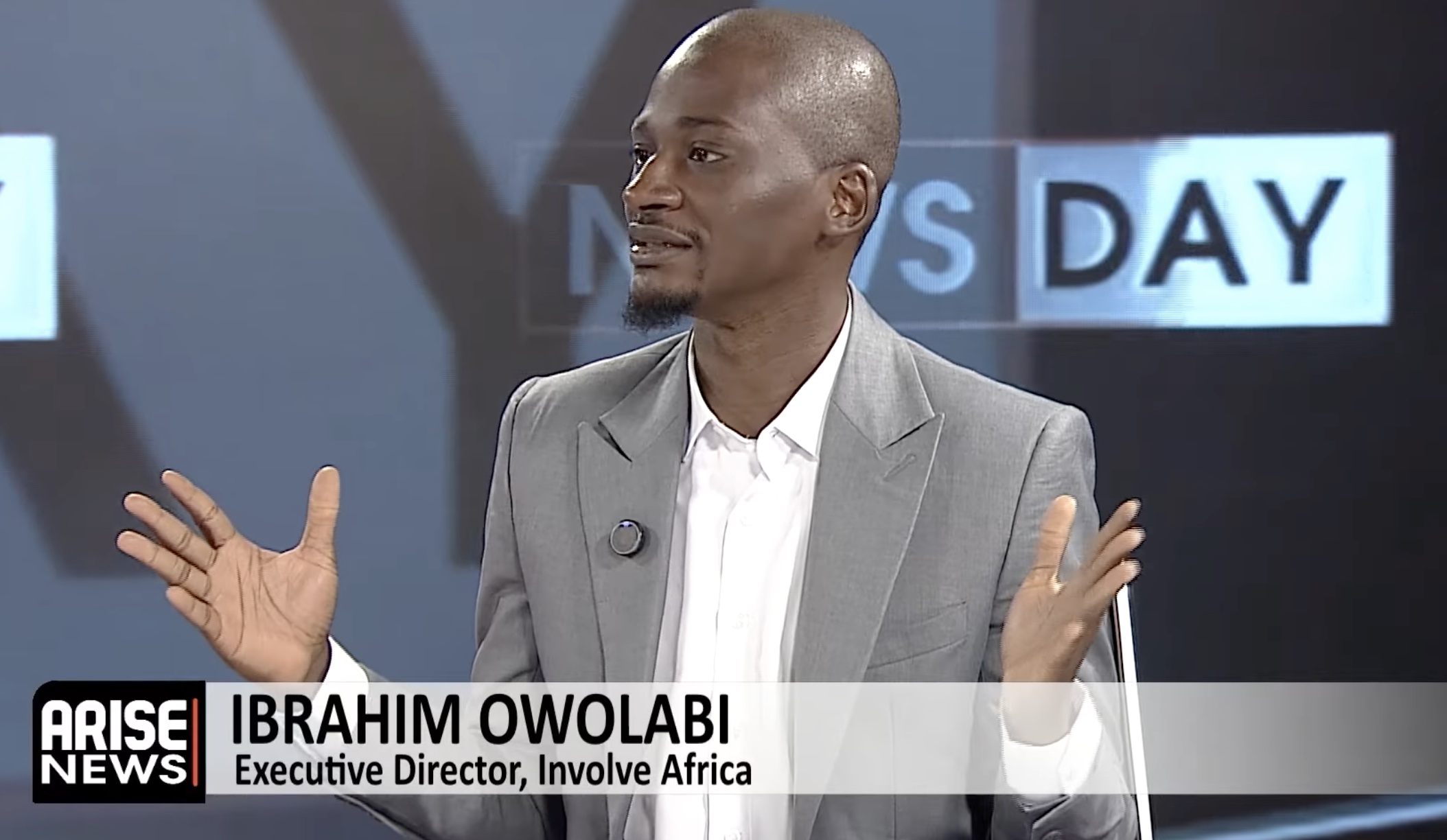
The Executive Director of Involve Africa, Ibrahim Owolabi, has called for greater implementation of youth-focused policies in Nigeria, saying the country has more policies on paper than actions to translate them into meaningful outcomes for young people.
Speaking during an interview on ARISE News on Wednesday to mark the 2026 International Youth Day, Owolabi said the Federal Government had made efforts to institutionalise youth policy and improve youth development, but stressed that there was still significant room for improvement.
He stated that the realities facing young Nigerians differ across the country, with factors such as location, education and government investment shaping their opportunities and participation in society.
Owolabi said investment in human capital remains critical to unlocking the potential of Nigeria’s young population, citing United Nations Population Fund data which indicates that about 74 percent of Nigerians aged between 15 and 24 have basic education.
“Human capital indeed is one of the most valuable capital any nation may have.”
Speaking on youth unemployment and his organisation’s work, Owolabi said Involve Africa focuses largely on strengthening young people’s participation in governance, social progress and peacebuilding rather than entrepreneurship.
He said young people should be prepared from university to contribute to society in different ways, whether as employees, entrepreneurs or advocates for social change.
On youth participation in governance, Owolabi acknowledged that participation remains low, although he said there was no current data available to quantify the level.
According to him, many young Nigerians have become less interested in governance and social progress because of the difficult realities they face.
“A lot of young people are not interested in governance process; they are less interested in social progress.”
He urged young Nigerians not to lose hope, saying hope remains important as the country works towards addressing its challenges.
“There is something we must remind our young people, and that is hope. Hope must be kept alive.”
Owolabi identified lack of education and information as major factors contributing to low youth participation in governance, while also calling on government agencies to improve the coordination of their interventions.
“Lack of education and information.”
He further acknowledged that Nigeria has a significant gap between the formulation of policies and their implementation, saying several policies and laws remain largely unimplemented.
“We have lots of policy in Nigeria today than implementation, and that’s part of the challenges in our development.”
Owolabi therefore called for greater pressure from individuals and organisations to ensure that existing policies are translated into concrete action.
“We need action points.”
He emphasized that without implementation, the existence of policies in government documents would have little practical value for young Nigerians.
“Without that, it’s as good as not starting.”
Ojo Triumph
Follow us on: