

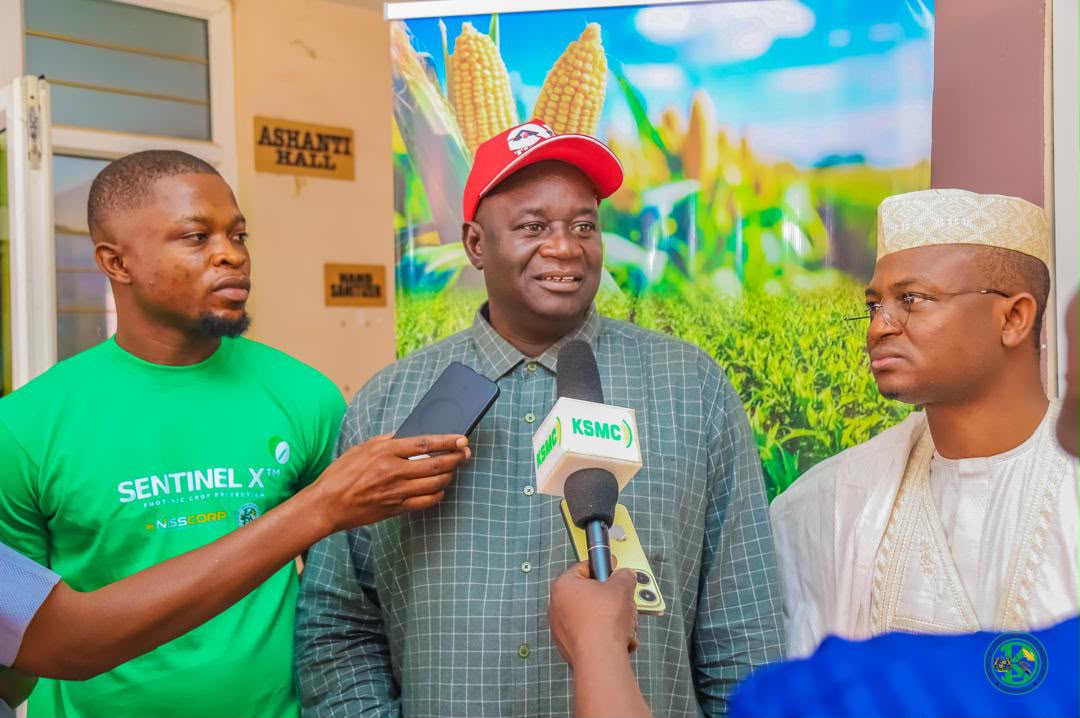
KADA, NISSCORP validates Sentinel X as non-chemical solution for safer, cheaper farming
Stakeholders across 7 North-West states in Nigeria have endorsed wider evaluation and rollout of Sentinel X™, a non-chemical crop protection technology, after pilot results showed near-zero Fall Armyworm infestation and improved yields in Kaduna.
The 2-day hybrid validation workshop was convened recently in Kaduna state by the Kaduna Agricultural Development Agency (KADA) in partnership with NISSCORP, the in-country provider of Sentinel X™.
Participantsat the workshop included officials and farmers from Kaduna, Kano, Katsina, Kebbi, Sokoto, Zamfara and Jigawa, plus regulators, researchers, banks, insurers, cooperatives and development partners.
Sentinel X™ is developed by Informiton and deployed by NISSCORP. Sentinel X™ is a photonic, non-chemical system which uses the sun’s near-infrared spectrum to stimulate crops to naturally repel pests like Fall Armyworm.
It requires no chemicals, GMOs, or new farm equipment. Farmers pay a single seasonal subscription instead of 3–4 rounds of pesticide and fertilizer spraying.
Pilot Results Drive Support Data presented from Kaduna pilot farms showed near-zero Fall Armyworm infestation; measurable gains in crop performance and yield; lower input costs for pesticides, fertilizers, equipment and labor; reduced chemical exposure and residues in food.
Government of the North-west states backs Innovation
Declaring the workshop open, KADA General Manager, Mallam Muhammed Rili, said the initiative aligns with Kaduna state governor, Senator Uba Sani’s agenda on food security, climate-smart agriculture and farmer prosperity.
Speaking for the Kaduna state government, Commissioner for Agriculture, Mallam Murtala Mohammed Dabo, urged stakeholders to adopt practical and affordable solutions that cut production risks and boost livelihoods.
NISSCORP President, Kingsley Obaji, and Country Manager, Igo Ogbu, pitched Sentinel X™ as a safer, more affordable alternative that can make Nigerian produce more competitive globally by cutting chemical residues.
Stakeholders are already committed to the project. State ADPs like KNARDA’s Dr. Farouk Kurawa and reps from Zamfara, Kebbi, Plateau states, welcomed deployment in their states and urged adoption to meet global organic standards.
Representatives of All Farmers Association of Nigeria (AFAN), Mohammed Kabir and other groups, cited rising chemical costs and called for transparent subscriptions and farmer-group involvement. Also, representatives of financial institution, including the Central Bank of Nigeria (CBN)
asked for bankable models, credible farmer databases and measurable indicators to fund scale-up. While insurance representatives present at the event
noted that Sentinel X™ could lower farm risk and be built into agricultural insurance products.
Participants at the workshop however resolved and endorsed
Independent technical assessment by research and regulatory bodies, mass farmer sensitization and stronger extension support; affordable subscriptions and financing options for smallholders; insurance partnerships to cover reduced-risk farms; integration of cooperatives into rollout plans; clear regulatory framework
for commercialization, and phased expansion across the North-West and other regions of Nigeria.
In his closing remarks, Mallam Rili called for further validation nationwide and stronger collaboration among government, research, finance, insurance and private sector players to drive commercial adoption.
He said scaling technologies like Sentinel X™ can advance food safety, consumer health, farmer productivity and sustainable agriculture in Kaduna, the North-West and Nigeria.
The workshop ended with a joint commitment to support the evaluation, financing and commercialization needed to integrate Sentinel X™ into Nigeria’s agricultural value chain.
Sentinel X is a non-chemical, photonic information-based system that helps crops naturally repel pests and improve nutrition, without chemicals or farm equipment changes.