

By Omoyeni Ojeifo
The National Drug Law Enforcement Agency (NDLEA) has urged the global community to accelerate cross-border asset recovery mechanisms.
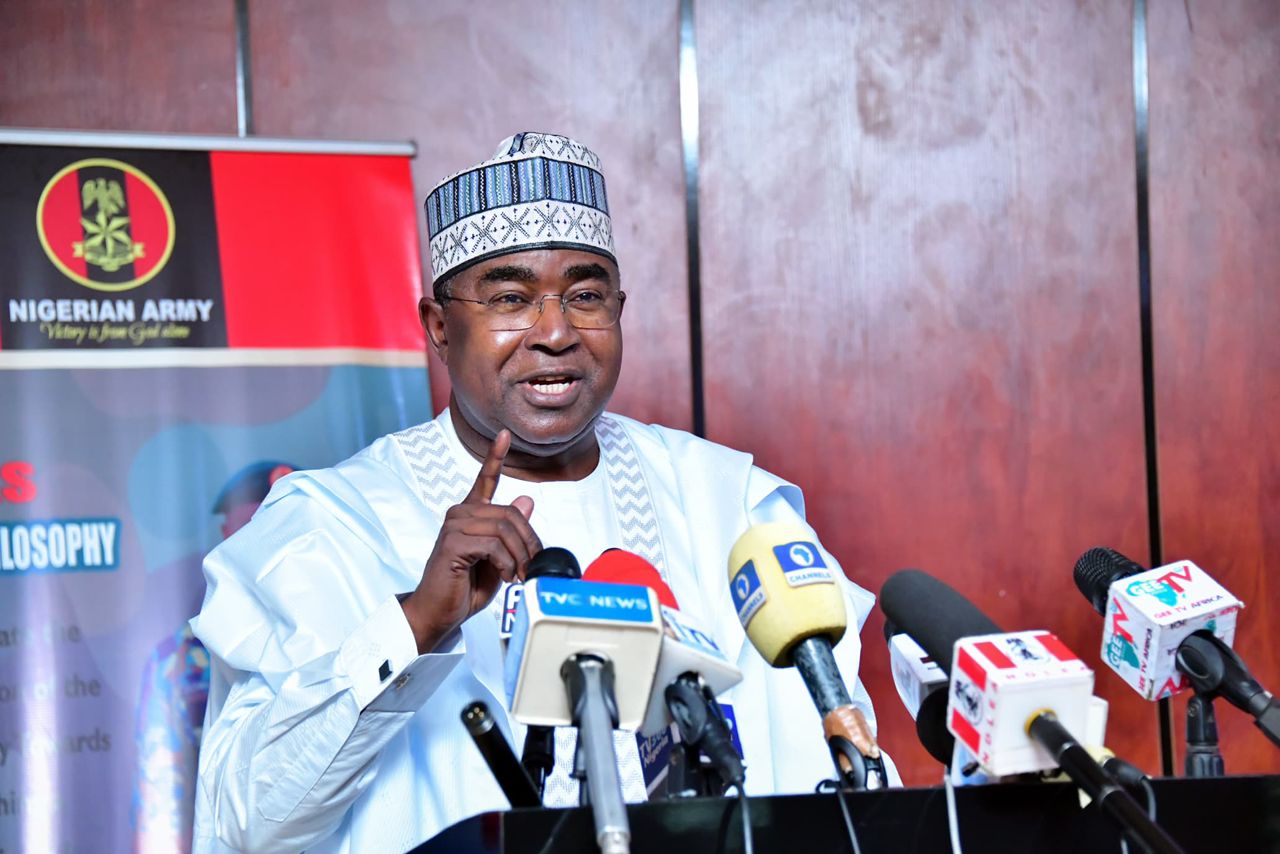
Presenting at the 43rd Cambridge International Symposium on Economic Crime at the University of Cambridge, NDLEA Chairman/Chief Executive Brig.-Gen. Mohamed Buba Marwa (retired.) advocated for speedier international collaboration and stronger recognition of non-conviction-based forfeiture orders.
Addressing an international gathering of judges, law enforcement chiefs, financial intelligence experts and academics, Marwa warned that criminals could exploit jurisdictional gaps to move and retain illicit wealth, making coordinated international action critical to dismantling the financial architecture of organised crime.
“The ultimate objective must be to deny criminals the proceeds of their crime, promptly, and lawfully while preserving the value of the property. Nigeria, through the National Drug Law Enforcement Agency, will continue to strengthen this approach,” Marwa said in a statement emailed to PerSecondNews by the Director media and Advocacy, Femi Babafemi on Tuesday.
Marwa said a trafficker who loses his liberty but retains his fortune has not truly been defeated, as the wealth could finance another operation, support his associates and sustain the criminal enterprise.
“The effectiveness of the criminal process should not be measured only by the number of convictions secured. It should also be measured by whether crime is made unprofitable.”
Addressing the session chaired by Honourable Judge Wendy Tien, Marwa likened arresting a trafficker without dismantling his fortune to “pruning a weed at the stem while leaving its roots undisturbed.”
He warned that such wealth could resurface “under a different name, through a different front company, in a different jurisdiction,” underscoring the importance of international cooperation in tracing and recovering illicit assets.
Marwa outlined six practical strategies deployed by NDLEA to strengthen asset recovery, anchored on the National Drug Law Enforcement Agency Act 2004, the Proceeds of Crime (Recovery and Management) Act 2022 and the Money Laundering (Prevention and Prohibition) Act 2022.
He cited the forfeiture of the Hook Hotel, a property linked to a fugitive drug suspect, as an example of the agency’s use of non-conviction-based forfeiture to recover criminal assets.
The property was sold for $4.2 million, with the proceeds paid into the Federal Government’s forfeited assets account domiciled with the Central Bank of Nigeria.
Marwa noted that the recovery was proof that a fugitive “cannot simply outrun the process and retain the benefit of his crime.”
He also disclosed that NDLEA investigators and prosecutors are now embedded together from the inception of cases, a reform he said had shortened the interval between arrest and securing restraint orders.
Marwa revealed that last month alone, the agency froze bank accounts worth over $7 million and secured interim forfeiture orders covering multibillion-naira assets, including filling stations, multi-storey buildings and exotic vehicles linked to a fugitive methamphetamine syndicate.
On the landmark case of Nigerian billionaire and suspected drug baron Amadi Simon, arrested in Switzerland through a joint operation involving NDLEA, the United States Drug Enforcement Administration (DEA), and authorities in Switzerland, Greece and France, Marwa said three hotels linked to the suspect were placed under professional asset managers.
He explained that the decision was aimed at preserving the hotels’ value as going concerns rather than shutting them down while the trial is pending.
Marwa further highlighted the use of unexplained wealth and living beyond one’s legitimate means as powerful investigative triggers, alongside the interlocutory sale of perishable and depreciating assets to protect their value before final judgment.
He said the efforts had now been institutionalised within Nigeria’s National Drug Control Master Plan 2026–2030, ensuring that financial disruption of drug cartels remains a sustained national priority rather than a series of
Isolated cases.
Marwa further stressed that the agency’s experience had established three principles that must be applied consistently to ensure criminal assets are quickly restrained, protected from depreciation and managed through established systems.
“Speed over sequence, preservation of value, and institutionalisation. These are the three guiding principles that should shape how we approach the recovery and management of criminal property.”
He called for faster international cooperation mechanisms and stronger cross-border recognition of non-conviction-based forfeiture orders.
The NDLEA boss commended the Centre for Geopolitics, the organisers of the symposium and Judge Tien for the platform, and reaffirmed NDLEA’s readiness to deepen partnerships with jurisdictions and institutions committed to dismantling the financial architecture of drug trafficking.