
I tried the same ChatGPT prompt Sam Altman used to build a website. It helped me finally learn how to vibe code.

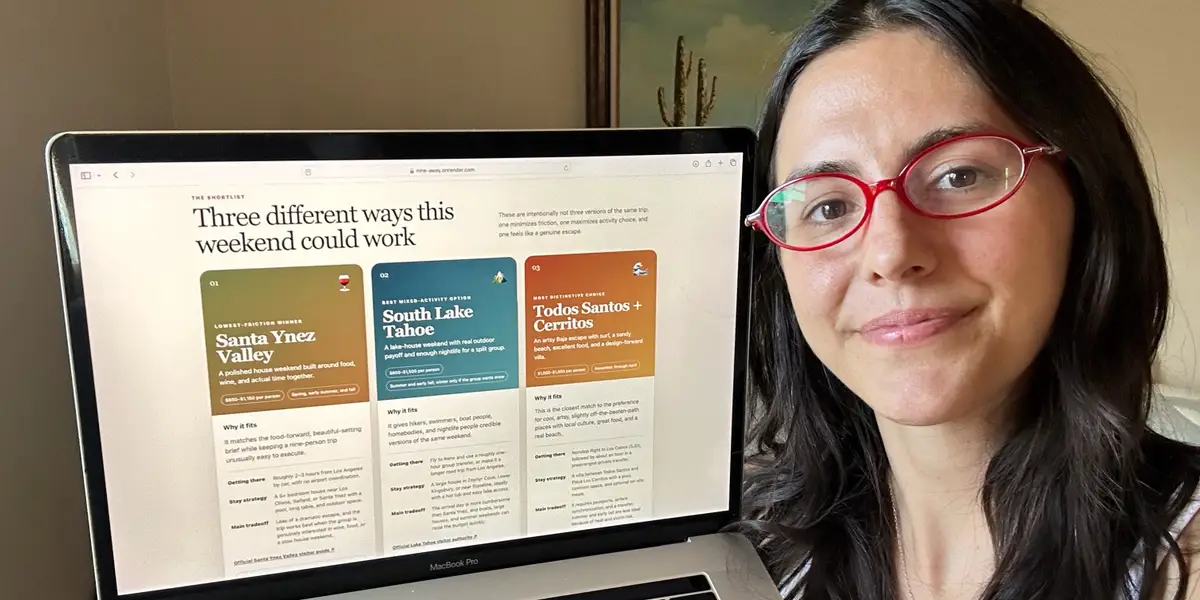
Sam Altman taught me how to vibe code.
I’ve spent the past several months reading my colleagues’ excellent coverage on vibe coding and the many ways regular people, from firefighters to busy parents, are building creative solutions to simplify their lives.
I wanted to try it myself, but my limited coding experience — editing HTML to customize my MySpace page as a teen and a computer science 101 course in college that I can’t even begin to remember — deterred me, so I kept putting it off.
That is, until this week, when Altman, cofounder and CEO of OpenAI, shared on X a prompt he put into ChatGPT from his phone:
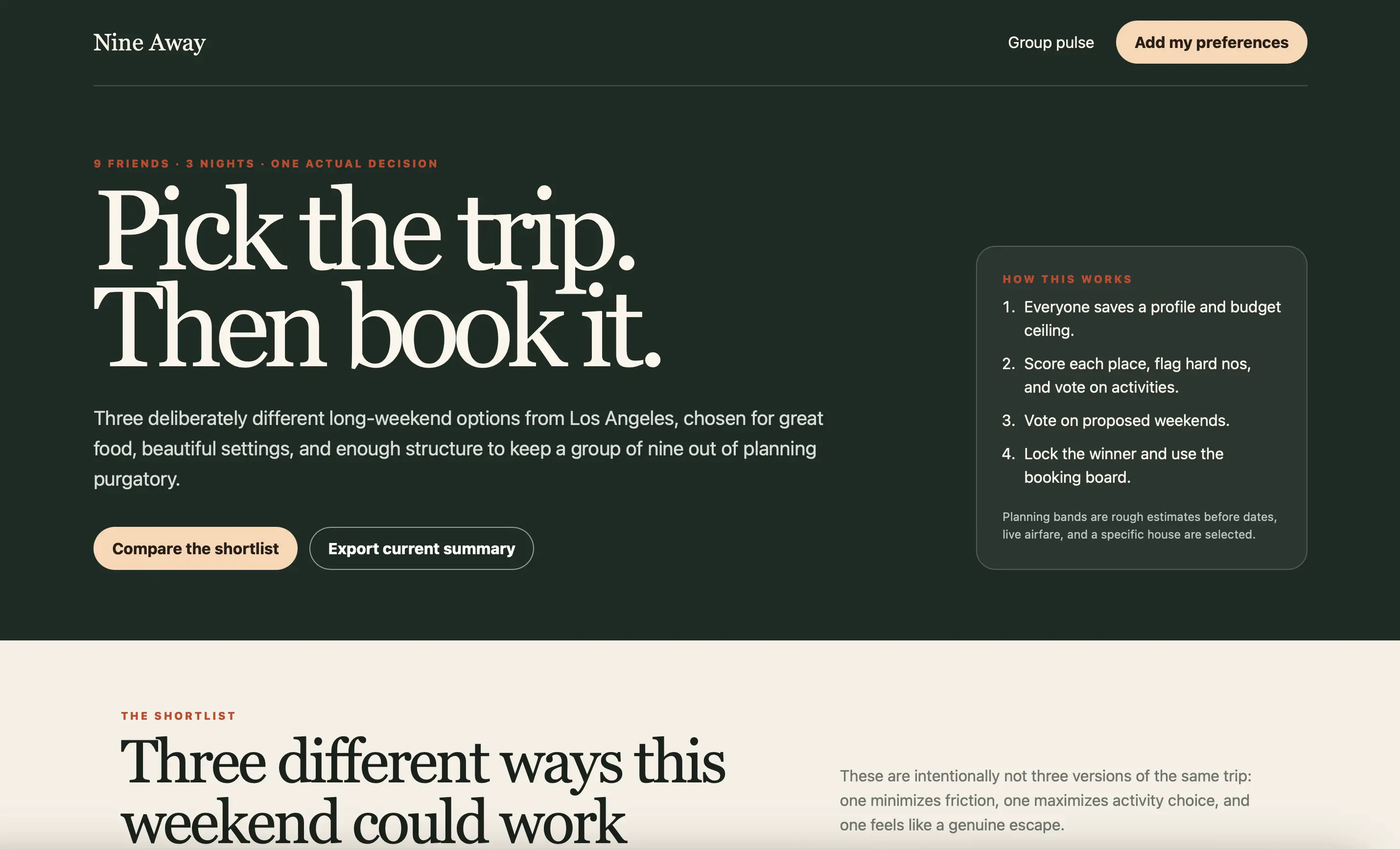
“Okay,” I thought, “I’ll give it a shot.” I copied and pasted the exact text, prompted ChatGPT, and, in under two hours, had a fully functioning website up and running with three trip options well tailored to my interests.
Turns out the promise of vibe coding — that I, as a non-coder, could build custom apps and websites that are specific and useful to me without actually learning to code — might not be too good to be true after all. It just took the OpenAI boss to show me.
ChatGPT walked me through anything remotely technical
I used my personal ChatGPT account for the experiment, the $20 a month Plus plan, and had it set to GPT-5.6 Sol with intelligence set to “High.”
Nine minutes and 47 seconds later, ChatGPT returned three destination options, a link to download the source code for a complete website, and an email draft.
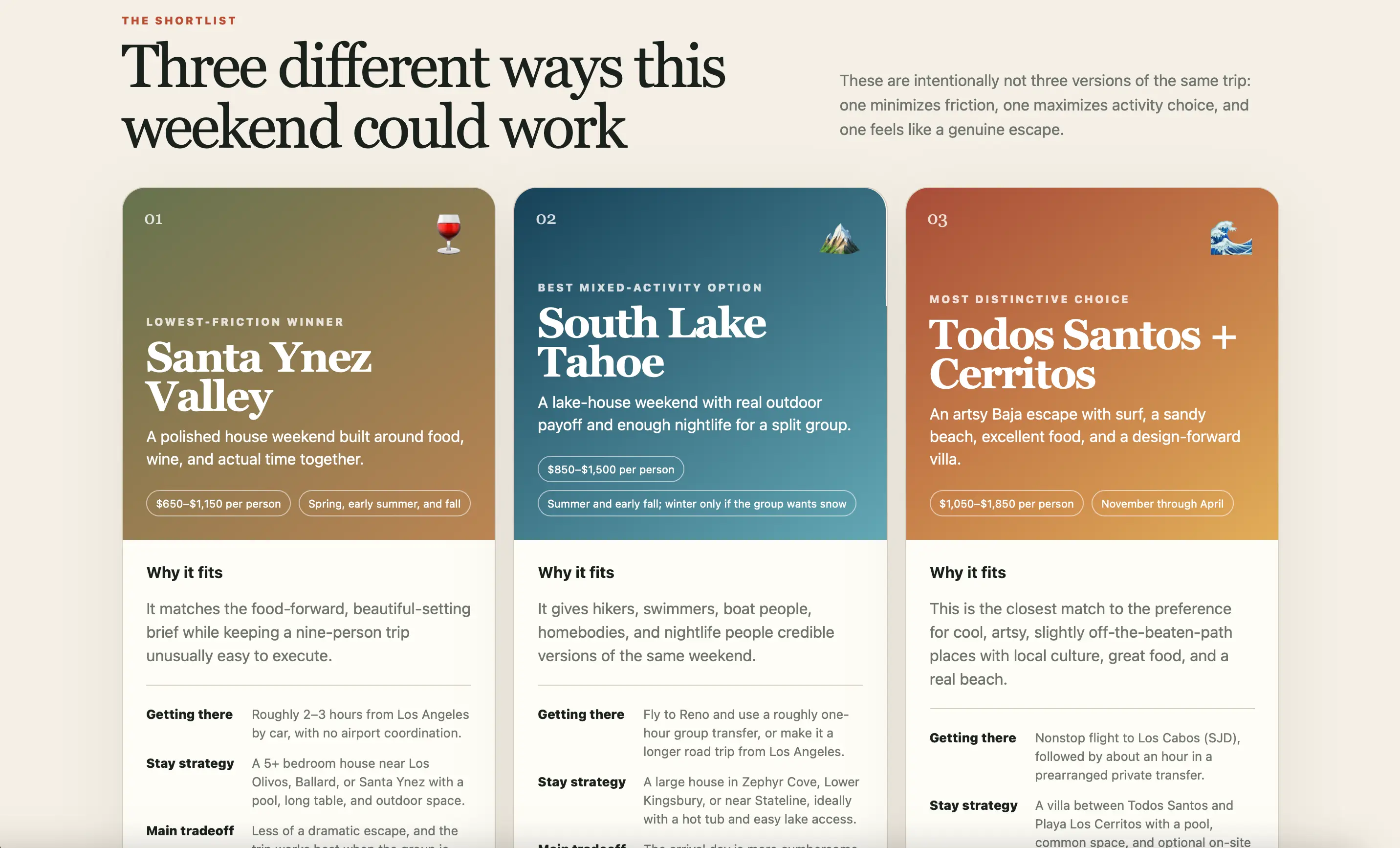
The three destinations it recommended were shockingly curated to my interests — Santa Ynez Valley, South Lake Tahoe, and Todos Santos — and included two that were already high up on my list of places to visit. I was impressed, but highly skeptical; “Does this link actually contain a fully coded website??”
ChatGPT’s response included a “README” file that explained what was in the project and how to install and deploy it. I imagine for people like Altman and others with coding experience, it was as clear as it could be. To me, it read like gibberish.
I told ChatGPT I had no idea how to follow those instructions or run the site locally on my computer, let alone get it online; that I had exactly zero technical coding skills; and that I needed a plain-language, step-by-step explanation of what to do next.
I proceeded to follow the steps ChatGPT outlined, some as specific as “Press Command + Spacebar” on my Mac to search for and open the Terminal application, which was essentially foreign to me. It talked me through downloading Python, signing up for GitHub, and hosting the site using Render. It helped me test the site locally on my Mac, blowing my mind at how complete and functional the code was, before setting it live online.
If none of these terms mean anything to you, welcome to the club.
I paid Render to host my website for $7.25 a month, but later asked ChatGPT if there were free options. It recommended Cloudflare and said the whole process would have been just as simple if we had started with that plan.
ChatGPT knows I’m not a coder, and since this was a request for a very simple project, it acknowledged it should’ve suggested the free option. So there were still some classic AI missteps.
When I reached out to OpenAI for this story, a spokesperson told me about a recently launched feature called Sites, which allows users to create, preview, edit, and host their sites all in ChatGPT for free with a Plus subscription — no third-party hosting service required.
The tool is in public beta and was already available in my account. ChatGPT, yet again, said it should’ve recommended Sites as an option.
I built a website from scratch without writing a line of code
In under two hours, some of which was spent handling other work tasks, I had a live website.
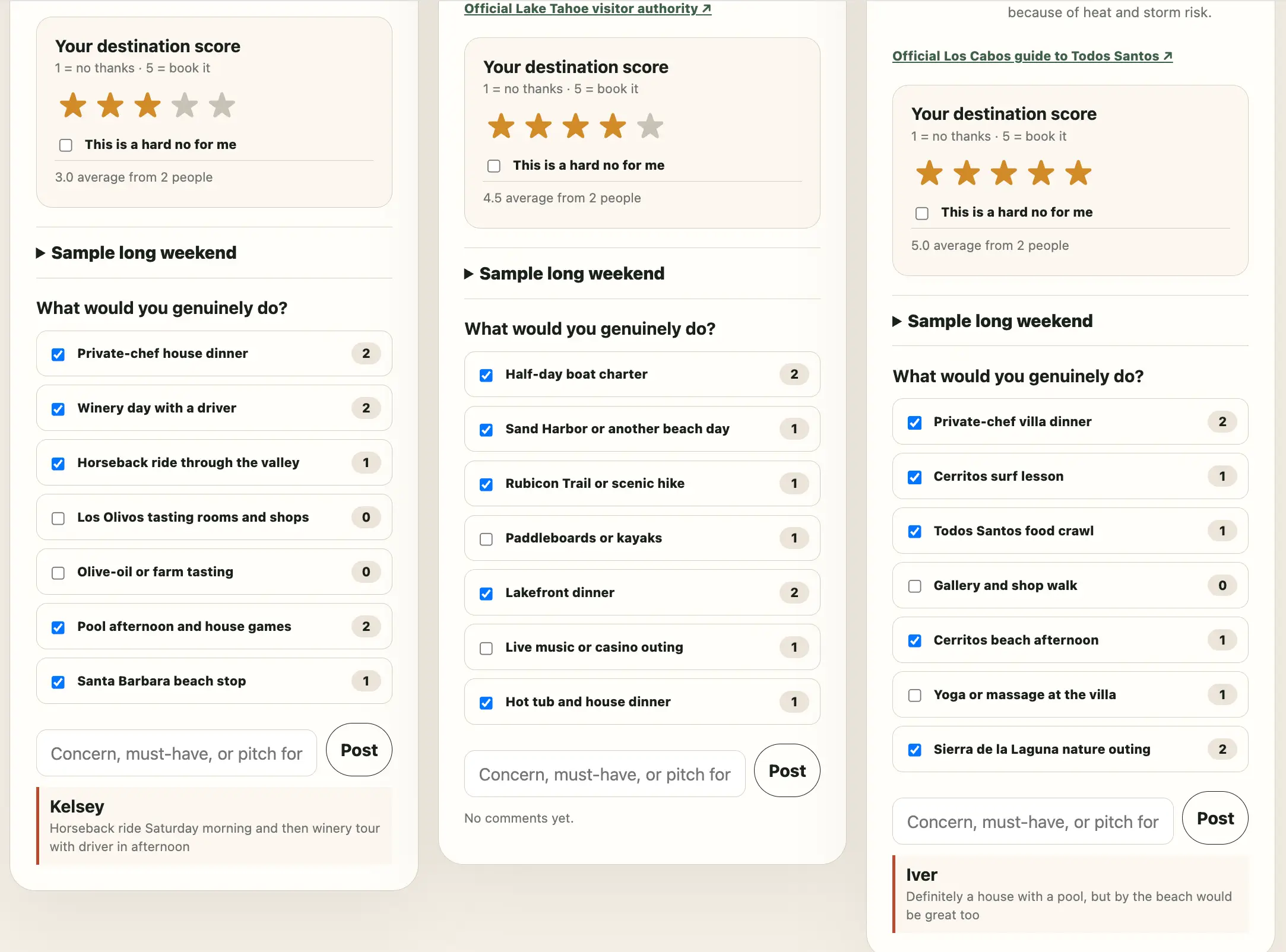
It would allow my friends with the access code to create their profiles, share their budgets, vote on a destination, select the dates they were available, check the activities they were interested in, and comment on their own ideas for things to do. It would also allow me, after everyone had voted, to lock in the final destination, at which point it would populate a new section with specific tasks that could be assigned and managed.
I didn’t write a single line of code. The closest I got was copying and pasting a few short strings of code from ChatGPT into the Terminal app as directed. I also didn’t customize the prompt at all — it was the exact prompt a billionaire tech CEO used, and yet it produced a website that I also found useful, with the help of my ChatGPT history.
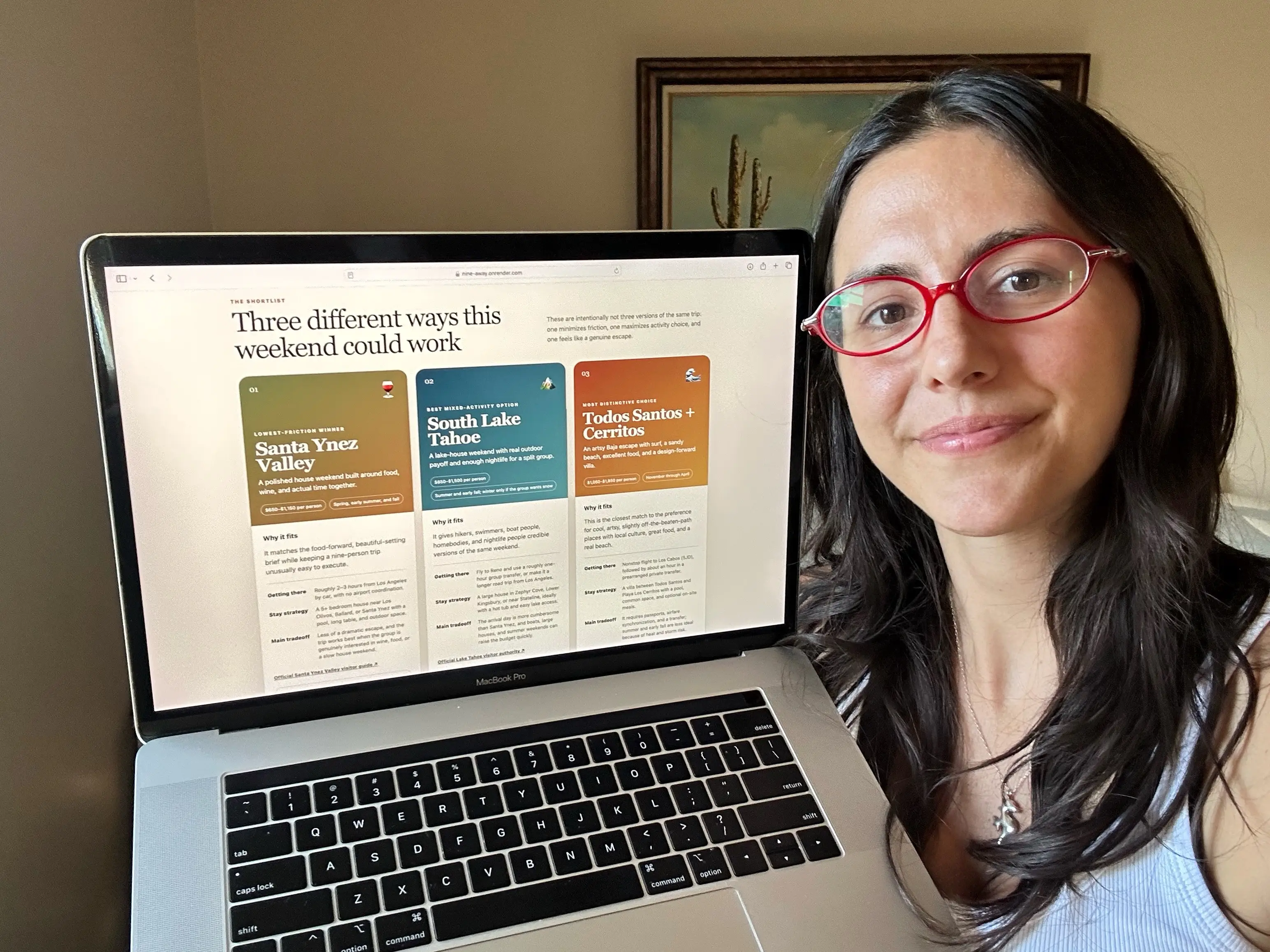
The website wasn’t perfect, and there were several changes I wanted to make. I ended up transferring it into a Sites workspace and, using another chat to help me word my prompt perfectly, asked for small tweaks, like adding the ability for users to edit or delete their comments and moving the access code window higher up the page.
ChatGPT worked for 14 minutes and eight seconds, and deployed the changes perfectly.
Altman’s prompt turned out to be exactly the jump-start I needed to understand how vibe coding actually works. Now I also know how to ask ChatGPT to do things I don’t know how to do.
“If you tell a friend they can now instantly create any app, they’ll probably say, ‘Cool! Now I need to think of an idea.’ Then they will forget about it, and never build a thing,” writer Jasmin Sun, who has a Substack on AI, wrote earlier this year. “The problem is not that your friend is horribly uncreative. It’s that most people’s problems are not software-shaped, and most won’t notice even when they are.”
After one vibe-coding exercise, I’m already starting to see some software-shaped solutions in my life, and I’m already dreaming of which one I want to build next.
Read the original article on Business Insider