

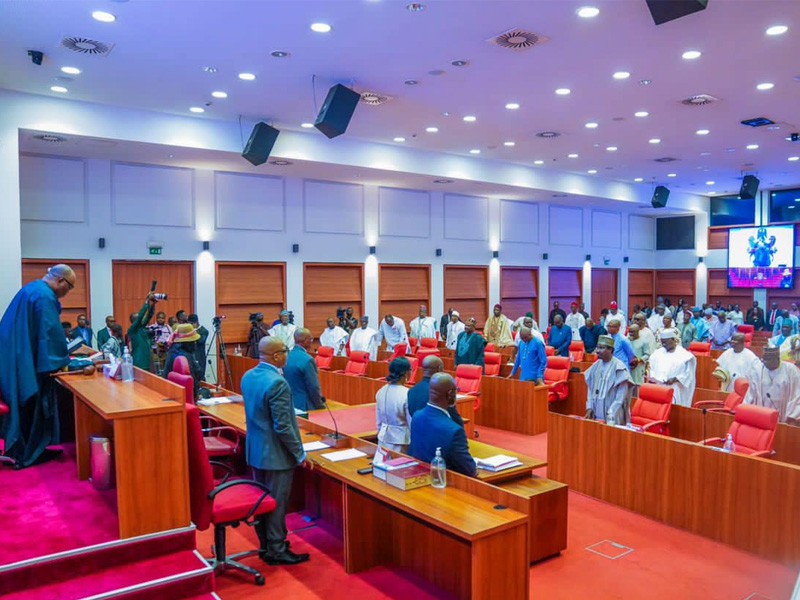
- The Senate has proposed a jail term of up to 15 years for drug hawking as part of efforts to strengthen Nigeria’s fight against counterfeit medicines, fake drugs and unsafe processed foods through a new legislation that passed second reading on Wednesday.
The proposed legislation, titled the Counterfeit Medical Products, Fake Drugs and Unwholesome Processed Foods (Prohibition and Control) Bill, 2026, was subsequently referred to the Senate Committee on Health (Secondary and Tertiary) for further legislative scrutiny, with a directive to submit its report within four weeks.
Leading the debate, the sponsor of the bill, Senator Umar Suleiman, said the legislation seeks to repeal the outdated Counterfeit and Fake Drugs and Unwholesome Processed Foods Act, Laws of the Federation of Nigeria, 2004, replacing it with a comprehensive legal framework capable of addressing the growing threats posed by counterfeit medicines, adulterated cosmetics, mislabelled chemicals and unsafe processed foods.
Suleiman argued that the existing law has become inadequate in the face of technological advancements, the expansion of online marketing, increasing cross-border trafficking and the activities of organised criminal networks involved in the production and distribution of counterfeit products.
According to him, the proposed legislation is intended to protect Nigerians from preventable deaths, disabilities and other health complications caused by fake medicines, while restoring public confidence in the country’s healthcare system and promoting the growth of Nigeria’s pharmaceutical industry.
The senator explained that the bill criminalises every stage of the counterfeit supply chain, including the production, importation, manufacture, transportation, distribution, sale, possession and facilitation of counterfeit medical products, fake drugs and unwholesome processed foods.
It also prohibits the manufacture, importation or possession of labels, wrappers, packaging materials, printing equipment and other tools intended for the production or distribution of counterfeit products.
A major provision of the bill is the prohibition of drug hawking and the sale of medicines in unauthorised locations. If enacted, drugs will no longer be legally sold in open markets, motor parks, roadside stalls, buses, ferries and unlicensed online platforms, a move aimed at ensuring medicines are dispensed only through approved channels.
To deter offenders, the bill prescribes penalties of up to 15 years’ imprisonment for serious offences, in addition to substantial fines, compensation for victims or the families of those who suffer harm from counterfeit products, and sanctions against corporate organisations and their directors found culpable of violating the law.
The proposed legislation also seeks to strengthen regulatory enforcement by granting the National Agency for Food and Drug Administration and Control (NAFDAC) expanded powers to deploy modern product-tracking technologies, establish national and state enforcement task forces, conduct inspections of factories, warehouses and retail outlets, seize counterfeit products, arrest suspects, seal offending premises and enhance surveillance at Nigeria’s air, sea and land borders.
To ensure speedy justice, the bill vests exclusive jurisdiction over offences arising under the proposed law in the Federal High Court and provides for accelerated prosecution of cases to minimise delays in the trial of offenders.
Describing the bill as a life-saving intervention rather than merely a punitive measure, Suleiman said the proposed law would protect public health, safeguard legitimate pharmaceutical manufacturers and food producers, boost consumer confidence in regulated products and align Nigeria’s anti-counterfeit legal framework with international best practices.
If passed by both chambers of the National Assembly and assented to by the President, the bill is expected to significantly strengthen Nigeria’s legal and institutional response to the growing threat posed by counterfeit medicines and unsafe processed foods.