
NOG2026: Operators identify drilling, infrastructure renewal, technology as crucial in raising Nigeria’s oil production

Oil & Gas
By Anthony Isibor
THE indigenous upstream operators have identified aggressive drilling campaigns, rehabilitation of ageing infrastructure, improved financing, technology deployment and sustained government reforms as the critical ingredients required for Nigeria to achieve its ambitious oil production targets.
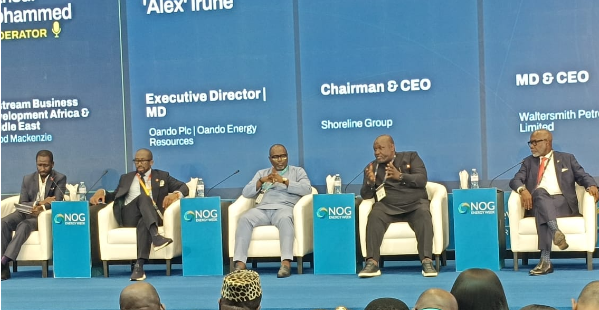
The consensus emerged during a strategic panel session on “Production Optimisation Strategies – Maximising Investment in the New Energy Landscape” at the 2026 Nigeria Oil and Gas, NOG, Energy Week.
Moderated by Mansur Mohammed, Upstream Business Development Africa & Middle East, the session examined how operators can maximise output from existing assets while attracting fresh investment into the Nigerian upstream sector.
Opening the discussion, Oando Energy Resources Managing Director, Aimojie Alex Irune, said that Nigeria’s aspiration to produce 3 million barrels of oil per day should be viewed as a stretch target capable of driving operational efficiency across the industry.
According to him, the country’s technical production capacity already exceeds current output, noting that Nigeria is producing only about 70 per cent of its technical potential.
He argued that the industry’s first responsibility is to protect existing production before unlocking additional volumes from undeveloped reserves.
Irune noted that recent reforms, including improvements in security, implementation of the Petroleum Industry Act and presidential executive orders, have created a stronger foundation for investment than existed in previous years.
According to him, Nigeria’s share of upstream investment in Africa has begun to improve after years of decline, describing collaboration among operators and government as increasingly positive.
Speaking from the perspective of asset development, Shoreline Group Chairman and Chief Executive Officer, Kola Karim, stated that unlocking production potential depends on three priorities drilling, rehabilitation of ageing facilities and reliable evacuation infrastructure.
He explained that many assets acquired from international oil companies require significant investment because much of the infrastructure dates back several decades.
Karim explained that replacing obsolete equipment, funding drilling programmes and ensuring pipelines remain operational would significantly increase production, while supporting the country’s 3-million-barrel ambition.
He also stressed the importance of continued collaboration between indigenous operators, government agencies and joint venture partners in executing investment programmes.
ND Western Chief Executive Officer, Lanre Kalejaiye, said production optimisation goes beyond drilling and requires a holistic approach from reservoir management to export infrastructure.
He disclosed that the company’s OML 34 asset still contains significant undeveloped oil and gas resources despite decades of production.
According to him, ND Western plans to drill about 20 wells over the next three years—10 gas wells and 10 oil wells—to increase production.
He added that the company is deploying advanced technologies, including horizontal drilling, dual-completion wells and active gas-lift programmes to improve recovery rates while slowing production decline from mature fields.
Kalejaiye said that understanding reservoir behaviour, improving well completions and integrating technology across production systems remain central to maximising output from mature assets.
The panel concluded that Nigeria’s production growth ambitions will depend on sustained reforms, improved access to capital, investment in ageing infrastructure and wider adoption of technologies that enhance recovery from existing fields.
A.I
July 8, 2026
Tags: Aimojie Alex Irune Kola Karim LANRE Kalejaiye Mansur Mohammed NOG2026 Oando Energy Resources