

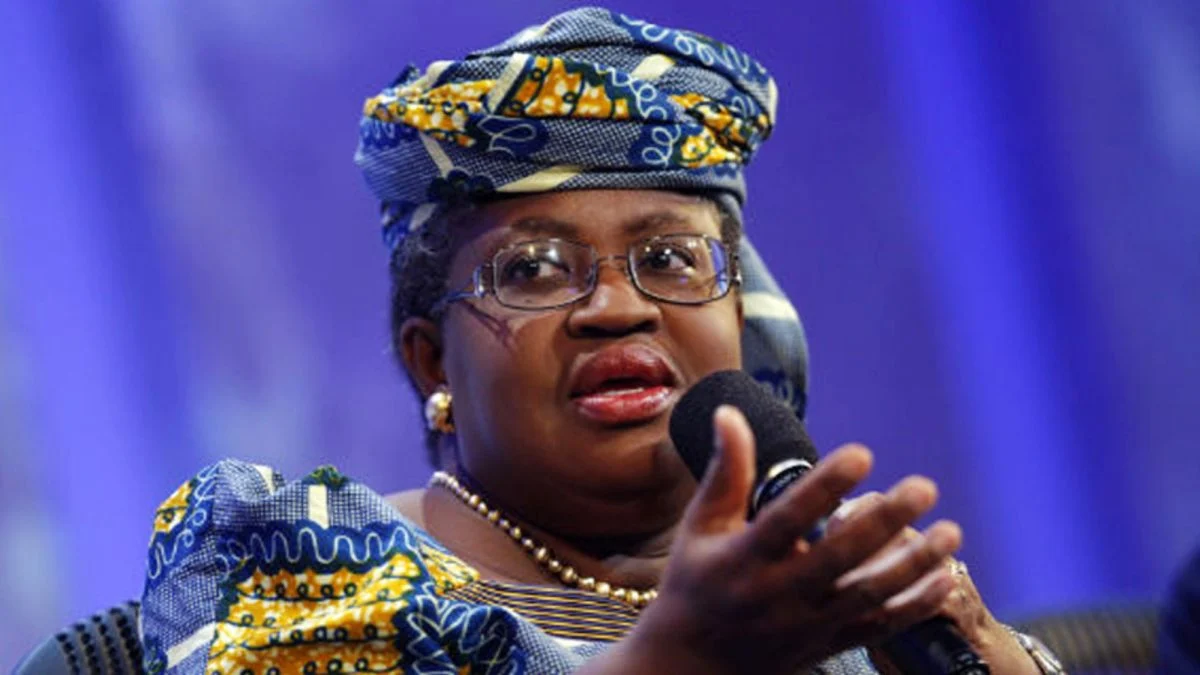
Director-General of the World Trade Organisation (WTO), Ngozi Okonjo-Iweala, has urged the Tinubu administration to sustain its macroeconomic reforms while ensuring that ordinary Nigerians begin to experience tangible improvements in their daily lives through more jobs and better living standards.
Speaking at the opening of the 7th Africa Emerging Markets Forum in Abuja on Wednesday, Okonjo-Iweala said Nigeria stands to benefit from ongoing changes in global trade if it continues to improve its business environment, maintain macroeconomic stability and attract more investment.
She stressed that while economic reforms were necessary, their success would ultimately be measured by their impact on citizens.
“Nigerians have to feel the impact of reforms,” she said, adding that government policies should improve livelihoods and strengthen the country’s competitiveness.
According to the WTO chief, Nigeria should continue implementing broad-based macroeconomic reforms while carefully managing fiscal policy, public debt and job creation to ensure sustainable economic growth.
Okonjo-Iweala explained that the global economy is gradually moving away from overdependence on a few manufacturing centres as businesses diversify their supply chains following the disruptions caused by the COVID-19 pandemic, geopolitical tensions and other global shocks.
She said countries that create favourable business conditions and maintain stable economic policies would be better positioned to benefit from the changing global trading system.
Despite increasing protectionist policies in some parts of the world, she noted that about 72 per cent of global trade is still conducted under WTO rules, demonstrating the resilience of the multilateral trading system. She added that countries are increasingly entering bilateral and regional trade agreements that go beyond tariff reductions to promote broader economic cooperation.
Okonjo-Iweala also encouraged African countries to take advantage of opportunities in green industries and critical minerals, noting that the continent possesses about 30 per cent of the world’s mineral reserves. She said African nations should move beyond simply extracting and exporting raw materials by investing in value addition and integrating more deeply into global value chains.
She further called for reforms of global institutions, including the WTO, warning that fragmentation of international trade would weaken global economic growth. Instead, she advocated an open, predictable and rules-based trading system capable of supporting export-led growth and shielding economies from domestic shocks.
To attract greater investment, she said developing countries must strengthen their business environments, improve physical and digital infrastructure and maintain sound macroeconomic policies.
Okonjo-Iweala added that Africa has a unique opportunity to become a major contributor to the future global workforce while expanding trade among developing countries, but said achieving that goal would require stronger regional cooperation, improved competitiveness and sustained economic reforms.
Also speaking at the forum, Governor of the Central Bank of Nigeria, Olayemi Cardoso, urged African countries and other emerging economies to take a leading role in shaping the changing global economic order instead of merely reacting to developments.
Cardoso said Africa’s growing population, expanding consumer market and vibrant innovation ecosystem provide enormous opportunities for long-term economic growth. However, he stressed that those advantages must be supported by prudent macroeconomic policies, stronger institutions and deeper regional integration.
Speaking on Nigeria’s reform programme, the CBN governor said the apex bank has prioritised transparency, policy consistency and institutional accountability as part of efforts to rebuild investor confidence and strengthen macroeconomic stability.
According to him, growing investor interest indicates that the government’s reform agenda is beginning to restore confidence in Nigeria’s economic prospects.
He also stressed the importance of international cooperation, saying no country can effectively tackle today’s interconnected global economic challenges in isolation.
Okonjo-Iweala’s remarks come days after President Bola Tinubu defended his administration’s economic reforms, saying they had stabilised the economy and revived investor confidence despite the hardship experienced by many Nigerians.
The President said reforms introduced since 2023, including the removal of petrol subsidies, electricity subsidy reductions and the liberalisation of the foreign exchange market, were beginning to produce positive macroeconomic results.
“Today, I can say with confidence that Nigeria has stabilised and is moving forward again. Across the country, visible progress is taking shape,” Tinubu said.
He also pointed to increased investment in the oil and gas sector, improvements in domestic refining, ongoing road and rail projects, and efforts to strengthen the power sector as evidence that the reforms are laying the foundation for long-term economic growth.