

metro
Photo Caption
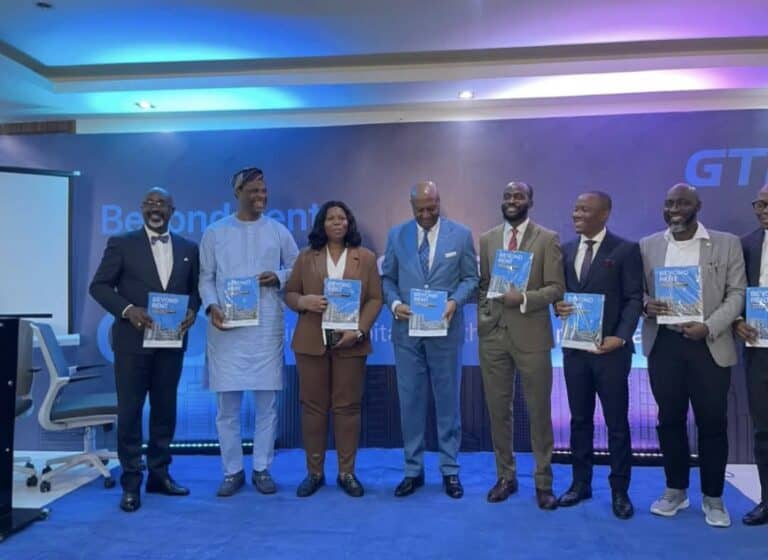
Some dignitaries at the event during the unveiling of GTI’s 86 page research journal, “Beyond Rent: Mapping Lagos’ Housing Led Capital Expansion” on Thursday in Lagos.
Prof. Timothy Nubi, Director, Centre for Housing and Sustainable Development, University of Lagos, has called for stronger political will and innovative financing to address Nigeria’s housing deficit.
Nubi made the call on Thursday at the hybrid “Beyond Rent: A Lagos Housing and Capital Forum” organised by GTI Investment Group.
The forum, with the theme, “Housing, Capital and the Future of Lagos” also featured the unveiling of GTI’s 86 page research journal, “Beyond Rent: Mapping Lagos’ Housing Led Capital Expansion”.
Nubi said Nigeria had identified major housing challenges but had failed to implement solutions consistently.
He said government remained critical because land administration, legislation and regulation were central to housing development.
The university don said the National Housing Fund, introduced in 1991, could have become a major source of long term housing finance if properly managed and digitised.
He also identified pension funds as a major source of potential housing finance, noting that Nigeria’s pension assets had exceeded N31 trillion.
He, however,said inadequate investment instruments, including Real Estate Investment Trusts, had limited access to institutional capital.
Nubi said land acquisition, insecure titles, inadequate infrastructure and limited long term finance were major barriers to housing delivery in Lagos.
He said that Lagos’ population could rise from about 20 million to 40 million within 25 years, making urgent housing investment imperative.
He expressed concern over rising rents and property prices, citing a University of Lagos lecturer who received an allocation for a two bedroom house costing N28 million despite earning less than N250,000 monthly.
“Housing unaffordability is also affecting workers’ productivity, as many live far from their workplaces because they can not afford homes within Lagos.
“Government and private investors should prioritise affordable housing and urban regeneration, particularly the upgrading of slums and underdeveloped areas.
“We do not have a housing crisis, we have a capital architecture problem. Design the system and the city will build itself,” he said.
Meanwhile, real estate experts at the forum identified short term financing, infrastructure deficits, high construction costs and weak purchasing power as major constraints to housing delivery.
Mr Abdulhafis Toriola, Permanent Secretary, Lagos State Ministry of Housing, said government could not finance Lagos’ housing needs alone.
Toriola called for greater private sector participation, supported by land provision, infrastructure, streamlined approvals, public private partnerships and investment incentives.
He said that there was an enabling environment provided through various initiatives, including establishment of the Lagos State Real Estate Regulatory Authority.
Other experts also called for faster land title processing, improved dispute resolution and innovative financing models to enable developers access long term capital.
Mr Kehinde Hassan, Managing Director, GTI Capital Ltd., urged stakeholders to become part of efforts to address the housing challenge.
The forum brought together stakeholders from the real estate, finance and government sectors to examine housing and capital investment opportunities in Lagos.
M.P
Tags: Don housing