

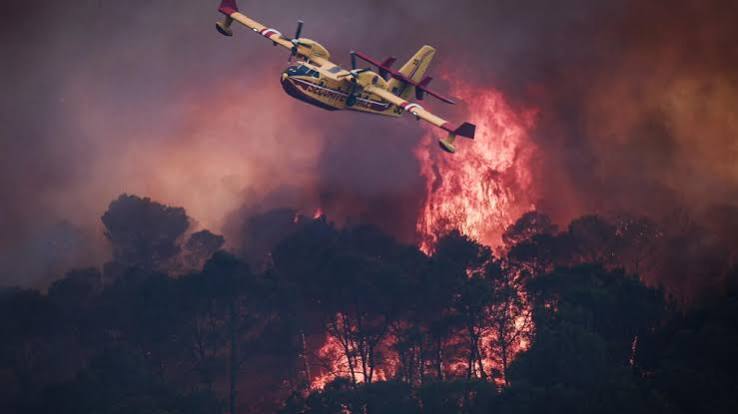
\Massive wildfires fuelled by intense heatwaves and prolonged drought continue to devastate parts of southern and western Europe, forcing nearly 375,000 residents and tourists to flee their homes as firefighters battle dozens of blazes across France, Spain and Italy.
Authorities across the Mediterranean region have declared states of emergency as temperatures soar above 40°C, creating ideal conditions for fast-moving fires. Governments have deployed military personnel, additional firefighting teams and international aerial support to help contain the rapidly spreading infernos.
France has been among the hardest-hit countries, with widespread fires scorching more than 40,000 hectares of pine forest in the Gironde department, including areas around the Cap Ferret Peninsula near Bordeaux. Thick smoke has blanketed coastal resorts around Arcachon, prompting large-scale evacuations by road and sea.
Officials estimate that about 260,000 people have been evacuated across France, with many temporarily sheltered in exhibition centres, sports halls and other emergency facilities. French authorities also confirmed the deaths of two firefighters who were killed while battling the blazes in the Gironde region.
In neighbouring Spain, authorities are struggling to contain several major wildfires burning southwest of Madrid after separate fires merged across areas including Almorox, Villa del Prado, Ávila and Guadalajara. More than 45,000 hectares have reportedly been destroyed in the Madrid region alone.
Prime Minister Pedro Sánchez declared a national emergency as the fires threatened communities on the outskirts of the Spanish capital. More than 116,000 residents have been evacuated after emergency services and Civil Guard officers conducted door-to-door evacuations in affected communities.
“We are facing extremely difficult hours,” Sánchez said. “The Iberian Peninsula is suffering the direct, severe consequences of the global climate emergency, and our emergency services are stretched to their absolute limits.”
The wildfire crisis has also affected Italy and Greece. Italian authorities confirmed that a firefighter died while responding to a blaze in the country’s north, while parts of Greece, including areas near Thessaloniki, continue to battle localised fires and heavy smoke.
In response to the growing emergency, the European Union has activated its Civil Protection Mechanism, dispatching firefighting aircraft, specialist crews and emergency equipment to support affected countries. Water-bombing aircraft from Italy, Spain and Germany have been deployed to assist firefighting operations in France, Portugal and other hotspots.
European Commissioner for Crisis Management Hadja Lahbib warned that Europe is facing one of its most severe wildfire seasons in recent years, citing prolonged drought, an earlier-than-usual start to the fire season and increasingly extreme weather conditions linked to climate change.
Meteorologists have forecast continued high temperatures across much of southern Europe in the coming days, raising fears that the wildfire threat will persist. Emergency authorities have urged residents and tourists in high-risk areas to remain alert, follow evacuation orders promptly and avoid activities that could ignite new fires as firefighters continue efforts to bring the blazes under control.