

Opinion
By Achilleus-Chud Uchegbu
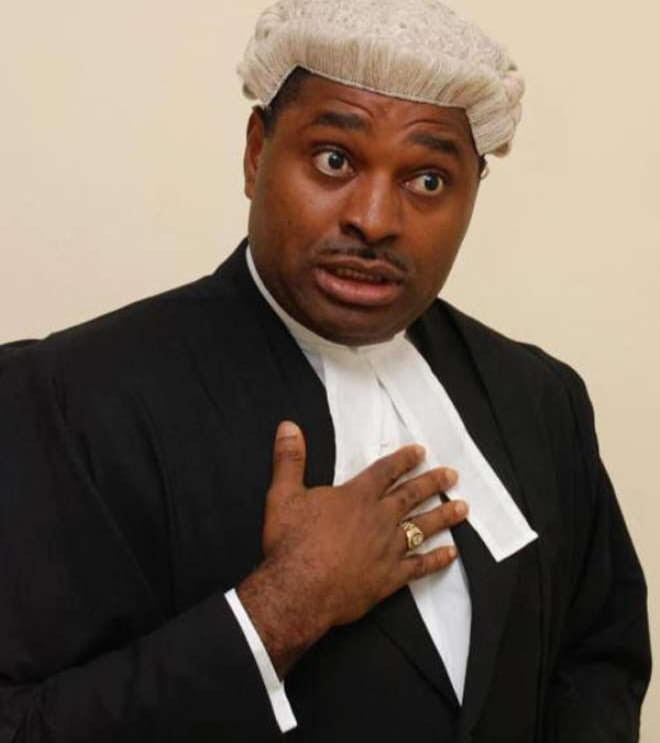
THERE are moments in public life when a man, perhaps convinced of his own invincibility, strips himself bare before the eyes of the nation, not in courage, but in disgrace. Kenneth Okonkwo, once celebrated as the face of Nollywood’s iconic “Living in Bondage,” has gifted Nigeria one such moment. What he has done in recent days is not merely politically irresponsible but morally reprehensible, legally reckless, and psychologically alarming. It demands to be named for exactly what it is.
Okonkwo appeared on Channels Television and alleged that Peter Obi and other Nigeria Democratic Congress (NDC) leaders in the Southeast received bribes during the recent primary elections. He also claimed that an aspirant sent him an “SOS message” exposing alleged fraud in the outcome of the primaries. He went further to declare that anyone voting for Peter Obi is “voting for criminality.” These are not mere political jibes. They are accusations of bribery and criminal conspiracy against a man whose entire public identity is built on a reputation for financial probity. In a country where political reputations are the currency of electoral survival, Okonkwo fired a missile and sat back to watch it detonate in his own hands.
The controversy intensified when the very aspirant Okonkwo cited as his source, Obunike Ohaegbu, appeared on the same television station and publicly denied ever accusing Obi of collecting money from him. “I am telling you that Peter Obi never told me to pay N10 million. I never told Kenneth Okonkwo that Peter Obi, in any way, told me to pay N10 million,” Ohaegbu stated flatly. That single denial should have been the end of it. But for Okonkwo, it was not. Rather than retract with the dignity befitting a man of his self-acclaimed stature, he doubled down, shared WhatsApp screenshots, and insisted that everyone else was wrong except him.
Okonkwo also published a bank transaction receipt of N10 million. He presented it as evidence of extortion. The receipt, however, showed payment made to the NDC’s official account, not to Obi or any individual directly linked to him. A receipt of payment to a political party’s official account, in an era of structured party primaries, is not evidence of personal bribery. It is evidence that a man paid his party fees. That Okonkwo presented this as a smoking gun speaks to either a fundamental misunderstanding of what he was alleging or, more disturbingly, a deliberate attempt to mislead the Nigerian public with documents that, on their face, contradict the very story he is telling. And, it would be very disappointing if, as a lawyer and a member of the Nigerian Bar, Okonkwo does not know what bribery is.
Obi’s legal team has described the allegations as “false, baseless, malicious, reckless, defamatory and wholly unsupported by any fact,” and stressed that they amount to a direct assault on Obi’s integrity and public standing. Obi has demanded a N5 billion retraction and public apology. These are proportionate responses to an attack that could materially damage the electoral prospects of a man seeking the presidency of Africa’s most populous nation. Okonkwo’s response to this legal notice, however, is where his conduct crosses from the merely irresponsible into the genuinely disturbing.
Okonkwo warned that it would be “very unwise” for Obi to sue him, being Obi’s former spokesperson, for defamation. He went further to threaten that such a lawsuit could compel him to divulge confidential information obtained during his time as Obi’s spokesperson. Let that sink in slowly. A man is being sued for making false allegations (defamatory statement). Rather than produce evidence to defend the allegations, he reaches for a different weapon entirely. The weapon is privileged information entrusted to him as a confidante and campaign spokesman. Okonkwo declared: “The lawyers must take responsibility for any information I may have to divulge, which I acquired as a spokesperson, but which by my conscience I have not shared with anyone.”
This is not the language of a man who has been wrongly accused and is fighting back with truth. This is the language of a hostage-taker and a blackmailer. This is extortion dressed in legal drag. Okonkwo is essentially saying: drop the lawsuit, or I will weaponise trust. He is threatening to turn confidential information shared between political allies in the heat of a campaign into instruments of retaliation. He is not threatening to tell the truth. He is threatening to deploy private information as leverage. The distinction matters enormously, and it should terrify anyone who has ever trusted Kenneth Okonkwo with anything, especially Atiku Abubakar, whom he currently claims to speak for, and members of the African Democratic Congress (ADC), who bring him into their meetings.
What is particularly disturbing is that, rather than reassuring the public that he has evidence to support his claims, Okonkwo threatened to reveal confidential information he became privy to while serving as Peter Obi’s spokesman and close political associate. A man of principle, faced with a defamation suit, produces evidence or evidences to back his claim. He does not threaten to ransack the archives of a former friendship. The fact that Okonkwo’s instinct, in the face of legal accountability, is to threaten the disclosure of campaign secrets tells us everything we need to know about the contents of his character. This is why those who deal with him, even outside politics, ought to be careful.
As one commentator observed, Okonkwo may believe he is being clever, and may think that threatening to divulge secrets gives him leverage, or may imagine that Obi will back down. But what Nigerians see is a man who cannot be trusted with a secret, a man who turns confidential conversations into bargaining chips, and a man who confuses revenge with righteousness. The world is seeing a man who could take Atiku or other members of the ADC hostage and blackmail them with the disclosure of confidential information unless a certain bounty is transferred to him.
But there is a clinical reality to this sort of behaviour. The behavioural pattern on display by Okonkwo, made up of the reckless public accusation without verifiable evidence, the refusal to recant when the named source publicly denies the claim, the escalation into threats, and the weaponisation of intimacy, is not the profile of a man engaged in principled whistleblowing. It is the profile of a man in psychological distress and operating without adequate internal regulation. It is impulsive. It is retaliatory. It is the behaviour of someone for whom the ordinary social compacts, including confidentiality, honesty, and proportionality, have ceased to function as constraints. Such a man ought to be feared and avoided.
Nigeria has had enough of public figures who treat others’ reputations as collateral damage in their personal vendettas. We have had enough of men who deploy the trust others placed in them as ammunition. Kenneth Okonkwo, once Andy Okeke in reel life, has now, in real life, given us a character study far darker than anything “Living in Bondage” imagined. Real life is showing us a man who sold his integrity not for ritual money, but for relevance, revenge, and the fleeting thrill of a trending hashtag.
Anyway, the courts will have their say. Obi’s lawyers have a clear brief. But beyond the courtroom, Nigeria must say its own piece. The time for indulging this kind of dangerous recklessness, cloaked in celebrity and legal credentials, is over. Kenneth ‘Andy’ Okonkwo owes Obi a retraction. He owes the Nigerian public an apology. And he owes himself, and urgently too, a period of reclusive introspection, or, if his kinsmen (Umunna) are paying attention, something of a consultative engagement with his _chi_ . That could afford him some structured withdrawal to enable him to re-examine the connection between his mouth and his brain.
But one last line. Obi has been through APGA, PDP, LP, ADP and is now at NDC. Okonkwo has been through PDP, APC, LP and is now at ADC. So why is he inconsolable about Obi’s move to the NDC?
A.I
June 11, 2026
Tags: Achilleus-Chud Uchegbu Kenneth Okonkwo