

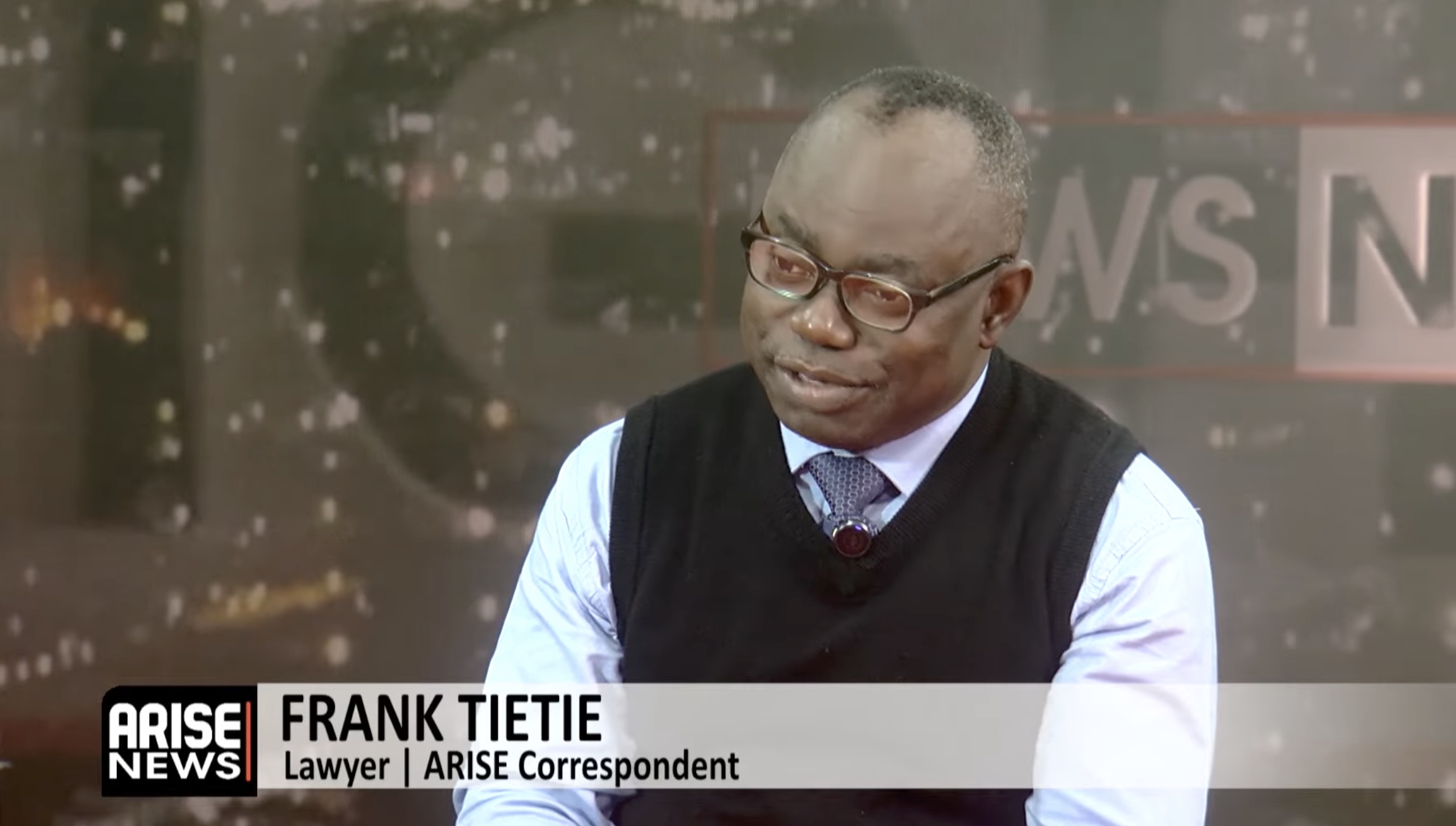
A lawyer and Arise News analyst, Frank Tietie, has faulted Justice Peter Lifu over a controversial ruling on the deregistration of some political parties, including the African Democratic Congress, (AFC), describing it as a serious breach of judicial conduct.
Speaking in an interview with ARISE NEWS on Tuesday, he argued that the decision undermines the established hierarchy of courts and the principle of binding precedent, warning that it poses a threat to the stability of the legal system and democratic order.
“Justice Peter Lifu was actually committing a democratic crime. Clearly, Justice Peter Lifu was on a mission to cause anarchy. He has attempted to destroy the very foundation of the Nigerian legal system, which is the principle of judicial precedent and the hierarchy of courts. That is how the law becomes a very certain instrument that ensures stability in the polity,” he explained.
Reiterating his confidence in the National Judicial Council (NJC) to act on the issue, Tietie said the body operates in a deliberate and predictable manner guided by experienced jurists who understand the long-term consequences of their decisions for the judiciary.
“The NJC operates in a slow, sure movement that is also certain. I can sit here and predict the outcome of what the NJC will do. The NJC is not just a collection of jurists led by the Chief Justice of Nigeria, but you see, they are time-tested men. If they want to have a future, they know what to do,” he said.
Stressing that courts must be cautious not to overreach in matters reserved for INEC’s constitutional discretion, Tietie said the judiciary’s role is to interpret the law without disrupting institutional balance.
“Section 225A emphasizes the independence of INEC. It is wrong for anybody, for that matter, to try to tell INEC what to do—not even the courts can do that. So Justice Lifu went too far. He should have left it at declaring the powers of INEC based on the provisions of Section 225A.
“INEC would not be that foolish to think that after all the investments by politicians, political parties, and the government in this process of electioneering, it would want to create this kind of chaos. The judge actually failed a noble duty in terms of preserving the public interest,” he maintained.
Adding, the lawyer said Justice Lifu’s ruling blurred the line between judicial and executive powers, insisting courts must not interfere with INEC’s independence.
“Nobody should determine, other than INEC—nobody should determine at what point an application for de-registration should be entertained,” he stressed.
Favour Odima
Follow us on: