

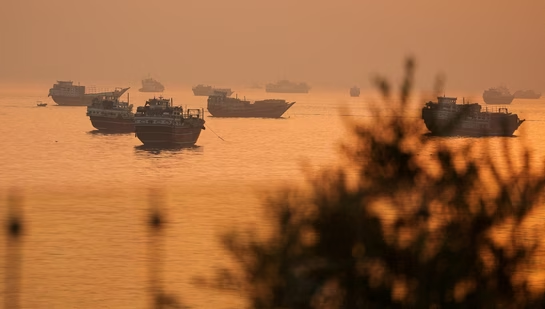
IT SHOULD BE a moment of huge relief for global energy markets. A memorandum of understanding (MoU) between America and Iran announced by Donald Trump on June 14th calls for the lifting of the US Navy’s blockade of Iranian ports and reopening the Strait of Hormuz within 30 days. While Mr Trump and his Iranian counterparts work out the details of the agreement, the world can look forward to recovering 15-20% of its usual supply of oil and liquefied natural gas (LNG). Although the MoU has yet to be formally signed, and the deal could be derailed by skirmishes or disagreements over things such as the fate of Iran’s nuclear programme and fees for Hormuz passage, both sides have strong incentives to end the war. Iran’s devastated economy needs oil exports to resume; Mr Trump wants cheaper petrol ahead of the mid-terms in November. Markets are pricing in relief. Brent crude, the global benchmark, has slid below $80 a barrel, from well over $110 in May.
The traders may be getting ahead of themselves. Wary buyers are not yet placing large orders for Gulf crude, notes Tom Reed of Argus Media, a price-reporting agency. Even if the deal holds, normalisation requires tankers not just to leave the Gulf but to start returning, production to restart and refining to ramp up worldwide—all of which will take time. A nervy summer beckons.