

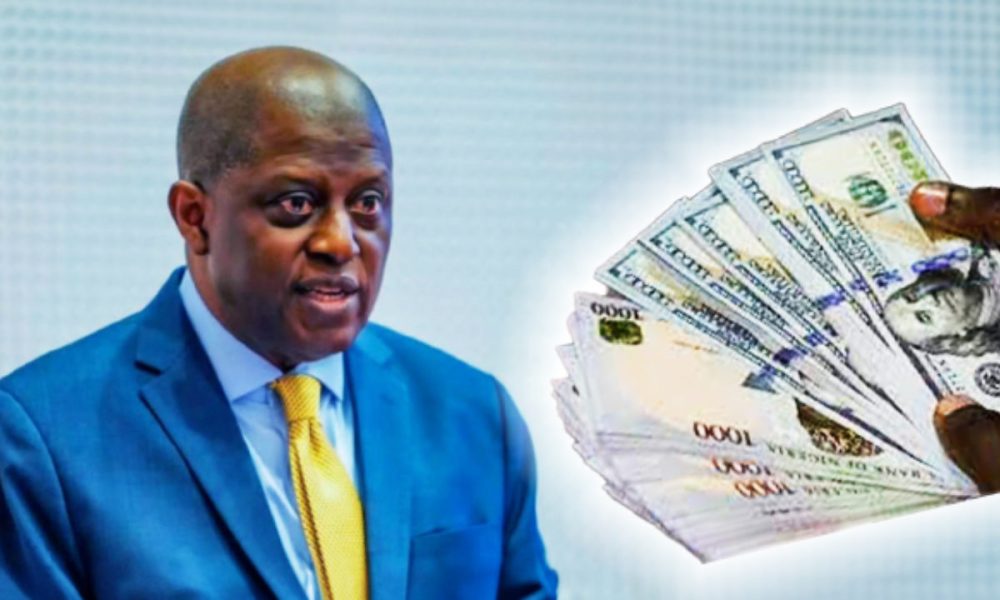
The Central Bank of Nigeria (CBN) has directed all banks, payment service banks, and other financial institutions operating in the country to immediately freeze accounts, assets, and transactions linked to six individuals and four Bureau De Change (BDC) operators recently designated for alleged involvement in terrorism financing.
The directive, contained in a circular dated June 24, 2026, with reference number CMD/FCS/PUB/CIR/002/011, follows an update to the Nigeria Sanctions List that took effect on June 18, 2026. The apex bank stated that the sanctions are binding on all regulated institutions and must be implemented without delay.
According to the CBN, the latest designations were issued by the Nigeria Sanctions Committee (NIGSAC) and reinforced by sanctions imposed by the United States Department of the Treasury’s Office of Foreign Assets Control (OFAC) under Executive Order 13224, as amended.
The six individuals added to the Specially Designated Nationals (SDN) and Blocked Persons List are:
Muktar Muhammad Adam; Babangida Muhammed Adamu Hammajam; Abdullahi Umar Usman; Ibrahim Abubakar; Adamu Chiroma and Yakubu Ogirima Ibrahim.
READ ALSO: Tensions rise over Nigeria’s dual approach as 500 terror suspects face trial, 720 rejoin society
Also designated are four Nigeria-based Bureau De Change operators and money service businesses allegedly owned or controlled by the sanctioned individuals: Generation Currency Bureau De Change Limited; Manhattan Bureau De Change Limited; Nine to Nine Exchange Bureau De Change Limited and Abbal Bako & Sons Bureau De Change Limited
The CBN instructed financial institutions to identify and freeze, without prior notice, all funds, assets, and economic resources belonging to, owned, held, or controlled directly or indirectly by the designated persons and entities.
The order also applies to companies and organisations that are at least 50 per cent owned, individually or collectively, by any of the sanctioned persons.
In addition to freezing assets, regulated institutions have been directed to ensure that no financial services, funds, or economic resources are made available, either directly or indirectly, to the affected individuals and entities.
The CBN outlined a series of immediate compliance measures for financial institutions, including:
Conducting comprehensive screening of existing customers, beneficial owners, and all incoming and outgoing transactions against the updated sanctions list and known aliases.
Freezing all identified assets and economic resources connected to designated individuals and entities.
Blocking any transaction or financial service that could benefit sanctioned parties.
Filing Suspicious Transaction Reports (STRs) with the Nigerian Financial Intelligence Unit (NFIU) immediately after identifying a match.
Strengthening monitoring systems to detect terrorism-financing indicators, including suspicious transaction patterns and the use of money service businesses or BDCs.
Submitting compliance reports to the CBN within 48 hours, detailing affected accounts, amounts frozen, status of matches, and actions taken.
Institutions that find no links to the sanctioned persons are required to submit nil returns to the regulator.
The apex bank further instructed financial institutions to conduct retrospective reviews of past transactions involving the designated individuals and entities to identify any previous dealings that may warrant investigation.
The latest directive comes days after the United States government imposed sanctions on Mukhtar Muhammad, a Lagos-based BDC operator, and several companies allegedly under his control.
In a statement released earlier this week, OFAC accused Muhammad, also known as Mukhtar Adamu Muhammad, of facilitating financial transactions and transferring funds on behalf of the Islamic State West Africa Province (ISWAP), a regional affiliate of the Islamic State terrorist network.
The U.S. agency also sanctioned Nine To Nine Exchange Bureau De Change Limited, Generation Currency Bureau De Change Limited, and Manhattan Bureau De Change Limited, alleging that the companies were used as channels for moving funds linked to the terrorist group.
Terrorism financing has remained a major security concern for Nigerian authorities, who view illicit financial flows as a critical factor sustaining insurgent and extremist activities across parts of the country.
During the administration of former President Muhammadu Buhari, security agencies reportedly arrested 96 suspects and 424 associates in connection with terrorism financing investigations. Authorities also linked more than 100 companies and 33 BDC operators to various terror-financing probes.
The CBN warned that any institution providing false, inaccurate, or misleading information in relation to the sanctions directive would be in breach of the provisions of the Banks and Other Financial Institutions Act (BOFIA) 2020 and could face regulatory penalties.
The regulator stated that compliance would be closely monitored through off-site surveillance, on-site examinations, and supervisory engagements, stressing that the directive takes immediate effect.
The latest sanctions enforcement highlights the CBN’s ongoing efforts to strengthen anti-money laundering (AML) and counter-terrorism financing (CTF) controls within Nigeria’s financial system.
The development also comes against the backdrop of longstanding restrictions imposed on Bureau De Change operators’ access to the official foreign exchange market, reflecting regulatory concerns over compliance deficiencies and abuses within the sector.
Financial analysts say the move reinforces the central bank’s preference for a more tightly regulated, bank-led foreign exchange distribution framework while increasing scrutiny of non-bank financial operators considered vulnerable to illicit financial activities.