

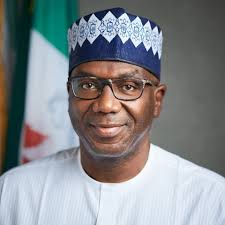
(Kwara State Governor, AbdulRahman-AbdulRazaq. Photo Credit: Instagram)
To strengthen child protection systems and raise awareness of children’s rights in the education sector, the Kwara State Government has approved a statewide Child Rights Training Program for teachers and students in public and private schools.
Idowu Praise, the Administrative Secretary of Sterling Human Resource Development & Logistics Limited, made the announcement in a statement on Wednesday. The PUNCH in Ilorin was given a copy of the statement.
Aina Eunice, acting on behalf of Lawal Olohungbebe, Commissioner for Education and Human Capital Development, formally communicated the approval in a letter dated April 28, 2026.
The permission under reference number DE/SS/GEN/001/VOL. III/10 was given by the Ministry of Education and Human Capital Development in response to a proposal made on April 9, 2026, by Sterling Human Resource Development & Logistics Limited for a structured statewide child rights intervention.
The statement read, “Sterling Human Resource Development & Logistics Limited hereby announces the official approval granted by the Kwara State Ministry of Education and Human Capital Development for the implementation of a comprehensive Child Rights Training Programme targeting students and teachers across the state.
“On behalf of the Honourable Commissioner, Mrs. Aina Bose Eunice duly signed a letter dated April 28, 2026, with reference number DE/SS/GEN/001/VOL. III/10, formally conveying the consent.
According to the organization, the permission shows support from the government for a concerted effort to integrate child rights education into school systems throughout the state’s three senatorial districts.
According to the release, “this milestone follows a detailed proposal submitted on April 9, 2026, seeking authorization to carry out a structured and impact-driven training initiative designed to strengthen child protection systems within the educational sector.”
The organization states that in order to guarantee successful stakeholder participation and engagement, the program will be implemented in stages across a number of public and private schools.
“Selected public and private schools in Kwara State’s three senatorial districts will implement the approved program.
“The training will be conducted in carefully structured phases, allowing for adequate engagement with stakeholders at all levels, to ensure effectiveness, accessibility, and meaningful participation,” the statement stated.
It further stated that the training sessions would concentrate on safeguarding duties, child rights principles, and useful response techniques for dealing with violations of children’s rights in schools.
“Equipping teachers with the knowledge and skills required to identify, prevent, and appropriately respond to child rights violations will be given special attention,” the organization said.
In an effort to make learning settings safer and more inclusive, students are also encouraged to undergo orientation on punishment, accountability, and responsible behavior.
The statement said, “Participants will undergo a structured assessment designed to evaluate their comprehension and retention of the knowledge imparted at the end of the training.”
It stated that successful participants will get commendation certificates, while exceptional participants would be awarded.
The organization described the project as a significant step toward bolstering child protection systems in schools throughout the state and stated that it will fully finance the program.
Additionally, it thanked Lawal Olohungbebe, the Commissioner for Education and Human Capital Development, and Governor AbdulRahman AbdulRazaq for their support.
Nigeria passed the Child Rights Act in 2003 to give children legal protection and to encourage their participation, welfare, and development.
The law guarantees access to education, healthcare, and protection while outlining protections against abuse, exploitation, underage labor, trafficking, and harmful practices.
The law has been domesticated in a number of states, including Kwara State, and initiatives to strengthen child protection mechanisms, particularly in schools and communities, have been ongoing.