

New Delhi:
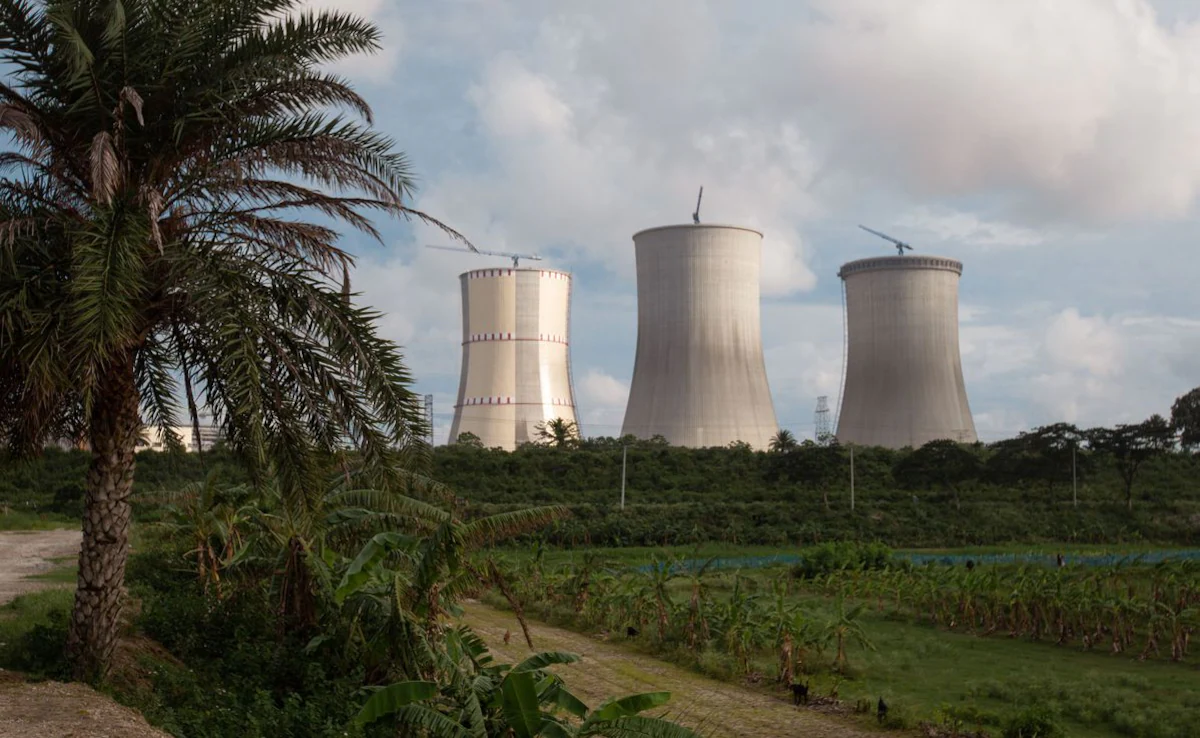
Bangladesh has formally entered the peaceful atomic energy era with the start of nuclear fuel loading at the first unit of the Rooppur Nuclear Power Plant, marking one of the most consequential milestones in the country’s energy history and placing it among a small group of nuclear power-generating nations in South Asia.
With this step, Bangladesh becomes the third country in South Asia, after India and Pakistan, to enter the era of harnessing nuclear energy for electricity generation, signalling a strategic shift as the country looks to secure long-term, low-carbon power for its growing economy.
The fuel loading ceremony at Rooppur, about 160 kilometres from Dhaka, was attended by Rosatom Director General Alexey Likhachev and Bangladesh’s Minister of Science and Technology Fakir Mahbub Anam, who jointly granted symbolic permission to load fresh nuclear fuel into the Unit 1 reactor core. The process marks the transition of Bangladesh’s first nuclear power station from construction to commissioning.
“Today, Bangladesh has joined the club of countries that use the peaceful atom as a reliable source of sustainable development,” Likhachev said. “Rooppur Nuclear Power Plant will definitely become the most important element of the energy system of the country.”
The fuel loading ceremony at Rooppur, about 160 kilometres from Dhaka, was attended by Rosatom Director General Alexey Likhachev and Bangladesh’s Minister of Science and Technology Fakir Mahbub Anam.
Rooppur is equipped with two VVER-1200 reactors, each with a capacity of 1,200 megawatts, giving the plant a combined output of 2,400 megawatts. The VVER-1200 is a Generation III+ pressurised water reactor, incorporating advanced passive and active safety systems and meeting the most stringent international safety requirements.
Notably, Bangladesh’s first nuclear reactors are based on more advanced technology than the reactors India initially acquired from Russia for the Kudankulam Nuclear Power Plant. While Kudankulam Units 1 and 2 use VVER-1000 older generation reactors, Rooppur has leapfrogged directly to the newer VVER-1200 Gen III+ design, reflecting how late entrants to nuclear power are benefiting from technological evolution.
Following fuel loading, the Rooppur reactor will be brought to the minimum controlled level, a stable and carefully managed power state. This will be followed by gradual power escalation and, finally, grid synchronisation, when electricity produced at Rooppur will begin flowing into Bangladesh’s national grid.
“The peaceful utilisation of nuclear energy will play a vital role in ensuring national energy security, accelerating industrialisation and fostering the growth of a technology-driven economy,” Bangladesh’s Science and Technology Minister Fakir Mahbub Anam said. “The Rooppur project stands as a symbol of Bangladesh’s scientific advancement and demonstrates our readiness and capability to harness advanced technologies responsibly and effectively.”
For Bangladesh, where electricity demand is rising rapidly due to industrial growth and urbanisation, nuclear energy offers a stable baseload alternative to fossil fuels and imported energy. Once fully operational, Rooppur is expected to supply a significant share of the country’s total electricity, strengthening energy security while also reducing carbon emissions.
Rosatom, which is both the general contractor and general designer of the Rooppur plant, describes the project as part of its broader strategy of expanding peaceful nuclear cooperation with partner countries. VVER-1200 reactors are already operating in Russia and Belarus, with similar plants under construction in Egypt, Turkey, Hungary and China.
“For Rosatom, this project is another important step in developing peaceful nuclear power and in strengthening friendly relations with our foreign partners,” Likhachev said, adding that the company sees long-term prospects for cooperation with Bangladesh.
The Rooppur project is being executed under a general contract signed on December 25, 2015, and represents one of the largest infrastructure investments in Bangladesh’s history. The Engineering Division of Rosatom, which oversees nuclear construction projects worldwide, ranks first globally in terms of the number of nuclear power plants built simultaneously across different countries.
Beyond power generation, the fuel loading milestone carries wider symbolic weight for Bangladesh. It reflects decades of planning, regulatory preparation, and international oversight, particularly from the International Atomic Energy Agency, to ensure safe and responsible use of nuclear technology.
As Bangladesh prepares for grid-connected nuclear electricity in the coming months, Rooppur stands not just as a power plant, but as a marker of the country’s arrival into a new phase of technological maturity, joining India and Pakistan as South Asia’s peaceful nuclear energy producers, this time with one of the most modern reactor designs in operation anywhere in the region.
India has played a behind-the-scenes but important role in preparing Bangladesh’s human resources for safe nuclear operations at Rooppur by training Bangladeshi engineers and scientists under a trilateral cooperation framework involving India, Bangladesh and Russia. Under an agreement, India drew on its decades of experience operating Russian-designed VVER reactors at the Kudankulam Nuclear Power Plant to act as a technical mentor for Dhaka.
Indian experts from the Department of Atomic Energy and the Global Centre for Nuclear Energy Partnership (GCNEP) have trained Bangladeshi engineers in reactor operations, nuclear safety culture, radiation protection and regulatory practices, helping Bangladesh build operational expertise suited to South Asian conditions and regulatory environments similar to India’s. This capacity-building effort has complemented Russian technical training and has been aimed at ensuring that Rooppur is operated safely, reliably and in line with international norms once it goes on stream.