

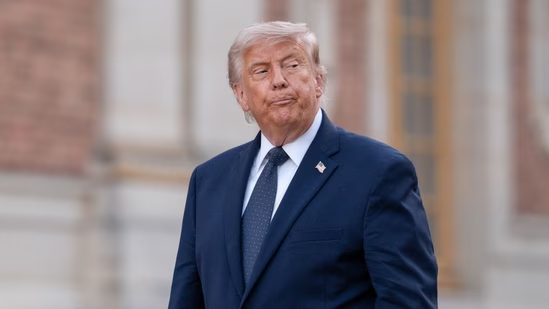
US President Donald Trump signed the 14-point memorandum with Iran during the G7 Summit in France. Ahead of the signing, the US leader made the case for his deal with Tehran during an hour-long press conference.
During the press conference, the US president warned Iran that if talks fail, the US could launch bombs again.
With the deal now signed from both ends, Iran and the US will now engage in a 60-day negotiation period regarding the Iranian nuclear programme and disposal of its enriched uranium. Track LIVE updates here
However, the 14-point MoU signed on Wednesday reflects a much calmer set of war objectives than thoseTrump laid out before February.
What were Trump’s objectives when the war began?
Before and after Trump launched the war against Iran, he stated that some of the goals were to overthrow the regime, end the nuclear programme and destroy its military.
If we are to believe what Trump says, then the Iranian military may have been destroyed during the three-month-long war.
Also Read | What did Trump actually achieve in Iran? A deep dive into his unmet ‘objectives’
But the other objectives seemed to have faded away due to the energy crisis triggered by the US-Israeli war in the region.
Where did he fall short?
For a president who wanted a say in Iran’s next Supreme Leader as well as control of their oil and tolls on the Strait of Hormuz, the deal with Iran skips these points.
With nothing on elections and a change in the Islamic regime, Iran will continue governing that way it has been since 1979.
Furthermore, the 14-point deal calls on Iran to ensure the reopening of the Strait of Hormuz within 30 days and ensure the marine movement goes back to pre-war volume.
However, there’s a point of friction here, which says that Iran must keep the strait open without any restrictions for 60 days. This clause does not rule out the possibility of a toll later on.
The Strait of Hormuz has been a free passage for ships and vessels, especially for Asian countries. However, with war damages now in place, a toll might just be implemented as a way to make up economically.
Additionally, Iran stands to gain financially from the agreement, with the US assuring sanctions relief and the release of frozen assets for Tehran.
And the $300 billion fund to rebuild the Islamic Republic, which Trump denied, is also mentioned in the document signed on Wednesday.
While US Vice President JD Vance has stated that the money will come from Gulf nations and not the US. However, be it money from America or not, billions will still be funnelled into Tehran.
Vance added that the flow of investments from this rebuilding plan will remain in the hands of Gulf nations, and if “Iran starts to behave like a normal country.”
The deal also ends the US naval blockade on Iranian ports, allowing the transport and sale of Iranian oil.
Trump’s deal leaves Washington confused
Before the text was made public, certain aspects of the memorandum of understanding began to leak in the media, and people were not happy about it. Trump’s own Republicans were left in shock after reading the draft texts, while the Democrats targeted the US president for his criticism of the 2015 deal with Obama.
While Trump and Vance denied the authenticity of the texts leaked in the press, the final wording of the deal is very similar, if not the same, to what we saw earlier this week.,