

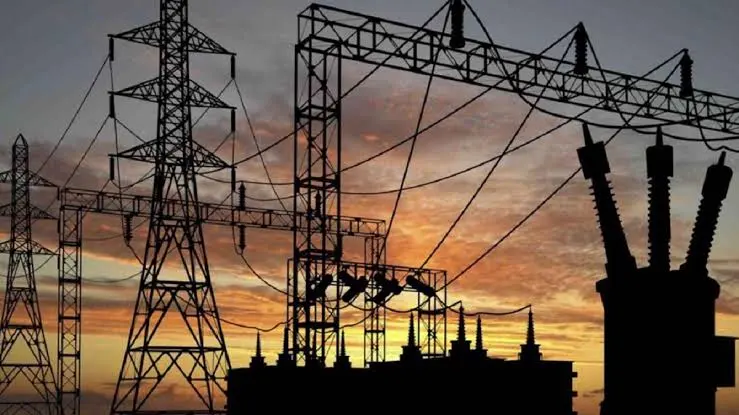
The Federal Government and the Lagos State Government have established joint committees to coordinate measures aimed at achieving more reliable, 24-hour electricity supply across Lagos.
The development followed a Ministerial Implementation Retreat on the Clean Lagos Electricity Market held on Monday at Lagos House, Marina, where officials from the federal and state governments reviewed technical, regulatory and operational challenges affecting electricity supply in the state.
Minister of Power, Joseph Tegbe, said Lagos had been selected as the first pilot under the Federal Government’s proposed 24/7 Energy Zones initiative because of its importance to Nigeria’s economy and electricity demand.
According to the minister, the Lagos axis accounts for between 40 and 50 per cent of Nigeria’s electricity demand, making improvements in the state critical to efforts to strengthen electricity supply in major commercial and industrial centres.
A Joint Technical Working Committee has been constituted to identify and address outstanding technical, regulatory and operational issues affecting electricity supply.
The committee brings together representatives of key institutions, including the Transmission Company of Nigeria, Rural Electrification Agency, Nigerian Electricity Regulatory Commission, Federal Ministry of Power, Lagos Independent System Operator and Lagos State Electricity Regulatory Commission.
A separate Steering Committee will oversee the implementation of the decisions reached by the technical committee. Lagos State Governor Babajide Sanwo-Olu will chair the committee, while Tegbe will serve as co-chairman.
Other members include the Special Adviser to the President on Power, the Permanent Secretary of the Federal Ministry of Power and the Lagos State Commissioner for Energy, Biodun Ogunleye.
The initiative is expected to focus on four key areas identified by the Federal Government: grid stabilisation, market liquidity, grid expansion, and governance and regulatory harmonisation.
The Ministry of Power also said it had engaged electricity distribution companies operating along the Lagos corridor and secured commitments to increase power offtake and provide more stable electricity to consumers.
Sanwo-Olu said Lagos was committed to working with the Federal Government and other stakeholders to develop a more reliable and sustainable electricity market.
The governor has previously said Lagos requires more than 6,000 megawatts of electricity to achieve its goal of a reliable 24-hour supply, underscoring the scale of the infrastructure and generation challenge facing the state.
The Federal Government plans to use Lagos as the first phase of the 24/7 Energy Zones programme before extending the approach to the Abuja-Kaduna-Kano and Enugu-Port Harcourt corridors. The broader initiative is intended to improve electricity supply to homes, businesses and industries in areas with high demand.
Lagos has also been developing a state-level electricity market under the Lagos State Electricity Law 2024, following the decentralisation provisions of Nigeria’s Electricity Act 2023.
However, officials have not announced a specific date for when Lagos residents will begin receiving uninterrupted 24-hour electricity. The immediate challenge will be translating the committee structure and policy commitments into additional generation, stronger transmission and distribution infrastructure, improved market liquidity and measurable improvements in electricity reliability.
For consumers and businesses across Lagos, the success of the initiative will ultimately be judged not by the creation of committees but by whether it delivers longer hours of supply, fewer outages and more predictable electricity service.