

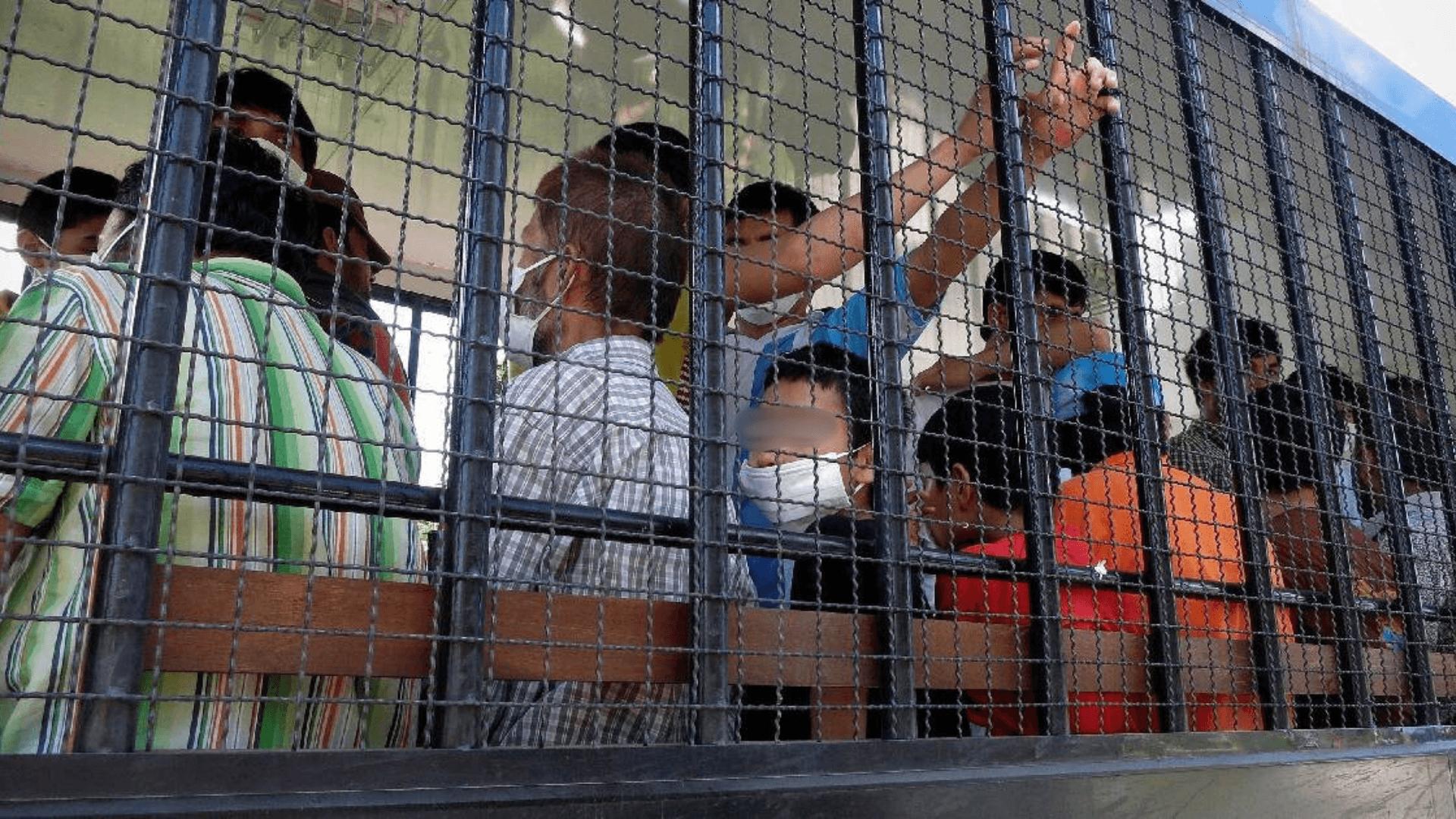
Two Uyghur men who have spent more than a decade in detention in Thailand are appealing against being returned to China, where they fear they could face torture, abuse or imprisonment.
The men, aged 26 and 35, reportedly made the appeal during a meeting with Thailand’s National Human Rights Commission on Wednesday, according to a source familiar with the discussions who spoke on condition of anonymity.
They also expressed their fears in a letter published the previous week, insisting that they were not terrorists and did not want to return to China.
The men were among more than 300 Uyghurs who fled China and were detained by Thai authorities near the Malaysian border in 2014.
Uyghurs are a predominantly Muslim Turkic ethnic group indigenous to China’s Xinjiang region. Beijing has faced years of international criticism over allegations of discrimination, arbitrary detention and human rights abuses against the community. Some Western governments have described China’s treatment of Uyghurs as genocide.
China has repeatedly sought the return of Uyghur detainees, accusing some of involvement in terrorism.
Thailand Says Courts Will Decide Their Fate
The latest appeal has renewed concerns among human rights organisations and some Thai politicians, who fear the two men could be forcibly returned to China.
Thailand’s National Security Council chief, Chaipruak Doungprapat, said China would have to submit a formal extradition request before the authorities could proceed.
He explained that the courts would determine whether the men should be extradited, adding that they would have an opportunity to defend themselves.
According to Doungprapat, a favourable court decision could allow the men to seek resettlement in another country. However, if the court rules against them, they could be extradited under the relevant treaty.
.
advertisement
China’s Foreign Ministry spokesperson, Mao Ning, did not confirm whether Beijing had submitted a formal extradition request.
Mao said cooperation between China and Thailand in addressing cross-border crimes, including illegal immigration, was being conducted in accordance with the laws of both countries and international law.
Human Rights Groups Raise Concerns
The two men were released from prison in October following a royal pardon and transferred to an immigration detention centre in Bangkok.
Human Rights Watch said the transfer appeared to be in preparation for their deportation, warning that they could face serious human rights violations if returned to China.
Amnesty International has also urged Thai authorities to halt any forced return, arguing that the men could face torture, arbitrary detention and enforced disappearance.
The organisations have called for the men to receive legal assistance and for a safe third-country resettlement arrangement to be considered.
Opposition lawmaker Sasinan Thamnithinan of Thailand’s People’s Party said the government had an obligation under domestic and international law not to return individuals to places where they could face torture or inhumane treatment.
She maintained that diplomatic relations should not take priority over human rights protections and the rule of law.
Previous Deportations Raise Fears
The situation has renewed memories of Thailand’s earlier deportations of Uyghur detainees to China.
In 2015, Thailand deported 109 Uyghurs to China despite objections from human rights organisations, triggering international condemnation. Another 173 people, mostly women and children, were allowed to travel to Turkey.
In February 2025, Thailand returned another 40 Uyghur men to China despite appeals from Thai lawmakers and United Nations officials.
The fate of those 40 men remains unclear, with human rights groups and other concerned parties unable to independently establish their whereabouts and well-being.
Thailand’s National Human Rights Commission previously said authorities had failed to provide evidence that the men voluntarily agreed to their return or assurances that they would be safe in China.
Kannavee Suebsang, a former Thai lawmaker who has been involved in efforts to protect the Uyghurs, said attempts to obtain information about the 40 deported men had not received a response.
The latest case has therefore intensified calls for Thailand to ensure that the two men are not returned to a country where they fear persecution.