

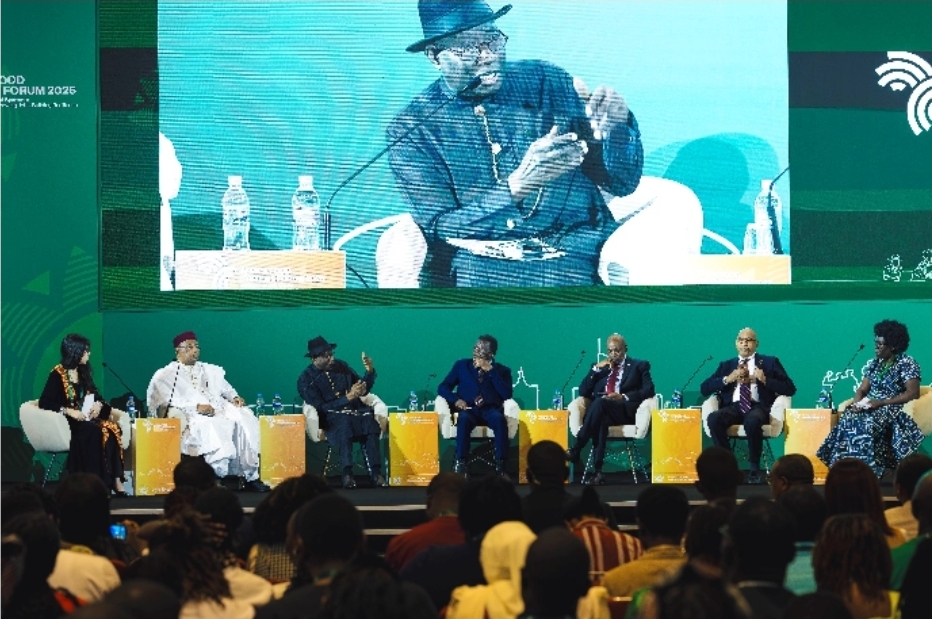
This week in Kigali, at the Africa Food Systems Forum, former African leaders said Africa’s borders are now part of why the continent still struggles to feed itself.
Former Botswana president Mokgweetsi Masisi spoke at the Council of the Wise session. He did not soften the point. Young agribusiness founders in the room talked about the problems traders already know: trucks delayed at borders, too many papers, and markets that stop at the checkpoint. Masisi said the weather does not stop at a border. Rivers do not stop at a ministry. If more than 50 countries keep planning food only inside their own borders, climate shocks will keep hitting them one country at a time.
He asked a hard question. After so many years of independence, should each country still treat land, water and sunshine as private national property, even when the next country is short of food? He said good farm land often stretches across two or three countries. To use it well, governments have to treat it as a shared resource, not a locked gate.
Dr Ibrahim Assane Mayaki, former prime minister of Niger and the African Union’s special envoy on food systems, backed the same argument with a practical warning.
Some African countries are producing more and trading more. But population growth is still faster than many national food plans. When every country plans only for itself, the same work is done twice: two storage plans, two seed rules, two weak transport systems. Grain can sit unused in one area while people across the border pay high prices.
Mayaki said the answer is regional food corridors. That means planning food around production zones and trade routes, not only around national capitals. Corridors create bigger markets. They let countries grow what their land is good at. They also give the African Continental Free Trade Area a real path to work, instead of a trade deal that dies at the border.
This is the direction AGRA is taking. Instead of lending support across many small national projects that do not connect, AGRA is putting investment behind regional food corridors. That work includes aligning food safety rules across borders, making certified seed policy the same across regional blocs, and using blended finance to support roads, storage and processing. The aim is to move food from areas that grow plenty to cities that do not have enough.
The message from Kigali was clear. Africa cannot feed itself if each country stays inside the borders drawn in the 1800s. It has to trade, process and move food across those lines. If it does not, the next drought, conflict or blocked port will do the same damage all over again.