

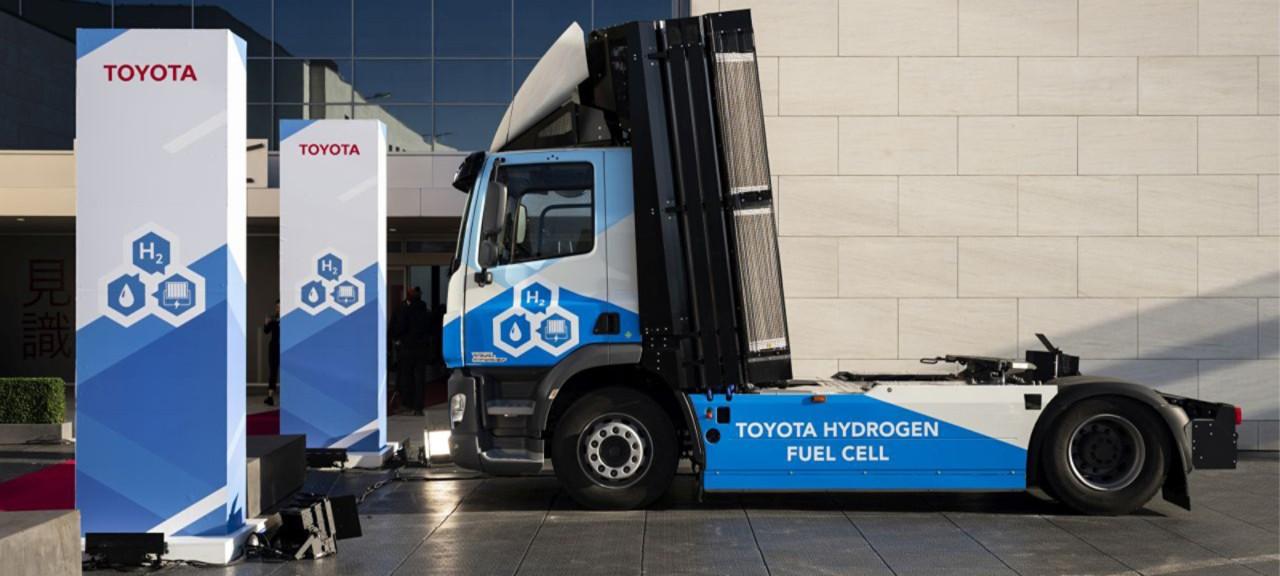
Toyota is considering hydrogen-powered trucks for transporting auto parts as the Japanese automaker looks for alternative energy sources amid rising fuel costs and concerns over energy security.
According to The Japan Times on September 4, 2026, Toyota Vice Chairperson Koji Sato said the company could eventually use hydrogen not only for logistics but also as an energy source in its factories.
Sato also said Toyota could explore the use of hydrogen across suppliers’ logistics networks.
Hydrogen has long been promoted as a potential key fuel in the global transition toward lower-carbon energy. However, its wider adoption has been limited by the high costs and inefficiencies involved in producing, storing and transporting the fuel.
Hydrogen fuel-cell passenger cars have also struggled to gain significant market share in Japan. As a result, attention is increasingly shifting toward commercial vehicles, where hydrogen could have more practical applications.
The Hydrogen Council and McKinsey reported that global committed investment in clean hydrogen had exceeded $110 billion by July 2025, an increase of about $35 billion from the previous year.
Sato’s proposal also aligns with Toyota’s involvement in the Japan Hydrogen Association (JH2A), where the automaker has pledged to use hydrogen for 1% of logistics, fuel and raw-material deliveries.
The initiative had 67 participating companies and organisations as of last month, including financial institutions, trading companies, insurers and local governments, according to the report.
Toyota maintains its multi-pathway strategy
Toyota has consistently promoted hydrogen as one part of a broader “multi-pathway” approach to vehicle technology.
Rather than relying exclusively on battery-electric vehicles, the company has continued to pursue a combination of battery-electric vehicles, hybrids, combustion engines and hydrogen technology.
However, Japan’s experience with hydrogen passenger vehicles highlights the difficulty of achieving mass adoption.
Japan became the first country to introduce a national hydrogen strategy and set ambitious targets for fuel-cell vehicles. The country aimed to have 200,000 fuel-cell vehicles on its roads by 2025 and 800,000 by 2030.
But by March 2025, fewer than 8,300 hydrogen fuel-cell cars were operating on Japanese roads, according to Japan’s Ministry of Economy, Trade and Industry.
For Toyota, the potential use of hydrogen in commercial trucks could therefore represent a more practical route for the technology.
Energy security becomes a bigger concern
Sato said hydrogen is now attracting attention in Japan not only because of its potential to reduce emissions but also because of energy-security concerns following supply disruptions linked to conflict in the Middle East.
He described the emerging shift as moving from “going and getting energy to making it ourselves.”
The idea reflects a broader concern for Japan, which relies heavily on imported energy. Producing more energy domestically or developing alternative energy sources could help reduce the impact of future supply shocks.
Toyota also wants deeper cooperation among automakers
Sato, who also chairs the Japan Automobile Manufacturers Association (JAMA), said Japanese automakers need to rethink how they operate as the global automotive industry undergoes major changes.
Japanese manufacturers are facing growing competition from Chinese carmakers, changing consumer preferences and increasing protectionist policies in major markets.
“We can’t do everything on our own anymore,” Sato said, according to The Japan Times.
Since taking over as JAMA chairman, Sato has pushed for greater standardisation of parts among Japanese automakers, with the aim of reducing production costs and improving efficiency.
Japanese automakers reportedly purchase about 70% of their vehicle parts from other manufacturers. Differences in quality-control and safety standards between companies can increase suppliers’ workload, production time and costs.
Sato argued that reducing the variety of parts could allow suppliers to improve productivity through greater automation.
Japanese automakers face growing pressure
The push for greater cooperation comes as Japanese carmakers continue to lose ground in China, the world’s largest automobile market.
Chinese manufacturers have rapidly expanded their presence with increasingly sophisticated and affordable electric vehicles, creating a major challenge for traditional Japanese brands.
Toyota has benefited from continued demand for gas-electric hybrid vehicles, while other Japanese manufacturers have been forced to reduce operations or explore deeper partnerships.
Honda Motor and Nissan Motor, for example, recently agreed to jointly develop software for next-generation vehicles. Mitsubishi Motors, which already has a strategic relationship with the two companies, is also considering joining the software collaboration.
The developments highlight a wider transformation within the global automobile industry.
For Toyota, hydrogen-powered logistics could become one part of a broader strategy aimed at reducing emissions, strengthening energy security and improving the efficiency of its supply chain.
At the same time, the company’s push for greater cooperation among Japanese automakers suggests that the future of the industry may depend increasingly on collaboration rather than companies attempting to develop every technology independently.
DailyInsightNG reports that Toyota’s consideration of hydrogen-powered trucks comes as the automaker and Japan’s wider automotive industry face simultaneous pressure from energy-security concerns, technological change and increasingly intense competition from Chinese electric-vehicle manufacturers.