

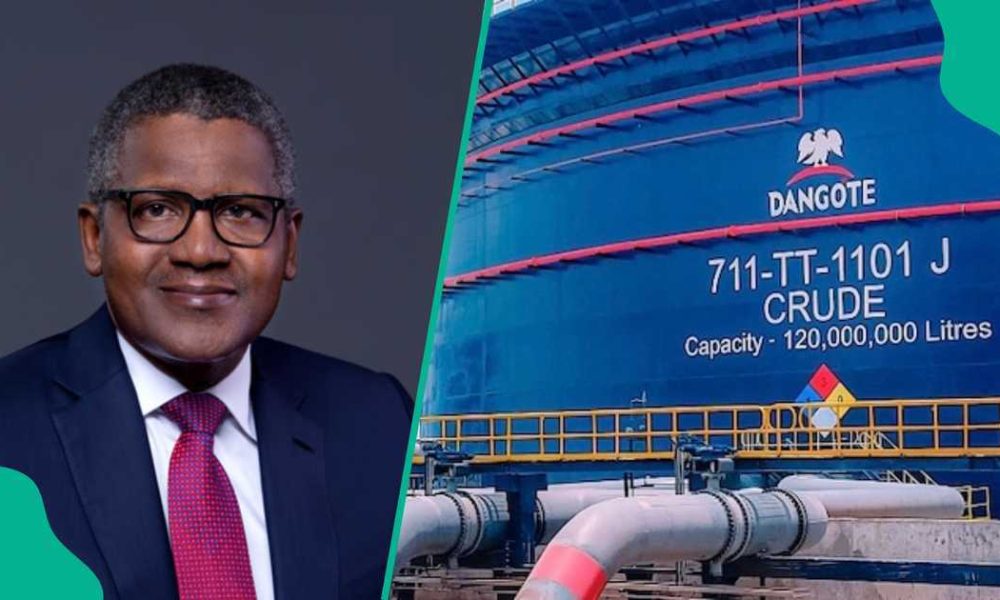
Nigeria’s business environment is heading into another potentially volatile week, with the opening of the much-anticipated Dangote Refinery initial public offering, rising international oil prices, currency movements and global interest-rate expectations likely to dominate conversations among investors, businesses and consumers between September 14 and 20, 2026.
The biggest event on the domestic business calendar is the launch of the Dangote Petroleum Refinery and Petrochemicals IPO on Monday. The offer involves 4.1 billion shares priced at N525 each and is expected to raise about N2.15 trillion if fully subscribed. The offer will remain open until October 13, while the shares are expected to begin trading on the Nigerian Exchange later in November. Reuters describes it as Africa’s largest IPO, with the refinery valued at roughly $47.6 billion.
The IPO is expected to attract considerable attention from retail investors, pension-linked investors, asset managers and other market participants. Investors can subscribe for as few as 10 shares, lowering the entry point to N5,250 and potentially making the transaction one of the most accessible major equity offerings in Nigeria’s recent capital-market history.
Its effect, however, will extend beyond Dangote Refinery itself. The size of the transaction means investors will be watching how much money moves from existing listed equities into the new offer. The Nigerian equities market already recorded a 1.60 per cent decline in the week ended September 11, according to Proshare, as investors positioned themselves ahead of the IPO. This could produce further volatility across major banking, telecommunications, industrial and consumer stocks during the coming week.
The refinery’s financial performance will also form part of the investment debate. Dangote Refinery reported a $1.82 billion net profit in the first half of 2026, compared with a $476 million loss in the previous year, while revenue exceeded $13 billion. The company is currently operating at about 700,000 barrels per day and plans to increase capacity to 1.4 million barrels per day over the next three years.
For businesses outside the capital market, developments in the oil industry could prove just as important. International crude prices entered the week above $100 per barrel as renewed conflict and attacks around key Middle Eastern energy infrastructure raised concerns about global supply. Brent crude rose to about $107.54 per barrel on Monday, while West Texas Intermediate climbed above $102.
Higher crude prices present both opportunities and risks for Nigeria. As an oil-producing country, stronger prices can improve government and foreign-exchange revenues. At the same time, higher global energy prices can put upward pressure on domestic petrol, diesel, transportation and logistics costs, particularly if international disruptions persist.
That pressure is already being felt in Nigeria’s downstream petroleum market. Reports indicate that petrol prices are rising in parts of the country as refiners and marketers respond to higher crude and logistics costs. The trend will be closely watched by manufacturers, transport operators, retailers and households during the week because changes in fuel prices can quickly feed into the cost of moving goods and services.
The Dangote Refinery could nevertheless provide an important buffer for Nigeria because the country is increasingly relying on domestic refining rather than imported petroleum products. The refinery has become a major supplier of petrol and other refined products to the Nigerian market, while its management expects global fuel shortages to remain a concern beyond the current Middle East conflict.
The naira will also remain an important indicator for businesses during the week. Companies that depend heavily on imported raw materials, machinery, finished goods or foreign-currency obligations will continue to monitor movements in the foreign-exchange market closely. A relatively stable naira would provide some relief for importers and manufacturers, while renewed weakness could quickly increase operating costs and complicate pricing decisions.
For exporters and businesses earning foreign currency, however, the picture can be different. A stronger dollar can support naira-denominated revenue when foreign earnings are converted, although the overall effect depends on the company’s import exposure, debt obligations and pricing structure.
Interest rates abroad will also matter to Nigerian markets. Investors globally are preparing for the US Federal Reserve’s policy decision later in the week, with markets currently expecting a rate increase amid renewed inflation concerns linked partly to higher energy prices. The outcome and, perhaps more importantly, the language used by the Federal Reserve about future rate moves could influence the dollar, global bond yields and emerging-market assets.
For Nigeria, movements in global interest rates matter because international investors constantly compare the returns available in emerging markets with those offered by US Treasury securities and other developed-market assets. A more aggressive US monetary-policy outlook could strengthen the dollar and encourage capital to move towards dollar-denominated assets, potentially putting pressure on emerging-market currencies and financial markets.
Nigerian manufacturers are likely to remain particularly sensitive to the combined effect of fuel prices, foreign-exchange costs and financing conditions. Although Nigeria’s economy has continued to expand, the pace of growth remains modest relative to the scale of the country’s structural challenges. The National Bureau of Statistics reported real GDP growth of 3.89 per cent year-on-year in the first quarter of 2026, with manufacturing growing by 3.29 per cent.
The coming week could therefore produce mixed signals for businesses. The Dangote IPO represents a major vote of confidence in Nigeria’s capital market and could deepen the market by bringing a major industrial company to public investors. At the same time, higher energy prices, currency risks and global monetary-policy uncertainty could keep operating costs and financial-market volatility elevated.
Consumer-facing businesses will also have to contend with the effect of energy and transportation costs on household purchasing power. Companies in food, retail, logistics and other sectors may continue to adjust prices or promotional strategies as they balance rising input costs against weak consumer demand.
For investors, the key issue during the week will be distinguishing between short-term market excitement and long-term value. The Dangote IPO is likely to dominate headlines and trading decisions, but investors will still need to consider earnings, valuation, dividend prospects, debt levels, foreign-exchange exposure and the company’s long-term growth prospects before committing capital.
Overall, the week of September 14 to 20 is likely to be defined by three major forces: the historic Dangote Refinery share offer, heightened global oil-market uncertainty and changing expectations about international interest rates. Together, these factors could determine the direction of Nigeria’s equities market, influence the naira and fuel-price outlook, and shape business sentiment heading into the final months of 2026.
For Nigerian businesses, the immediate priority will remain cost control and cash-flow management. For investors, it will be a week to watch liquidity, market rotation and the response to the Dangote IPO. And for consumers, movements in petrol prices, transport costs and the exchange rate could provide the clearest indication of whether the latest global and domestic developments will translate into relief or additional pressure on household finances.