

By Maryanne Awuya
Kenya has confirmed its first-ever case of Ebola after a Kenyan national who had spent the past seven years in the Democratic Republic of Congo (DRC) tested positive for the virus and later died in Nairobi.
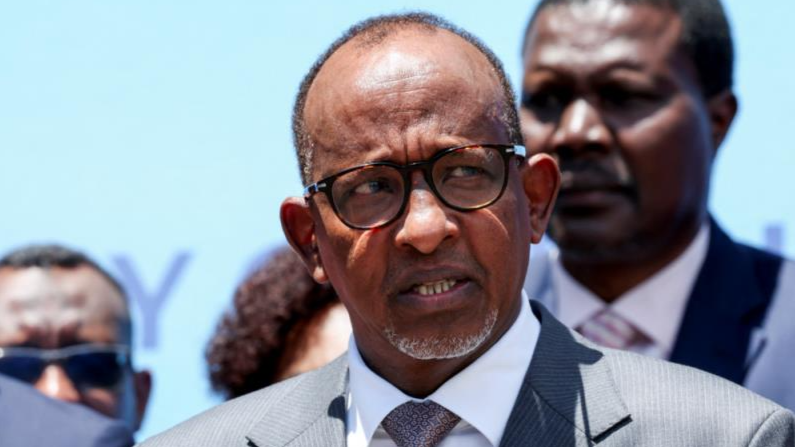
Health Minister Aden Duale said the patient, who had been ill for about a month and received treatment at several hospitals in the DRC, travelled to Kenya after first making his way by road to Kampala, Uganda, where he boarded a flight to Nairobi.
According to Duale, the patient arrived in Nairobi on Saturday and underwent routine public health screening at the airport before a relative took him to a hospital in the city.
PerSecondNews recalls that the Nigeria Centre for Disease Control and Prevention (NCDC) had heightened preparedness for the possible importation of the Bundibugyo strain, placing the country at high risk of Ebola importation and activating enhanced surveillance and epidemic intelligence activities.
The agency also placed its National Emergency Operations Centre on alert, issued case definitions and preparedness guidance to states, and conducted a national Ebola preparedness tabletop exercise to test coordination, early detection, rapid response and healthcare worker protection.
The Federal Government has also strengthened screening and surveillance at points of entry, including airports, while inbound travellers are subjected to enhanced monitoring.
In June 2026 , the government approved the release of ₦21.2 million to each state under the State Outbreak Investigation and Response Fund (S-OIRF) to strengthen disease surveillance, outbreak preparedness and rapid response capacity.
The funds are being disbursed through the NCDC Gateway of the Basic Health Care Provision Fund (BHCPF).
Back in Kenya, the patient was later transferred to an isolation facility established during the COVID-19 pandemic after his condition deteriorated.
Duale said the patient developed fever, chills, severe fatigue and weakness, painful swallowing, muscle pain and bleeding under the skin.
Doctors, suspecting a viral haemorrhagic fever based on his symptoms and travel history, collected samples for testing.
The tests subsequently confirmed that he had the Bundibugyo strain of Ebola, the same strain responsible for the current outbreak in the DRC.
The patient died on Monday, with his burial scheduled for Tuesday under public health safety protocols.
Kenyan health authorities have identified at least 28 contacts, including family members and healthcare workers, while efforts are ongoing to trace 23 other passengers and four crew members who were on the same flight.
Duale has urged Kenyans not to panic, saying health authorities have activated measures to prevent further spread.
He also called on healthcare workers to remain vigilant and maintain strict infection prevention and control measures.
The development comes as the DRC continues to battle what has become its largest recorded Ebola outbreak.
PerSecondNews reports that the World Health Organization (WHO) has recorded 8,463 cases and 4,082 deaths in the current outbreak, although Médecins Sans Frontières (MSF) has warned that the actual toll could be higher because of gaps in surveillance and testing.
The outbreak was first declared in the DRC in May and was later reported in Uganda, where two people died. Uganda was subsequently declared free of Ebola by the WHO in August.
Since then, known cases have remained concentrated in the DRC until Kenya confirmed its first case.
The virus spreads through direct contact with infected bodily fluids, including blood and vomit.
The current outbreak is being driven by the relatively rare Bundibugyo species of Ebola, for which there is currently no approved vaccine or specific treatment.
However, four vaccines are reportedly in development, with human trials for one candidate launched in July.
The outbreak has been particularly difficult to contain in eastern DRC, where decades of conflict have weakened healthcare infrastructure and restricted access to affected communities.
MSF recently warned that the virus was spreading rapidly, with new hotspots emerging in North Kivu province, which borders Ituri, where the virus began.
According to the organisation, the spread in North Kivu has intensified since early September, with the province accounting for nearly 40 per cent of newly confirmed cases nationwide.
The region has been affected by prolonged conflict involving armed groups, ethnic tensions and competition over political power and natural resources, further complicating efforts to contain the outbreak.