

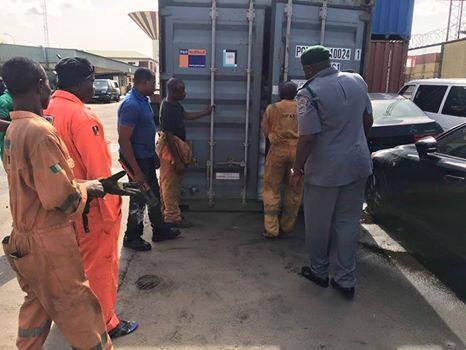
The Nigerian Customs Service has transferred 204 pump-action rifles seized at Tincan Island Port to the National Centre for the Control of Small Arms and Light Weapons for further action.
The weapons were intercepted after Customs officers acting on intelligence examined a container suspected of carrying illegally imported firearm components from Turkey.
The Comptroller-General of Customs, Adewale Adeniyi, disclosed the development on Monday at Tincan Island Port, where the seized items were formally handed over to the NCCSALW.
Adeniyi, represented by the Deputy Comptroller-General in charge of Enforcement, Investigation and Inspection, Timi Bomodi, said the interception was part of intensified efforts to stop the illegal movement of firearms through Nigeria’s ports.
Customs uncovers rifles hidden among declared goods
According to Adeniyi, the seizure followed intelligence that prompted Customs to flag a 20-foot container that arrived from Turkey aboard the vessel MV Algeciras Express on August 16, 2026.
The container was subjected to a full physical examination two days later, during which officers discovered firearm components concealed among declared household and commercial items.
The declared goods included furniture, refrigerators, solar panels and detergent.
Customs subsequently worked with specialists from its Armament Unit and the NCCSALW, operating under the Office of the National Security Adviser, to examine and assemble the recovered components.
The exercise resulted in the identification of 204 MAS 49 ALTER MAGNUM pump-action rifles, alongside additional firearm components.
The seized components included trigger pins, locking lugs, charging handles, pistol grip screws, springs, trigger groups, forward grips, grip latches, pistol grips, barrels and U-plates.
Adeniyi also disclosed that investigators discovered inconsistencies in the shipping documents, particularly information relating to the consignees.
He said the discrepancies were being examined as part of the investigation into the shipment and the people connected to it.
Customs vows to trace arms-smuggling network
The Customs chief described the seizure as evidence of the agency’s increased reliance on intelligence, risk profiling, technology and cooperation with other security agencies to detect prohibited consignments.
He said Customs would not stop at intercepting the physical weapons but would also work to identify the wider network responsible for moving them from their point of origin to their intended destination.
“Our risk management system is very robust and effective; there are no weak links in our architecture,” Adeniyi said.
He warned smugglers and their collaborators that attempts to disguise prohibited items as ordinary commercial goods or use inaccurate documentation were becoming increasingly difficult.
Adeniyi also appealed to members of the trading community and clearing agents with information about attempts to import illegal firearms to assist security agencies.
Tincan Command pledges continued vigilance
The Customs Area Controller at Tincan Island Command, Joe Anani, said the latest seizure demonstrated the command’s determination to prevent dangerous prohibited items from entering the country through the port.
Anani said repeated interceptions should serve as a warning to individuals who consider Nigerian ports an easy route for bringing prohibited goods into the country.
He stressed that the responsibility of the command went beyond revenue collection, noting that securing the ports was also essential to protecting lives and national security.
NCCSALW receives seized weapons
Receiving the items, the South-West Coordinator of the NCCSALW, Abiodun Alamutu, said the interception reflected continued attempts by criminal networks to exploit Nigeria’s ports and borders.
Alamutu commended the Customs Service for preventing the weapons from reaching unauthorised persons and potentially being used in criminal activities.
The handover marks another stage in the authorities’ investigation into the consignment, with Customs indicating that efforts will continue to identify those behind the shipment and determine its intended destination.