

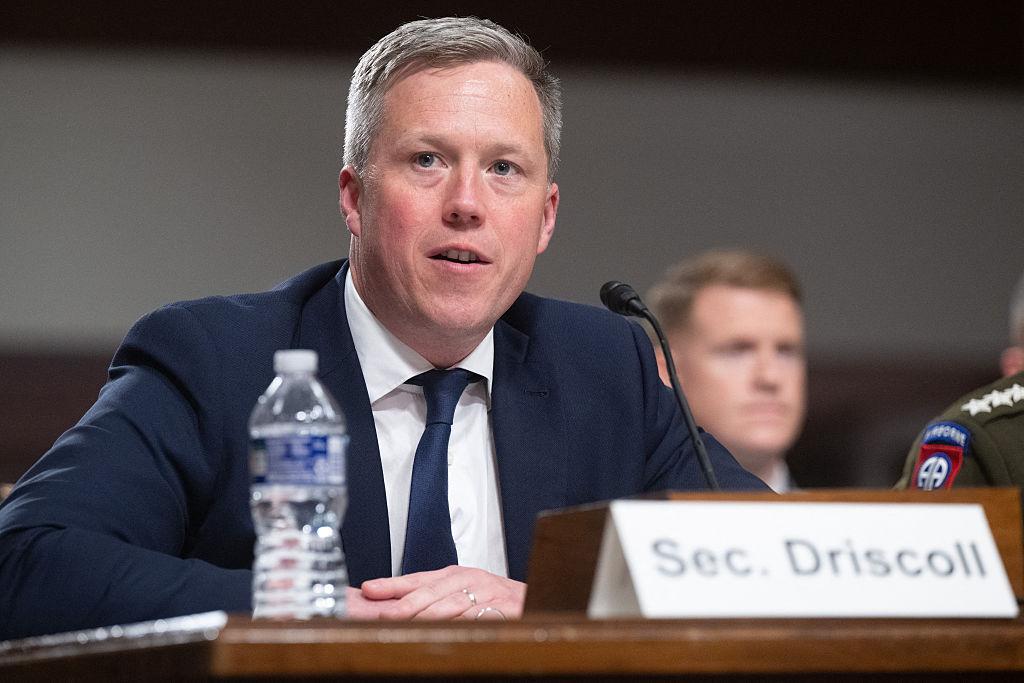
US Army Secretary Dan Driscoll has submitted his resignation, the White House has confirmed, amid reports of tensions between the senior Army official and Defence Secretary Pete Hegseth.
White House Principal Deputy Press Secretary Anna Kelly did not dispute reports of Driscoll’s resignation when asked about a report by The Wall Street Journal.
Instead, Kelly praised Driscoll’s performance in office, saying he had played an effective role in advancing President Donald Trump’s agenda at the Department of the Army.
She highlighted his leadership during US military operations, efforts to strengthen military readiness and combat capability, and involvement in negotiations between Russia and Ukraine.
“The United States Army is more powerful than ever thanks to his work alongside the Commander-in-Chief and Secretary of War,” Kelly said.
If formally accepted, Driscoll’s departure would create another leadership gap within the Army under the Trump administration.
Driscoll, a former Army officer who served in Iraq, had previously made an unsuccessful bid for Congress in 2020 before later working as an adviser to Trump’s 2024 re-election campaign.
He also attended law school with Vice President JD Vance, a relationship that reportedly helped his rise within the administration.
However, reports have pointed to growing disagreements between Driscoll and Hegseth, the US Defence Secretary.
The development has already attracted criticism from Democrats. Senator Jack Reed, the senior Democrat on the Senate Armed Services Committee, blamed Hegseth for Driscoll’s departure and accused the defence secretary of damaging the Department of Defence.
“I do not welcome Secretary Driscoll’s resignation,” Reed said, arguing that it was time for Trump to recognise what he described as the lasting harm Hegseth was causing to the department.
Driscoll’s departure comes at a sensitive period for the US military. With the Iran war entering its seventh month, the resignation could leave the Army without permanent civilian leadership while it also remains without a permanent uniformed chief.
Hegseth dismissed Army Chief of Staff General Randy George in April and has not yet nominated a permanent replacement.
The White House’s confirmation of Driscoll’s resignation now leaves questions over who will take over civilian leadership of the Army and how the change will affect the administration’s military agenda.