

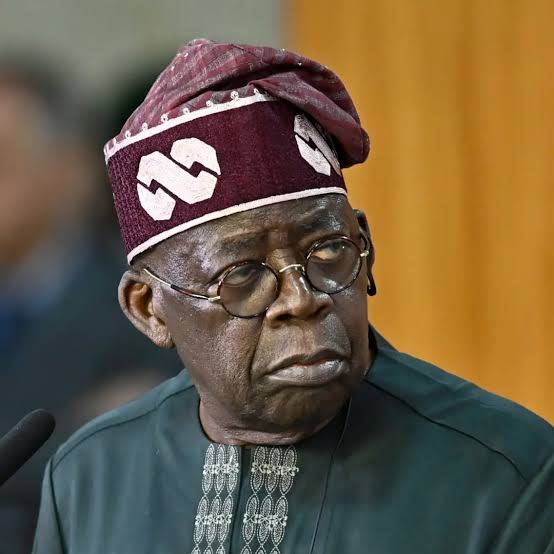
From subsidy removal and foreign-exchange reforms to the 2027 succession battle, President Bola Tinubu’s presidency is increasingly becoming a contest over who controls Nigeria’s political and economic future
Nigeria’s political landscape is entering a potentially decisive phase
President Bola Ahmed Tinubu’s administration has spent more than three years dismantling economic arrangements that had survived successive governments, while simultaneously consolidating political structures ahead of the 2027 general elections.
The result is a collision of interests.
To Tinubu’s supporters, the president is attempting to break with an inefficient system of subsidies, multiple exchange rates, revenue leakages and entrenched economic privileges.
To his critics, however, the reforms have imposed severe costs on households and businesses without delivering sufficiently broad-based relief.
Between those two positions lies a more complicated question: Is the growing opposition to Tinubu primarily a reaction to the hardship caused by his policies, or is it also part of a larger struggle among political and economic interests over Nigeria’s next political direction?
There is evidence for political realignment around Tinubu and against him. But claims of a single, centrally coordinated conspiracy to remove the president require stronger evidence than political rhetoric alone can provide.
THE HISTORICAL SHADOW OF JUNE 12
The argument that Nigeria’s political contest has always involved a struggle between regional power blocs is not new.
One frequently cited historical reference is Professor Omo Omoruyi’s account of the events surrounding the annulment of the June 12, 1993 presidential election, won by Chief Moshood Abiola.
In his writings on the crisis, Omoruyi described conversations involving the military government of General Ibrahim Babangida and influential actors within the Northern establishment.
Those accounts have subsequently been used by commentators to illustrate the depth of Nigeria’s regional competition for political power.
But history requires caution.
The political circumstances of 1993 cannot simply be transplanted into 2026. Nigeria’s political alliances have changed dramatically.
Political parties now cut across regional and religious boundaries, while powerful politicians routinely cooperate with former opponents when their interests converge.
Yet one lesson from the June 12 crisis remains relevant: questions of who controls the Nigerian state have historically involved more than electoral arithmetic.
They have also involved access to economic resources, institutional influence and elite networks.
TINUBU: REFORMER OR POLARISING POLITICIAN?
Tinubu entered the presidency with a reputation as one of Nigeria’s most formidable political strategists.
His political career was built largely outside the traditional military establishment. As governor of Lagos State between 1999 and 2007, he developed a political structure that survived changes in governments and party alignments.
That political network eventually became part of the coalition that produced the All Progressives Congress and helped deliver the presidency to Muhammadu Buhari in 2015.
Tinubu himself eventually became the presidential candidate of the APC and defeated his principal rivals in the 2023 election.
His governing philosophy became clear almost immediately.
On May 29, 2023, he announced the end of the petrol subsidy regime. His administration subsequently moved to unify the foreign-exchange market, overhaul revenue collection, increase government revenues and pursue significant changes in the petroleum sector.
These decisions altered the economic environment almost overnight.
The reforms also created winners and losers.
Government revenue has increased in several areas, but households have faced higher transport and food costs. Businesses have struggled with exchange-rate volatility, while the cost of energy and imported inputs has risen sharply.
This duality is central to understanding the political opposition confronting the administration.
WHO REALLY LOSES WHEN THE OLD SYSTEM CHANGES?
The petroleum subsidy debate provides perhaps the clearest example.
For years, Nigeria spent enormous sums subsidising petrol. Governments defended the policy as necessary to protect consumers, while critics argued that the system encouraged smuggling, arbitrage and corruption.
The removal of the subsidy ended one of the country’s most expensive fiscal arrangements.
But ending a distortion does not automatically eliminate all the interests that developed around it.
Whenever government removes a subsidy, exchange-rate privilege, tax loophole or regulatory advantage, somebody loses an economic benefit.
That creates resistance.
Dr. Cheta Nwanze, Head of Research at SBM Intelligence, has repeatedly emphasised the importance of examining Nigeria’s political economy rather than viewing economic policies in isolation.
The country’s economic problems, he argues, are closely linked to institutional weaknesses and the incentives created by government policy.
The implication is important: resistance to reform does not necessarily prove the existence of an ethnic or regional conspiracy. It may simply reflect the behaviour of individuals and organisations whose economic interests are affected by policy changes.
THE COST OF REFORM IS BECOMING A POLITICAL WEAPON
Tinubu’s biggest vulnerability may therefore not be the existence of an organised conspiracy, but the social cost of his reforms.
Inflation, food prices, transport costs, unemployment concerns and declining household purchasing power have become politically potent issues.
For millions of Nigerians, the question is not whether subsidy removal was economically necessary. It is whether government has done enough to cushion the consequences.
That distinction matters.
Political opponents do not need to invent public anger if genuine hardship already exists.
They only need to organise it.
This is where the opposition’s strategy becomes important.
The 2027 political contest is likely to transform economic dissatisfaction into electoral messaging. Opposition parties, former political allies, civil-society groups and influential individuals can all exploit the same grievances for different reasons.
But these groups should not automatically be treated as one coordinated bloc.
Nigeria’s opposition landscape remains fragmented, and politicians who appear united on one issue may have sharply different ambitions for the presidency.
THE EMERGENCE OF A 2027 COALITION
The most significant political development may therefore be the gradual search for a viable coalition capable of challenging the APC in 2027.
Nigeria’s political history demonstrates that incumbents are rarely defeated by criticism alone.
They are defeated when opposition forces discover a candidate, message and coalition capable of converting dissatisfaction into votes.
The opposition faces a difficult task.
The APC controls the federal government and possesses substantial political machinery. Tinubu also has deep relationships across Nigeria’s political establishment.
But the president’s political strength may simultaneously become his vulnerability.
The more aggressively he consolidates power, the more political actors who fear exclusion may have an incentive to cooperate against him.
This is normal political competition.
The critical question is whether such cooperation remains democratic or degenerates into ethnic mobilisation, misinformation and attempts to destabilise institutions.
WHAT POLITICAL OBSERVERS ARE WATCHING
Political observers identify several factors that could determine whether Tinubu’s political machine remains dominant.
The first is economic performance.
If inflation falls, investment improves, purchasing power begins to recover and Nigerians see tangible benefits from infrastructure and economic reforms, the administration will have a stronger argument for continuity.
If hardship persists, the opposition will have a powerful electoral weapon.
The second is intra-party cohesion.
Political parties frequently become unstable when succession calculations begin. Politicians who supported an incumbent can quickly become opponents when they believe their own ambitions are threatened.
The third is regional balancing.
Tinubu’s political coalition must continue to appeal beyond the South-West. Any perception that the presidency is serving one region or ethnic group at the expense of others could become politically damaging.
The fourth is opposition unity.
Nigeria’s opposition has historically struggled to convert public dissatisfaction into a coherent national electoral alternative.
That could change before 2027—but only if major opposition actors overcome personal ambitions and agree on a common strategy.
AN ECONOMIST’S WARNING: REFORM MUST PRODUCE RESULTS
Economic analysts generally agree on one fundamental point: reforms are not judged by intention but by outcomes.
An administration can be correct that subsidy removal or exchange-rate reform is necessary while still failing to protect vulnerable citizens adequately.
That is why Tinubu’s economic legacy will ultimately depend on whether the painful first phase of his reforms produces sustainable improvements.
A successful reform programme must eventually translate into lower inflation, stronger productive capacity, more jobs, reliable electricity, improved infrastructure and higher real incomes.
Otherwise, political opponents will have a simple argument:
Whatever the reform was intended to achieve, Nigerians are still suffering.
That argument could prove more powerful at the ballot box than allegations of a hidden political conspiracy.
THE BIGGER QUESTION: IS THIS REALLY ABOUT TINUBU?
Perhaps the most important conclusion is that Nigeria’s political struggle should not be reduced to a battle between Tinubu and an imaginary group of unnamed enemies.
There are real political interests competing for power.
There are economic interests affected by reforms.
There are citizens genuinely angry about the cost of living.
There are opposition politicians seeking an electoral opening.
There are also supporters of the administration who genuinely believe that Nigeria can no longer afford to preserve the old economic order.
All of these forces can exist simultaneously.
The danger comes when legitimate political competition is presented exclusively through the language of ethnicity, religion or conspiracy.
Nigeria has paid an enormous price for such politics before.
The June 12 crisis demonstrated the destructive consequences of allowing political competition to become a struggle over regional ownership of the state.
The challenge before Tinubu is therefore larger than surviving opposition.
He must demonstrate that the reforms can deliver measurable benefits to ordinary Nigerians while ensuring that political competition remains open and democratic.
The opposition, for its part, must demonstrate that it has more to offer than simply removing the incumbent.
2027: THE REAL BATTLE
The coming political contest is unlikely to be simply a referendum on Tinubu.
It will be a referendum on competing visions of Nigeria.
One side will argue that the country needed to break decisively from an unsustainable economic model and that the pain of transition must be endured.
The other will argue that the administration moved too quickly, failed to protect citizens adequately and has not delivered enough in return for the sacrifices demanded.
Both arguments will resonate.
Ultimately, Nigerians—not political elites, regional blocs or economic interests—will determine which narrative prevails.
The greatest test for Tinubu is therefore not whether he can defeat his political opponents.
It is whether he can convince ordinary Nigerians that the sacrifices demanded by his government are producing a better future.
And for those seeking to unseat him, the challenge is equally clear: they must prove that they are offering Nigerians something better—not merely offering them a different occupant of Aso Rock.