

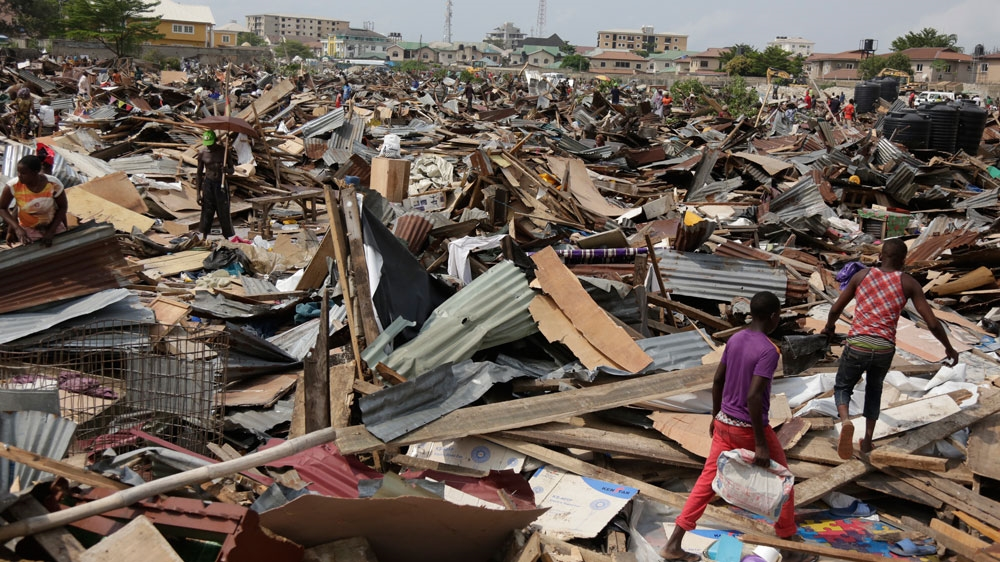
More than 5,000 residents have reportedly been displaced following the demolition of several houses by the Lagos State Government in the Ikola area of Agbado-Oke Odo, Alimosho Local Government Area, after a violent clash between Hausa and Yoruba communities.
The demolition exercise, which affected residential buildings in the troubled area, has left scores of families without shelter, with residents counting the cost of the communal violence and the government’s subsequent intervention.
The development followed tensions between members of the Hausa and Yoruba communities in the area, which reportedly escalated into a violent confrontation.
The exact circumstances that triggered the clash were not immediately clear, but the violence reportedly created tension in the community and raised concerns over the safety of residents and businesses in the area.
Following the incident, authorities moved to restore calm and prevent a recurrence of the violence. The government’s demolition of affected structures has, however, generated fresh concerns among displaced residents, who are now seeking assistance and clarification over their next steps.
Residents affected by the exercise said the demolitions had compounded the hardship caused by the communal crisis, leaving families struggling to find alternative accommodation.
Some residents reportedly lost homes and belongings during the exercise, while others have been forced to relocate to neighbouring communities.
The situation has also raised questions about the criteria used by the authorities in identifying structures for demolition and whether adequate notice or alternative arrangements were provided to affected occupants.
READ ALSO; 2023: Why Hausa community in Lagos must vote for Tinubu – Shettima
Community stakeholders are expected to intensify efforts to restore peaceful relations between the Hausa and Yoruba communities, while calls have grown for authorities to investigate the immediate and underlying causes of the clash.
Beyond restoring security, residents and community leaders are likely to seek measures that would prevent further violence, protect livelihoods and provide support for families displaced by the demolitions.
The incident underscores the challenges of managing communal tensions in densely populated parts of Lagos, where different ethnic groups live and conduct businesses side by side.
As the affected communities begin to recover, stakeholders are expected to call for dialogue, stronger community policing and early intervention mechanisms to prevent disputes from escalating into violence and further displacement.