

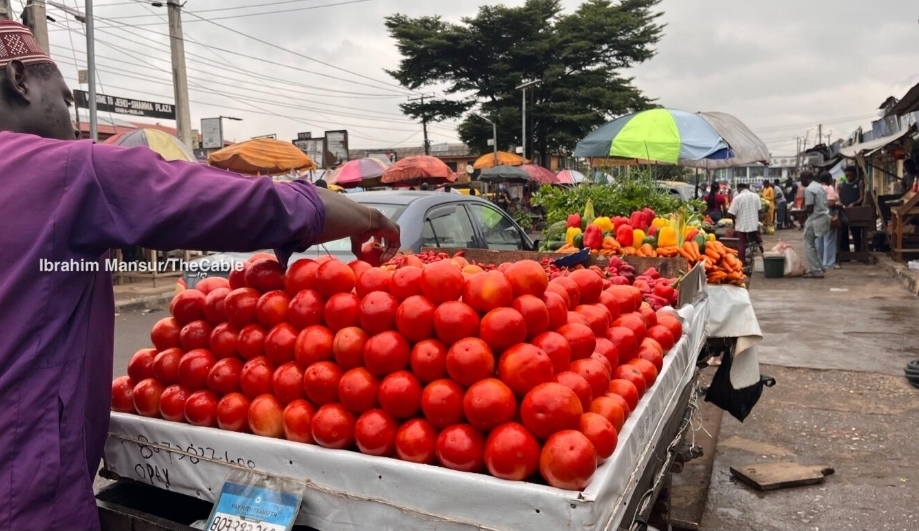
The federal government says it is prioritising support for farmers to boost domestic food production and improve distribution as the harvest period approaches.
Kashim Shettima, Vice-President, spoke on Friday while leading the seventh meeting of the presidential food systems coordinating unit (PFSCU) steering committee at the state house in Abuja.
In a statement issued by the PFSCU, the committee said discussions focused on supporting farmers, improving the movement of food from producing areas to consumers.
The conversation also covered strengthening strategic reserves and directing government interventions to areas where they would have the greatest impact.
Speaking at the meeting, Shettima said the government must strengthen Nigeria’s capacity to produce more of its own food while ensuring that households have access to food at affordable prices.
The vice-president also called for stronger coordination among federal and state governments, the private sector, and other relevant institutions to translate the administration’s food security objectives into measurable results.
“Under President Tinubu’s leadership, the government must continue to strengthen Nigeria’s capacity to produce more of its own food while ensuring that Nigerian families have access to food at affordable prices,” Shettima was quoted as saying.
“He stressed the importance of coordinated action across Federal and State Governments, the private sector and relevant institutions to translate that vision into measurable results.”
The committee also examined the role of transportation, logistics, levies, and market access in determining the final cost of food, with members stressing the need to improve the movement of agricultural produce between producing and consuming areas.
In his remarks, Marian Moon, executive secretary of the PFSCU, said the government needs better evidence to identify emerging pressures and respond before they worsen.
“Our focus is to ensure that the Government has the evidence to act early and precisely, supporting farmers, improving the movement of food, strengthening preparedness and directing interventions to where they can make the greatest difference,” Moon said.
On his part, Umar Namadi, governor of Jigawa, said agricultural policies should continue to prioritise farmers through improved irrigation, access to inputs, financing, production support, and markets.
According to the statement, the committee also considered the relationship between domestic production and trade policy, noting that trade measures could complement local production where there are verified supply gaps.
However, the PFSCU said such measures would be considered alongside strategic reserves, prevailing market conditions and the need to maintain incentives for Nigerian farmers and agribusinesses.
The committee further reviewed the resilience of the food system, including the use of data and intelligence to identify emerging production, market, nutrition, and security pressures.
The PFSCU said “interventions would increasingly be targeted at states, markets and communities where available evidence indicates the greatest need”.
The meeting also reviewed progress on major food-system initiatives, including the $500 million Nigeria sustainable agricultural value-chains for growth programme (AGROW), the national agribusiness policy mechanism, the national agro-productivity system, and the national food and nutrition crisis preparedness framework.
The PFSCU said the design and coordination phase of AGROW has been completed and transitioned to the federal ministry of agriculture and food security and participating states.
The unit said the initiatives would help the government understand farmers’ production plans, monitor in-season output, anticipate risks, and improve coordination between federal and state interventions.