

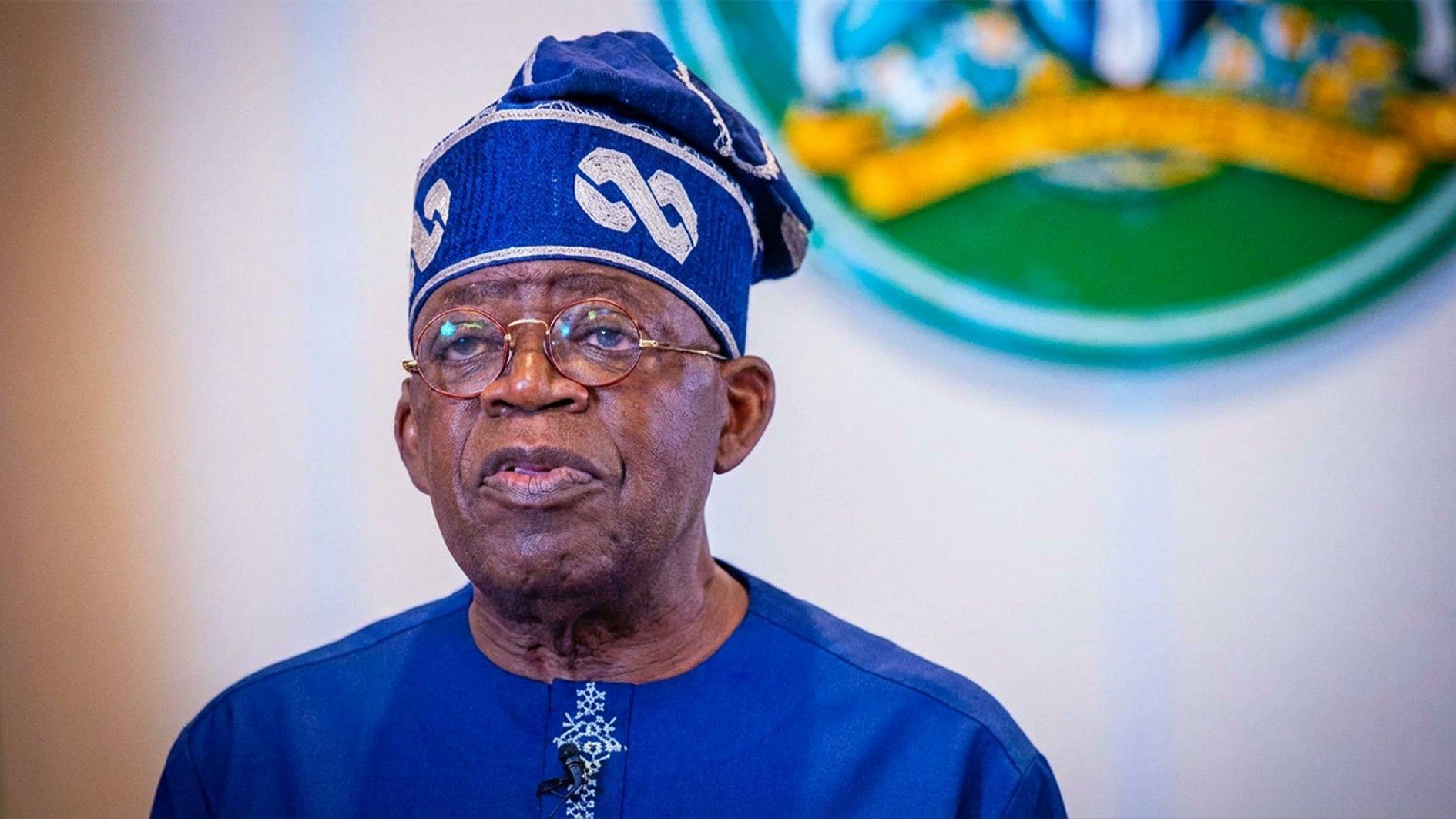
A lawyer representing President Bola Tinubu in a United States legal case has argued that the President would have faced indictment and prosecution if American authorities had sufficient evidence connecting him to drug trafficking.
Senior Advocate of Nigeria, Wole Afolabi, made the claim while appearing on Channels Television’s Sunday Politics amid a legal dispute over the release of records concerning Tinubu held by US law enforcement agencies.
The records are being sought by American businessman and transparency activist Aaron Greenspan through a Freedom of Information Act lawsuit involving agencies including the Department of Justice, Federal Bureau of Investigation and Drug Enforcement Administration.
Afolabi said the US authorities had already released thousands of pages of documents but were seeking to keep some information redacted. He maintained that Tinubu’s legal team was challenging further disclosure because US law provides grounds for protecting certain information, rather than because the President was attempting to conceal incriminating evidence.
According to the lawyer, the redacted material relates largely to the methods used by investigators, confidential sources and the identities or safety of law enforcement personnel.
Afolabi said it would be inappropriate for Tinubu’s lawyers not to use legal protections available to their client under American law.
He also rejected the suggestion that US authorities were withholding the records specifically to shield Tinubu.
‘Evidence would have led to prosecution’
A major focus of the interview was the long-running controversy over allegations concerning Tinubu and events dating back to the 1990s.
Afolabi argued that US authorities treat drug trafficking as a serious offence and questioned why Tinubu would have been able to travel in and out of the country without being arrested, indicted or prosecuted if sufficient evidence existed against him.
He cited cases involving foreign political figures and Nigerians who had faced US action over drug-related offences to support his argument.
“So the question that should be asked reasonably is this: what’s so special about President Bola Ahmed Tinubu that he would be coming into America and leaving America without being arrested, detained or interviewed for anything?” he asked.
The lawyer maintained that the absence of an indictment was significant and stressed that the presumption of innocence remained applicable.
When asked whether he was asserting that Tinubu had never taken drugs, possessed heroin or participated in drug trafficking, Afolabi said he was guided by what he described as the available evidence.
Dispute over $460,000 forfeiture
The interview also revisited the $460,000 forfeited to US authorities in the 1990s in a civil forfeiture proceeding linked to Tinubu.
Afolabi argued that the forfeiture should not be interpreted as a criminal conviction or proof that Tinubu was criminally culpable.
He said a finding of criminal responsibility would have resulted in an indictment.
However, Afolabi declined to disclose his client’s account of the circumstances surrounding the forfeiture, citing attorney-client privilege.
He said lawyers in the US are bound by strict confidentiality obligations and could face serious professional consequences for revealing information supplied to them privately by a client.
Why are some records being withheld?
Afolabi said the legal challenge does not seek to prevent the release of all records relating to Tinubu.
Rather, he said the dispute concerns information the US government believes should remain protected under applicable exemptions to the Freedom of Information Act.
He pointed to government filings which, according to him, raised concerns about exposing investigative techniques and confidential sources.
The lawyer also said law enforcement officers could become vulnerable if information identifying them or their methods was released publicly.
The case will therefore require the court to determine which information can legally be disclosed and which material can remain protected.
‘Anyone can be investigated’
Asked whether Tinubu had previously been investigated by the FBI or DEA, Afolabi declined to provide a direct yes-or-no answer.
Instead, he argued that being the subject of an investigation does not automatically establish that an individual committed a crime.
“Anyone can be a subject of investigation. That’s just how it goes. I mean, there’s a presumption of innocence,” he said.
He referenced historical FBI investigations involving prominent Americans to illustrate his point, arguing that government files can contain information about people who were never ultimately charged with offences.
Lawyer defends Tinubu’s privacy rights
Afolabi also argued that Tinubu retains privacy rights despite being Nigeria’s President.
He compared the case with instances in which US President Donald Trump sought to restrict access to some of his educational records by relying on protections under US law.
Afolabi’s position is that holding public office does not automatically remove an individual’s right to challenge the disclosure of protected personal information.
“Everybody takes advantage of it. Everybody. If the law offers you protection, there’s a reason why the law is there,” he said.
2027 election
The lawyer dismissed suggestions that the dispute over Tinubu’s US records would determine the outcome of Nigeria’s 2027 presidential election.
Afolabi argued that voters would ultimately judge the President on his performance, policies, promises and campaign rather than solely on documents being contested in a US court.
“At the end of the day, the election will not be decided on what document exists where. At the end of the day, it’s going to be decided by promises made, promises kept,” he said.
The controversy, however, continues to attract attention from opposition figures and groups demanding greater disclosure of records concerning Tinubu.
The ongoing US case concerns access to government documents under the Freedom of Information Act. The existence of the case or the withholding of records does not, by itself, establish that Tinubu committed drug trafficking or any other criminal offence.
DailyInsightNG reports that the final decision on which disputed records can be released remains with the US federal court handling the case.