

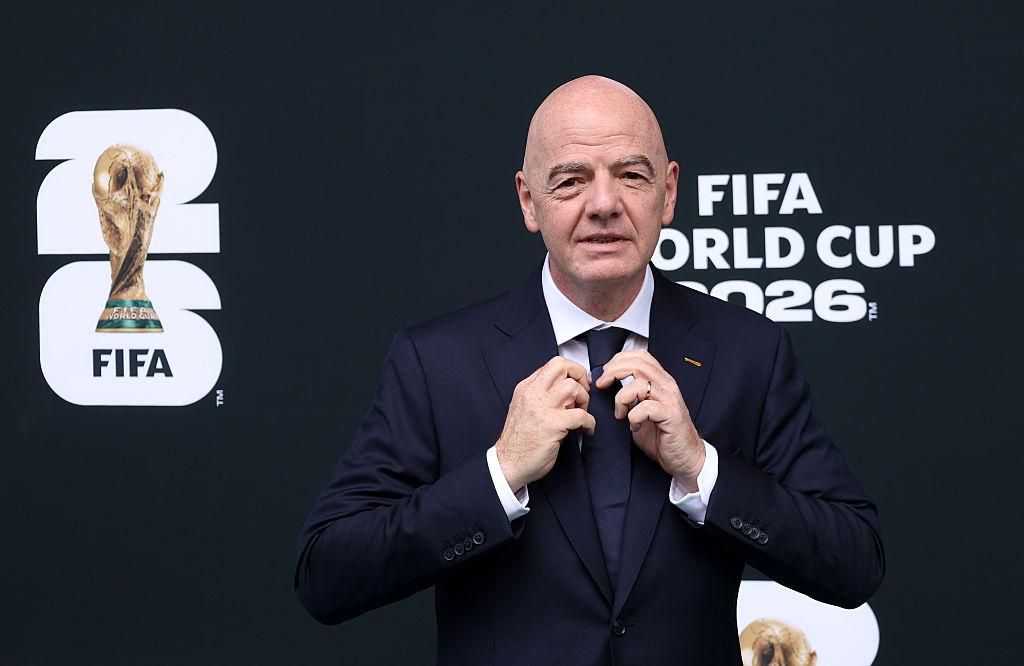
FIFA has officially abandoned its proposed private investment plan for the FIFA World Cup after facing intense opposition from football governing bodies, political leaders and stakeholders across the globe.
The proposal, championed by FIFA President Gianni Infantino, would have allowed outside investors to acquire minority stakes in a newly created commercial structure linked to the World Cup. The plan immediately sparked concerns over the future ownership and governance of football’s biggest tournament.
Below is a timeline of how the proposal unravelled within days.
Tuesday: Proposal becomes public
The controversy began after reports emerged that FIFA planned to open parts of its World Cup commercial business to private investors.
In response, European football governing body UEFA strongly rejected the proposal, insisting that football’s biggest competition was not an asset to be sold.
FIFA later clarified that it intended to retain majority control of the proposed FIFA Forward Enterprise while seeking about $4.2 billion from selected long-term investors through minority, non-controlling stakes.
The proposal also drew criticism from British political figures, including Andy Burnham, who argued that the World Cup belongs to football supporters rather than commercial investors.
Wednesday: Opposition spreads globally
Resistance quickly expanded beyond Europe.
CONCACAF, which represents North and Central America and the Caribbean, expressed disappointment that member associations had not been consulted before details of the proposal became public.
The European Union also voiced opposition, while the Asian Football Confederation (AFC) criticised FIFA for failing to properly engage stakeholders before unveiling the plan.
Reports also suggested FIFA had written to member associations, proposing financial incentives for supporting the investment structure, although the organisation maintained the initiative would ultimately benefit football worldwide.
Infantino defended the proposal, saying the additional investment could significantly improve football development across different countries.
Thursday: Boycott threat escalates crisis
The pressure intensified after UEFA announced it was prepared to boycott FIFA competitions if the proposal moved forward.
The European football body argued that the integrity of the sport should not be compromised through commercial investment structures.
CONCACAF’s member associations also unanimously rejected the proposal, dealing another major setback to FIFA’s efforts.
Friday: Internal divisions emerge
Despite mounting criticism, FIFA insisted it was not attempting to sell football and pledged to continue consulting stakeholders.
However, the organisation suffered a significant internal blow when Gianni Infantino’s Special Adviser, Carlos Cordeiro, resigned.
In his resignation statement, Cordeiro distanced himself from the proposal, describing it as harmful to FIFA member associations, football and the sport’s long-term future.
Further criticism followed from the AFC, while South America’s governing body, CONMEBOL, requested additional information instead of publicly backing the proposal.
Saturday: FIFA withdraws proposal
Facing growing resistance from confederations, football officials and political leaders, FIFA formally abandoned the initiative.
In a statement, Infantino said the organisation’s objective had always been to strengthen and unite football.
He confirmed that the proposed investment structure would no longer proceed.
The withdrawal represents one of the strongest coordinated pushbacks against a major FIFA commercial proposal in recent years.
The episode also highlights the influence of football confederations and national associations in shaping decisions that affect the governance and commercial future of the global game.
Although the proposal has now been shelved, the debate over football’s commercial direction is expected to continue as FIFA explores new ways to generate revenue for the sport.