
Sheikh Hasina must be allowed to return, reconciliation is key for Bangladesh: Former envoy Veena Sikri

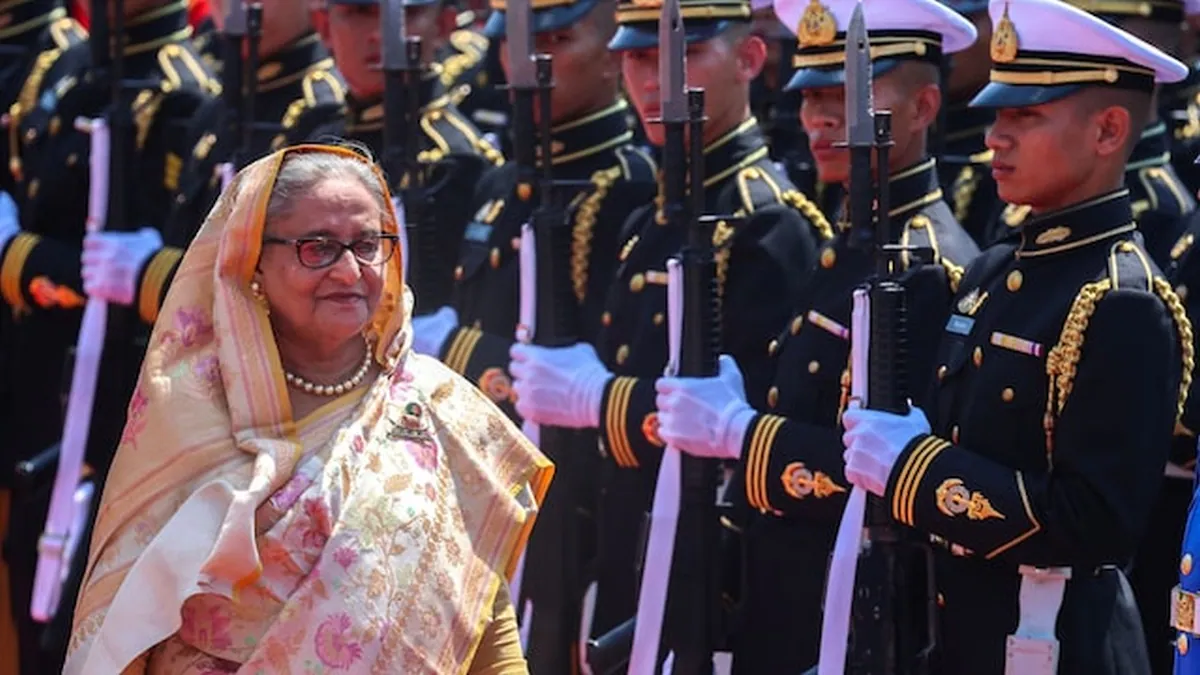
Speaking to CNBC-TV18 after Hasina announced plans to return to Bangladesh in December, Sikri said restoring democratic institutions and ensuring a fair legal process should be Bangladesh’s immediate priorities. She also said India could play a constructive role in encouraging dialogue among all political stakeholders.
“I think it is the right decision for her to go back,” Sikri said. “This is the time for reconciliation.”
Sikri said Hasina should be allowed to challenge the death sentence handed down by Bangladesh’s International Crimes Tribunal and receive a fair hearing.
“She must be allowed to appeal the death sentence that has been given to her. She must be allowed to be heard,” she said, adding that the judiciary should ultimately decide the case.
Calling for India to facilitate dialogue, Sikri said New Delhi could help ensure that Hasina’s return does not deepen political divisions.
“I think the Government of India can play a major role in bringing all the parties together and saying, let her go back, let her be heard in a court of law,” she said.
According to Sikri, Bangladesh’s political environment has deteriorated, with restrictions on political opposition, media freedom and democratic institutions. She also criticised the decision to bar the Awami League from political activity, arguing that political parties should be judged by voters rather than executive action.
“The political activities of the Awami League cannot be banned by executive order in a democracy. If a person doesn’t like a particular party, they don’t vote for it,” she said.
Sikri also argued that political reconciliation would be essential for Bangladesh’s economic recovery, saying prolonged uncertainty had weakened investment, slowed private sector activity, fuelled inflation and increased unemployment. She noted that Bangladesh had sustained annual economic growth of 6% to 7% for more than a decade and was preparing to graduate from least developed country status before the recent political turmoil.
Hasina, who has been living in India since fleeing Dhaka on August 5, 2024, following mass protests that toppled her government, announced during a virtual media interaction from Delhi that she intends to return despite the possibility of being arrested.
“I know I may be detained, but fear cannot decide my duty. I want to return because Bangladesh deserves democracy,” Hasina said.
Hasina’s planned return comes two years after nationwide protests, which began over the reinstatement of a 30% reservation quota in government jobs for descendants of 1971 Liberation War veterans, escalated into broader anti-government demonstrations following a security crackdown.
Hasina has denied responsibility for the violence and has alleged that organised groups transformed the protests into a violent political movement. Dhaka’s International Crimes Tribunal later sentenced Hasina and her son, Sajib Wajed, to death over the crackdown. According to the United Nations, around 1,400 people were killed during the unrest.
India’s Ministry of External Affairs distanced itself from the event, stating that it was organised by a private media organisation and that the Government of India did not endorse the views expressed during the forum.