
Mustafa Chike-Obi: Eko Atlantic could surpass Dangote refinery’s contribution to Nigeria’s GDP

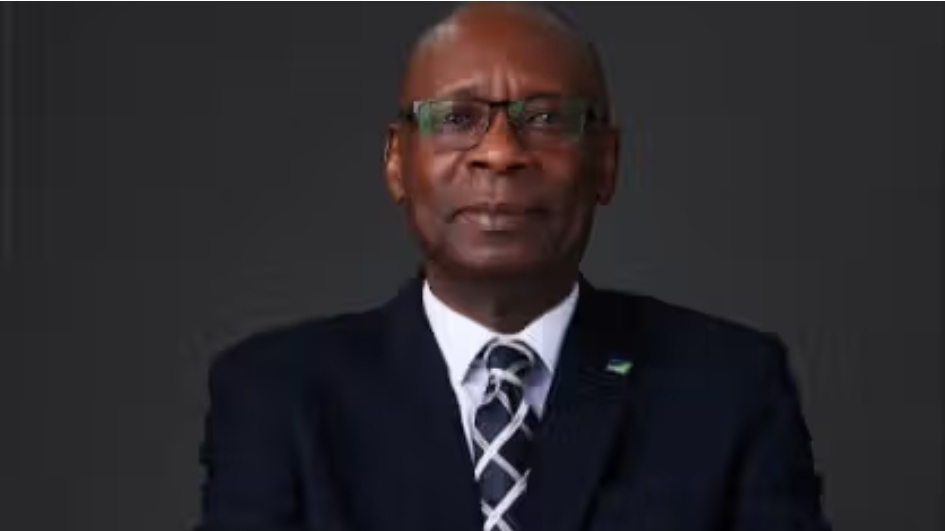
Mustafa Chike-Obi, former chairman of Fidelity Bank, says Eko Atlantic City could eventually contribute more to Nigeria’s gross domestic product (GDP) than the Dangote Petroleum Refinery.
Chike-Obi spoke during the Policy Without Politics podcast he co-hosts with Ken Ikpe on Thursday.
According to Chike-Obi, while the refinery has transformed Nigeria’s downstream oil sector, Eko Atlantic’s long-term contribution to the economy would be broader because of its capacity to attract businesses, institutions and residents.
“Eko Atlantic, in terms of value to GDP, is, in my opinion, comparable to the refinery. It may be bigger. Ten years from now, it will employ more people in one year than the refinery can employ in 10 years,” he said.
“The employment potential of Eko Atlantic is much bigger than the refinery. By the time Eko Atlantic is a well-thought-out, developed city, the impact on the Nigerian economy and GDP will, in my opinion, dwarf that of the refinery.”
Chike-Obi said the city’s economic footprint would expand as more organisations establish operations there.
He said the United States is building what he described as its largest embassy abroad at Eko Atlantic, while First Bank has already established a presence there.
He added that restaurants and hotels are operating in the city, while MTN is expected to move there.
Chike-Obi said the federal government should adopt what he described as an even-handed approach to supporting landmark private-sector investments.
According to him, Eko Atlantic and the Dangote refinery are both free trade zone projects, but the city appears to depend less on government support than the refinery.
“If government is going to invest in something as big, important and successful as the refinery, they should consider an investment in Eko Atlantic in some way. I know Femi Otedola encouraged First Bank to move there as a means of supporting the project. I think other large institutions should follow suit,” he said.
“Eko Atlantic is not asking for government support in terms of import bans and all that. They’re both free trade zones, but it seems to me that Eko Atlantic is far less dependent on the good graces of the federal government and the Lagos State government than the refinery seems to be.
“Government should be even-handed. Government should not be seen as picking winners and losers. These are two great projects. One appears to be having more government support than the other. That’s not a good look.”
During the discussion, Ikpe argued that the Dangote refinery had received greater government support because it addressed an urgent need to bridge Nigeria’s petroleum supply gap before longer-term development projects such as Eko Atlantic.
Chike-Obi, however, rejected that argument, insisting that the removal of petrol subsidy, rather than the refinery itself, resolved the fuel supply disruptions that had resulted in recurring fuel queues.
“I don’t think there was an urgency to build a refinery. You say so because we had a horrible policy of fuel subsidy, which constrained supply. From when the fuel subsidy was removed to when the refinery started, there were no fuel queues,” he said.
“So the urgency you’re talking about, I don’t see it. There was no gap. The gap was subsidy.”
Chike-Obi also questioned claims that the refinery was chiefly responsible for recent improvements in Nigeria’s foreign exchange position, arguing that the gains were driven largely by the liberalisation of the foreign exchange market and high interest rates that attracted foreign capital.
The former chairman of Fidelity Bank maintained that the refinery remains a major investment for Nigeria but said government should pursue policies that support landmark private-sector projects consistently rather than creating the impression that one enjoys preferential treatment.