

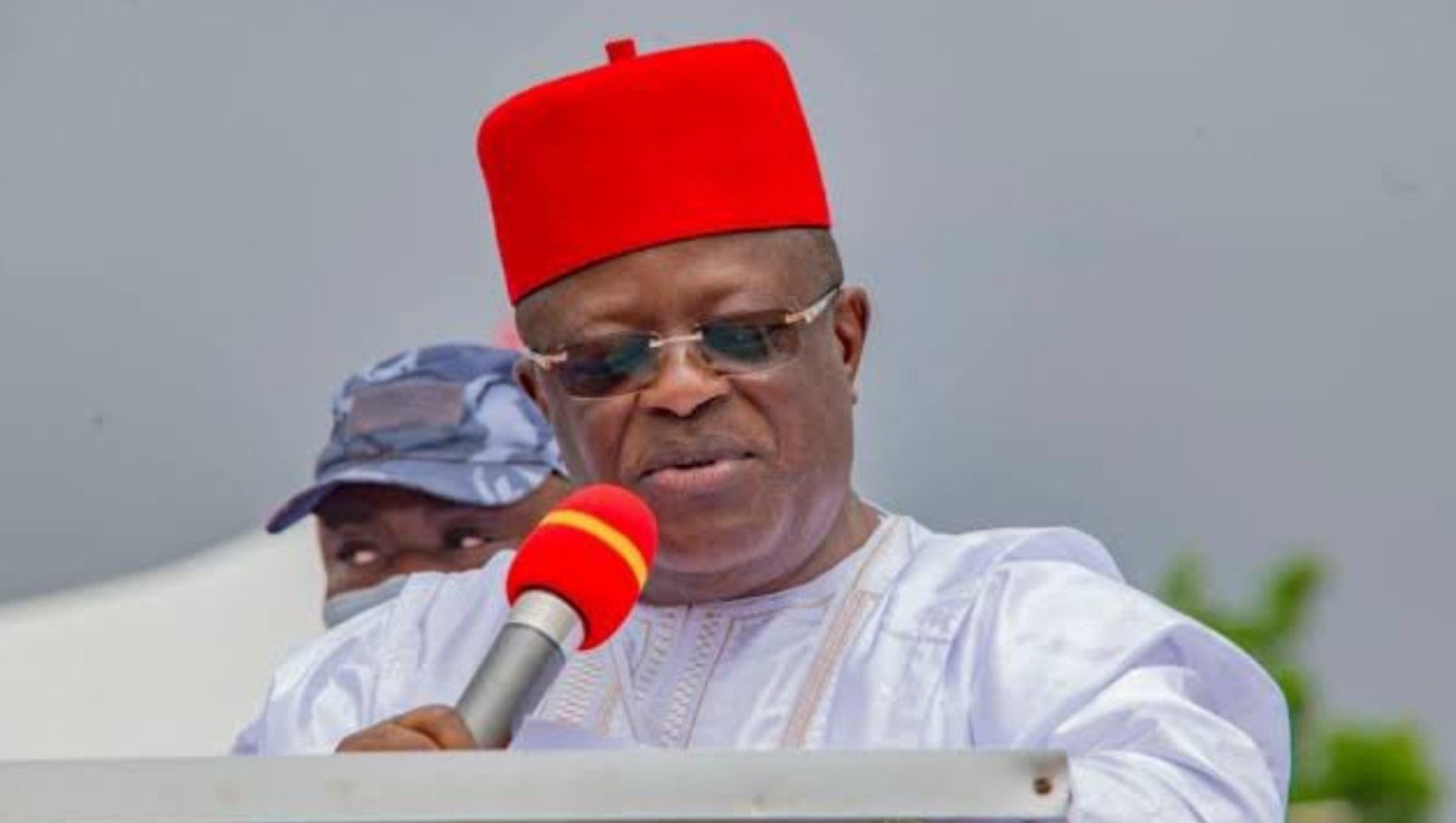
David Umahi, minister of works, says President Bola Tinubu’s infrastructure projects are creating jobs, and reducing hunger across the country.
Umahi spoke on Friday while inspecting the ongoing Calabar–Ebonyi–Benue–Nasarawa–Abuja Superhighway project in Onueke, Ezza South LGA of Ebonyi state.
The minister said the current administration’s infrastructure drive is generating employment through road construction while expanding economic opportunities for communities along project corridors.
“When people talk about hunger in this country, they should understand that the activities created by the President’s infrastructural development serve as a direct catalyst for addressing that challenge,” he said.
The minister said the highway project has employed hundreds of workers directly, while traders, suppliers and other service providers are also benefitting from the construction activities.
Umahi noted that the ministry’s decision to adopt reinforced concrete pavement for major federal highways is strengthening the local economy by reducing dependence on imported materials.
He appealed to Nigerians to be patient, noting that years of infrastructure deficit cannot be addressed within a few years.
“You can see the number of people working on the reinforcement section alone. You go to the project yards and see the number of workers employed. Along this corridor, people are selling food, supplying chippings, supplying sand and rendering different services,” he added.
“The introduction of reinforced concrete pavement is not only about durability; it is vital for our economic revolution because virtually nothing is imported.”
“Cement manufacturers are expanding production, generating higher returns, and employing more Nigerians.”
Umahi also urged media organisations to give more visibility to federal government projects, particularly in the south-east.
He added that the Calabar–Abuja Superhighway would reduce travel time, improve regional connectivity, and open up economic opportunities along its route.