

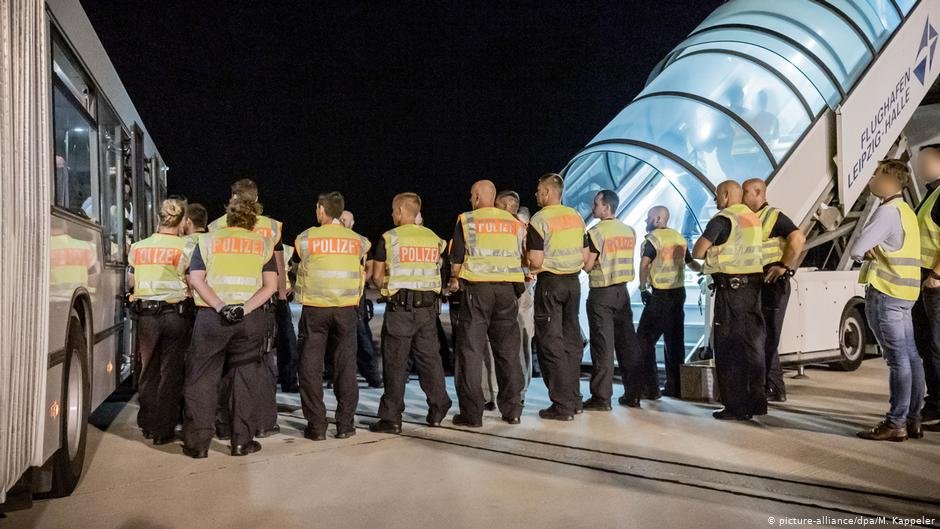
At least 137 Nigerians were deported from Germany to Nigeria between February and June 2026, with the returns carried out through five chartered-flight operations involving Germany and, in some cases, other European countries.
Records reviewed by the DERS Team and Refugees4refugees.org indicate that the deportations formed part of a continuing European effort to enforce migration decisions against Nigerians whose cases had been concluded.
The figures show that 27 Nigerians were returned in February, 37 in March, 24 in April, 23 in May and 26 in June, bringing the total to 137.
The pattern also highlights the increasing reliance on organised charter flights rather than regular commercial travel for large-scale deportation operations.
February operation raises questions
The first operation took place on February 18, 2026, when 27 Nigerians arrived at Lagos Cargo Airport after being deported from Germany.
According to Refugees4refugees.org, the flight was operated by World2fly and departed Stuttgart before arriving in Lagos shortly before 2pm.
Germany was primarily responsible for the operation, although one person described as severely ill and mentally unfit was transferred from Slovakia to join the other Nigerians being deported from Germany.
The operation reportedly involved authorities in Baden-Württemberg, with Stuttgart having previously hosted a deportation flight to Nigeria in December 2025.
But beyond the headline figure, the February operation raised questions about how vulnerable migrants and people with established ties to Germany were assessed before deportation.
Reports cited by the DERS Team alleged that some of those deported had serious health conditions, while others had lived and worked in Germany for several years.
Family allegedly deported in error
One of the cases cited involved a single mother and her three children from the Sindelfingen district of Stuttgart.
According to the report, the family was deported despite reportedly possessing documents relating to their residence status.
The case took an unusual turn when a volunteer intervened and local foreign authorities subsequently confirmed that the deportation had reportedly been carried out in error.
The family later returned to Germany.
READ ALSO; US lists 124 Nigerians for deportation over criminal convictions
The episode has become an example of the potential consequences of mistakes in deportation procedures, particularly when affected individuals include children and people whose legal status may require further verification.
For migration rights advocates, such cases reinforce calls for stronger safeguards and more thorough checks before removal orders are executed.
March produced largest operation
The second and largest operation recorded during the period took place on March 10, when 50 people were deported to Nigeria in a joint European operation hosted by Germany.
The operation involved Germany, Spain, Austria and Belgium, with Germany accounting for 37 of the deportations.
The DERS Team described the March operation as the largest single deportation involving Nigerians during the three-year period covered by its report.
The multinational nature of the operation illustrates how European countries can coordinate the enforcement of deportation orders where migrants have moved between jurisdictions or have migration cases connected to more than one country.
More Nigerians returned in April
On April 9, another 24 Nigerians, including women and a minor, were deported to Nigeria on a chartered flight from Frankfurt.
The operation was organised through Frontex, the European Border and Coast Guard Agency, in cooperation with German authorities.
The inclusion of women and a minor again places questions around vulnerability and protection procedures at the centre of discussions surrounding such operations.
Another 23 Nigerians were returned in May, while 26 Nigerians arrived in Lagos on June 17 following another chartered deportation flight.
Together, the five operations accounted for 137 Nigerian returnees within just five months.
Migration rights advocates have called for greater safeguards during deportation operations, particularly where children, people with medical conditions and other vulnerable individuals are involved.
They have also stressed the importance of ensuring that immigration authorities properly verify the legal status of individuals before deportation orders are carried out.
The reported case of the family from Sindelfingen has amplified concerns that procedural errors can have serious consequences for affected individuals.
Advocates argue that deportation should not simply be viewed as the physical removal of people from one country to another, but as a process requiring adequate legal review, humane treatment and appropriate reintegration support.