

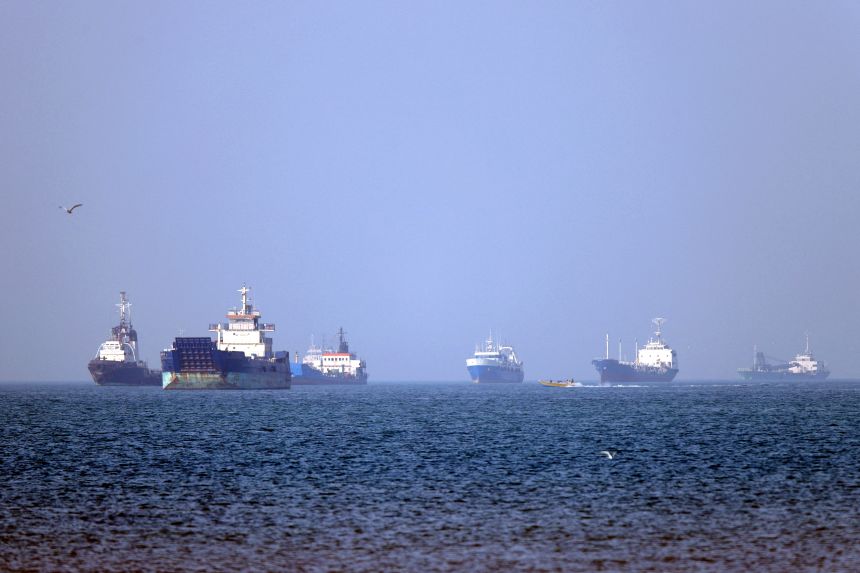
A commercial vessel struck near the Strait of Hormuz and conflicting statements over negotiations between Washington and Tehran have heightened uncertainty over prospects for a diplomatic breakthrough in the months-long US-Iran conflict.
The latest developments unsettled global energy markets on Tuesday, with oil prices rebounding nearly 3% as investors tempered expectations that the crisis was nearing a resolution through negotiations.
According to the United Kingdom Maritime Trade Operations (UKMTO), a cargo vessel was hit by an unidentified projectile off the coast of Oman near the strategic Strait of Hormuz. Maritime sources identified the vessel as a dry bulk carrier, saying its crew abandoned ship after the strike while one seafarer remained missing.
The maritime incident coincided with renewed disagreement over whether direct talks between the United States and Iran were taking place.
US President Donald Trump told reporters on Monday that negotiations with Tehran were already under way, describing the current moment as Iran’s “last chance” to reach an agreement. He said discussions were being held at the request of Iran, Saudi Arabia, the United Arab Emirates and Qatar.
Iranian officials, however, rejected Trump’s claims, insisting there were no negotiations with Washington. Tehran said its only ongoing discussions were with Oman on issues relating to the Strait of Hormuz and that no major meetings with US officials were planned this week.
Iranian President Masoud Pezeshkian also sought to ease fears of a wider regional conflict, saying Iran would continue to defend its territory but had no intention of expanding the war.
Trump’s comments came after he disclosed that he had called off what he described as “massive attacks” on Iran over the weekend, continuing a pattern in which threats of military action have been followed by renewed references to diplomacy.
Meanwhile, shipping activity through the Strait of Hormuz remained severely disrupted. Iran has halted most traffic through the strategic waterway, while Washington continues to enforce restrictions on Iranian shipping and ports, affecting a route that normally carries about one-fifth of global oil and liquefied natural gas exports.
Shipping data from Kpler showed that only six vessels transited the strait on Monday, including three tankers and three bulk carriers, a sharp decline from normal daily traffic, which typically exceeds 100 vessels.
Brent crude prices recovered after falling about 7% to a three-week low on Monday, as analysts warned that market optimism over diplomatic progress had been premature given the persistent uncertainty surrounding the conflict.
Analysts at ING said the sharp sell-off in oil prices appeared excessive, noting that previous expectations of an easing of tensions had repeatedly been followed by renewed instability.
Regional officials and security experts said Iran continued to view the Gulf’s shipping lanes and energy infrastructure as strategic leverage capable of increasing pressure on both neighbouring states and the wider global economy.
Diplomatic efforts nevertheless continued behind the scenes, with Pakistani officials confirming that mediation between Washington and Tehran remained active in an attempt to bring both sides back to the negotiating table.
Despite those efforts, significant differences remain over Iran’s nuclear programme, regional security concerns and the future of shipping through the Strait of Hormuz, leaving the prospects for a diplomatic resolution uncertain.
Goodness Anunobi
Follow us on: