

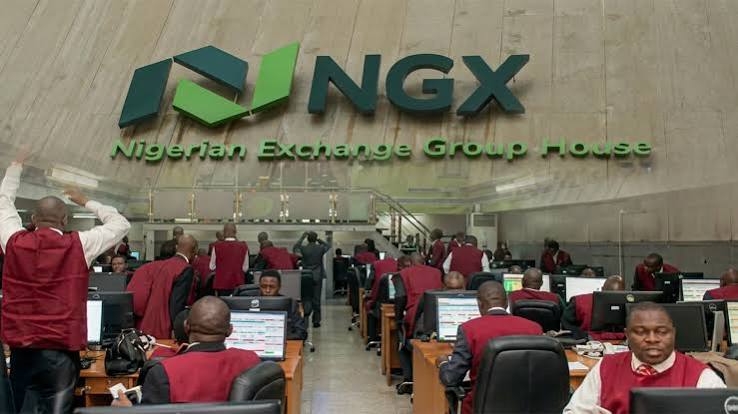
Foreign investors are increasingly stepping back from Nigeria’s equities market despite a powerful 2026 rally, leaving domestic institutions and retail investors to drive trading activity on the Nigerian Exchange (NGX).
The latest NGX data show that foreign portfolio investors accounted for only 5.6 per cent of total market transactions in July, the lowest monthly share recorded so far this year.
The decline is striking because the NGX All-Share Index has remained one of the world’s stronger-performing equity benchmarks, delivering a year-to-date return of 53.81 per cent as of August 21, 2026, despite entering a recent correction.
The divergence between strong market returns and weak foreign participation has raised questions over why international investors are yet to return in significant numbers.
Domestic investors take control
Between January and July 2026, total transactions on the NGX reached N11.98 trillion, almost twice the N6.01 trillion recorded during the corresponding period of 2025.
Domestic transactions accounted for N10.68 trillion, representing 89.21 per cent of total activity and exceeding the N9.27 trillion recorded for the whole of 2025.
Foreign transactions stood at N1.29 trillion, representing just 10.79 per cent of total activity.
Institutional investors were the biggest force behind the domestic surge. Their transactions increased 145 per cent year-on-year to N6.71 trillion, while retail transactions doubled to N3.97 trillion.
Foreign flows, however, moved in the opposite direction. Foreign inflows fell to N513.36 billion, while outflows increased to N779.43 billion, resulting in net foreign outflows of N266.07 billion compared with N61.83 billion a year earlier.
July provided the clearest evidence of the changing market structure. Domestic investors accounted for 94.4 per cent of the N2.37 trillion traded during the month, leaving foreign investors with only 5.6 per cent.
READ ALSO; Profit-taking hits NGX again as First HoldC leads market declines
Analysts point to a combination of political uncertainty, attractive fixed-income yields, operational adjustments following Nigeria’s adoption of T+1 settlement and concerns about security and policy stability.
Abiodun Ogunniyi, Head of Research at GTI Securities, said foreign portfolio investors traditionally become more cautious during the second half of election cycles.
According to him, investors are concerned about the potential impact of pre-election spending and higher money supply on inflation, making fixed-income securities increasingly attractive.
He noted that investors can currently access yields of around 21–22 per cent on OMO bills, 18–22 per cent on Treasury bills and 16–17 per cent on bonds.
The decision facing foreign investors, he argued, is whether to accept equity-market volatility when relatively attractive returns are available in fixed income.
Ogunniyi expects foreign interest to potentially return toward November and December as greater political clarity emerges. He also sees room for the equities market to deliver year-to-date returns of between 60 and 65 per cent if the bullish momentum resumes.
Charles Fakrogha, Managing Director and Chief Executive Officer of ECL Asset Management Ltd, described the July decline in foreign participation as concerning.
He said international investors are heavily influenced by their perception of Nigeria’s political environment, security situation and government policies.
Fakrogha, however, argued that the heavy participation of domestic institutions provides an important counterweight to foreign withdrawals.
Local investors, he noted, have greater familiarity with Nigeria’s economic and political environment and continue to commit substantial funds despite the uncertainties.
The Securities and Exchange Commission has clarified that foreign portfolio investors are not required to pre-fund their accounts and has established a 5:00 p.m. T+1 settlement deadline for equities and commodities transactions.
Fakrogha believes the adjustment is largely operational and should not represent a permanent barrier to foreign participation, noting that T+1 is already widely used in major markets.