

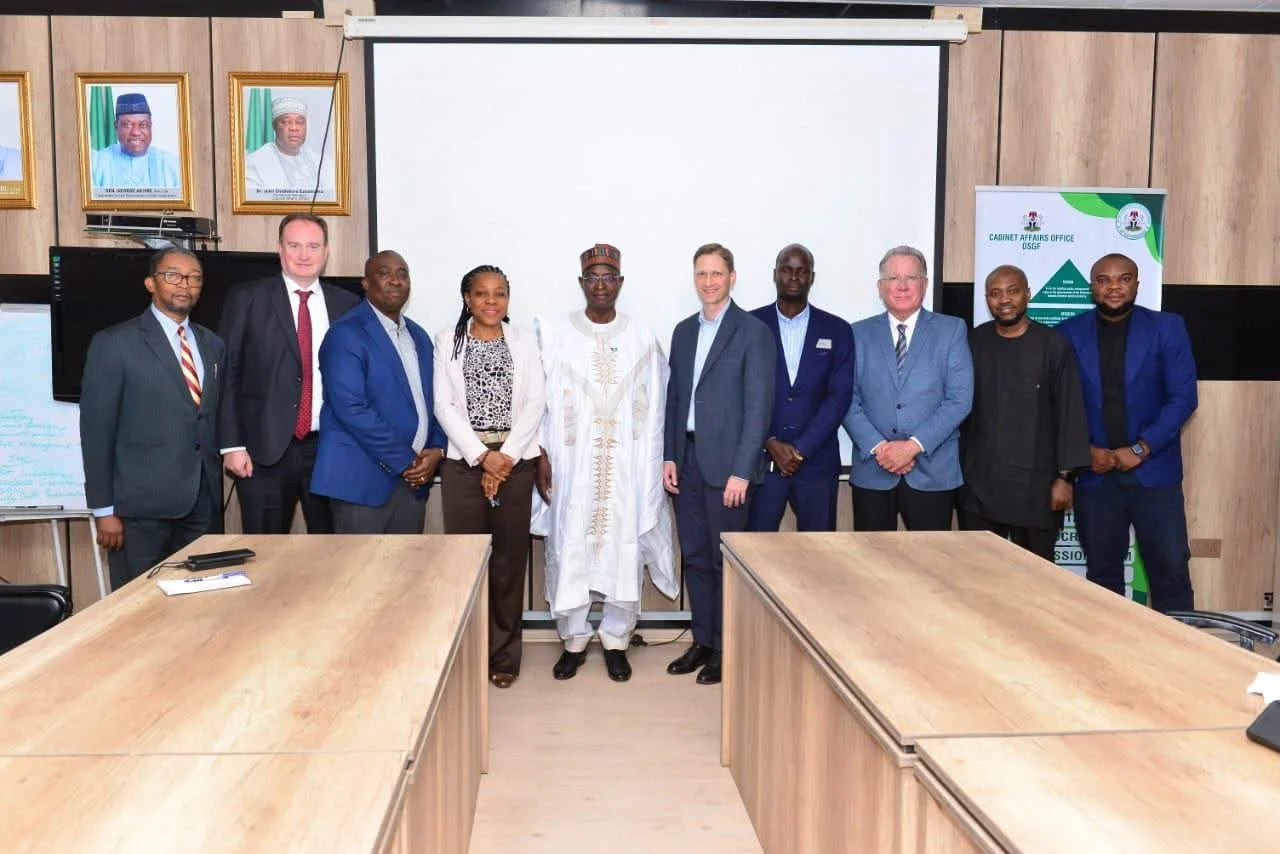
The Federal Government has commenced discussions with United States private-sector companies on partnerships to improve livestock genetics, animal nutrition, technology and productivity in Nigeria.
The Minister of Livestock Development, Idi Maiha, said the collaboration would help transform Nigeria’s livestock industry into a modern, productive and commercially viable sector.
Maiha made this known in Abuja on Wednesday when he received a delegation of American livestock companies and associations led by Christopher Bielecki, representing the United States Department of Agriculture (USDA).
The minister identified livestock genetics, animal feed and nutrition, poultry, dairy, ruminants and pig production as key areas for collaboration.
He urged the delegation to move beyond discussions and develop concrete partnerships with clear responsibilities and measurable outcomes, noting that Nigeria’s growing population and expanding livestock market presented significant investment opportunities.
Bielecki said the delegation was in Nigeria to explore mutually beneficial partnerships and introduce leading American livestock companies to investment opportunities in the country.
He disclosed that the US Government was supporting Nigeria’s livestock sector through the Food for Progress programme, with about $25 million over five years to develop poultry, aquaculture and animal feed value chains.
Representatives of STgenetics, Fast Genetics, ADM and the US Grains and Crop Council also identified opportunities in livestock breeding, genetic testing, feed production, dairy, poultry and aquaculture.
The participants emphasised the need for technology transfer, local capacity building and research partnerships, as well as greater use of locally available raw materials to reduce dependence on imported inputs.
Maiha reaffirmed the ministry’s commitment to working with credible international and local investors to increase livestock production, create jobs, improve farmers’ livelihoods and strengthen Nigeria’s food security.