


Weak US jobs data and two benign inflation readings have reduced expectations of a rate hike, although upcoming jobs and inflation data, along with the Jackson Hole symposium, leave plenty to play for.
He expects the inflation impact from higher chip and memory prices to remain limited, given the small weight of technology products in the US inflation basket and the impact of hedonic pricing.
Knightley, however, believes Japan may need to intervene more and raise interest rates to prevent broader Asian currency weakness.
This is an edited transcript of the interview.
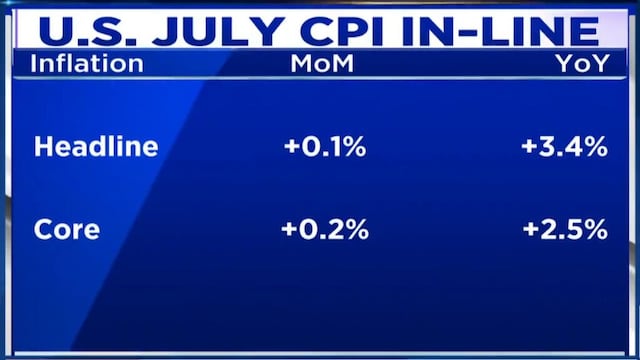
Q: James, a two-part question. One on the US consumer price index (CPI) data that came in. It was pretty much as expected, and not much in terms of a data point to provide any sort of outlook on whether the Fed would change its stance in any manner. Having said that, we’ve heard from Fed Chair Kevin Warsh on multiple occasions. The street believes that maybe towards the end of this year there could be one hike. The talk and the action are at divergent points. What do you make of yesterday’s data point, and where does that weigh in on the Fed’s outlook? That’s point number one. And secondly, the artificial intelligence (AI) AI trade. It seems like it’s well and truly back on.
A: Starting with the inflation point, I think we’ve got to put this in context of June’s Federal Open Market Committee (FOMC) meeting, when the Federal Reserve provided a bit of a surprise. Kevin Warsh was more hawkish than was anticipated, and we had nine committee members suggest that they thought they would have to raise rates this year. Now, nine thought they didn’t, and Kevin Warsh didn’t provide a forecast, but that really was the motivation for markets to push in the direction of policy tightening this year.
Since that June FOMC meeting, we’ve had another July meeting where the Fed didn’t move. Then last Friday, August 7, we had that very poor US jobs report where we saw payrolls falling. And that’s been followed up today by the second benign inflation print in a row.
So those market expectations about whether the Fed’s hawks will gain momentum and really push for a hike have kind of ebbed away a little bit. And I think, while we’ve not seen a bigger market move today, it is mitigating because there’s still quite a lot of news to come between now and September 16. We’ve got another jobs report and another inflation report. And, of course, we’ve also got the Jackson Hole symposium, which is the big Fed annual gathering, including other global central bankers as well.
So, there’s still a lot to play for. But in general, we think that the weakness in the jobs numbers is unlikely to really turn itself around imminently, and we still think there are key reasons for the disinflationary story to continue. So, we’re still very much in the camp that thinks the Fed will, instead of hiking, instigate a prolonged pause well into next year.
But as you say about the AI story, that comes and goes as well. Sentiment really does swing, but right now it does seem to be making a little bit of a comeback.
In terms of the economic feedback we’re seeing, we hear a lot of talk about chipflation, because I guess that’s the dynamics as to how it feeds through into the broader market. But I’m a little bit less concerned about chipflation than many analysts, largely because games consoles, computers, laptops and smartphones have a tiny weight in the US inflation basket. It’s got a weighting of just 0.7 percentage points, set against housing, which is a weight of 35 percentage points.
So, low weighting. So, it’s not going to influence the overall story on inflation and interest rates.
Moreover, in the US, we adopt what we call hedonic pricing. So, while the price of cell phones may not change, the fact that you’re getting better battery life, better quality screens, better processing power and better cameras translates into the CPI report as an actual price cut.
So, we think there’s still reasons for optimism that the inflation story is going to remain benign. AI doesn’t really impact that story, and we think that the Fed is not going to be hiking rates.
Q: So, you’re saying the pass-through to the finished goods on account of the chip inflation, the memory price surge, nearly 300%, is only 0.7%? Is that it? Direct and indirect?
A: Yeah, that’s just the weighting, the composition of the inflation basket. That’s what we’ve got to remember. Yep, lots of headlines about the price per Random Access Memory (RAM), a gigabyte of RAM going up, but it’s only one aspect of the inputs into the cost of these technology products.
And as I say, the overall weighting within the basket of goods and services that the US uses to calculate inflation is tiny.
And on top of that, there’s also hedonic pricing. So, in theory, with all these new chips and new cameras and better battery life, that counts as a quality improvement. And therefore, that helps to subtract from the pricing, because you’re getting more bangs for your buck, if you like.
So that, again, as I say, is unlikely to feed through inflation as many people fear.
Q: It’s just that there is an indirect impact, right? It goes also into automotive companies, for instance, on the industrial side as well. So, the direct impact may be 0.7%, but there is an indirect impact. But the other issue that people have been flagging off now is the increasing debt that’s being built up in the US economy. Can you tell us a little bit more in terms of how large the problem is? And could this be a systemic or a macro risk that needs to be watched?
A: For now, it’s one of those events that the US administration and US companies feel is of national importance. And that’s priority about maintaining the US’s economic dominance, but also its national security as well. This is a key national security topic on top of that.
So right now, yes, debt is an issue, but for now, everyone is prepared to lend. And, until the music stops, we haven’t really got a problem.
Moreover, the US administration is fully backing this, right? Because, as I say, it’s not only an economic issue, it’s a national security issue for the United States.
Q: What do you make of the action coming in from the Bank of Japan, the coordinated effort both by Japan as well as the United States? And I was looking at a Goldman Sachs note. They say that Japan has enough firepower to do another round of yen stability. What’s your view on that? Because that could be another hidden risk for global equity markets as well, that yen carry trade.
A: US Treasury Secretary Scott Bessent made the clear point that what concerns the US administration is that we see other Asian currencies doing competitive devaluations to maintain their competitiveness with Japan.
And that is what’s concerning the US. That you see these triggers broader Asian currency weakness against the US dollar, and the US administration will not tolerate that.
So, to try and cut this off at the early point, they’re very keen to see Japan step up and do something more. And that will involve Japan hiking interest rates.
Watch the full conversation here

And we think that there’s a very strong chance that they will have to not only intervene more, but also, they will have to raise interest rates, because remember, inflation is above target, and the economy is growing. Interest rates, arguably, should be higher in Japan.
Catch all the latest updates from the stock market here