
World Population Day Highlights Opportunities, Challenges for Nigeria’s Growing Youth Population

By Omoyeni Ojeifo
Every child born today represents both a promise and a collective responsibility. For Nigeria, where the population has surged to an estimated 242.4 million, that responsibility grows more urgent by the day.
Governments and development partners are actively grappling with the immense challenge of providing adequate schooling, healthcare, jobs, and infrastructure for one of the world’s fastest-growing nations.
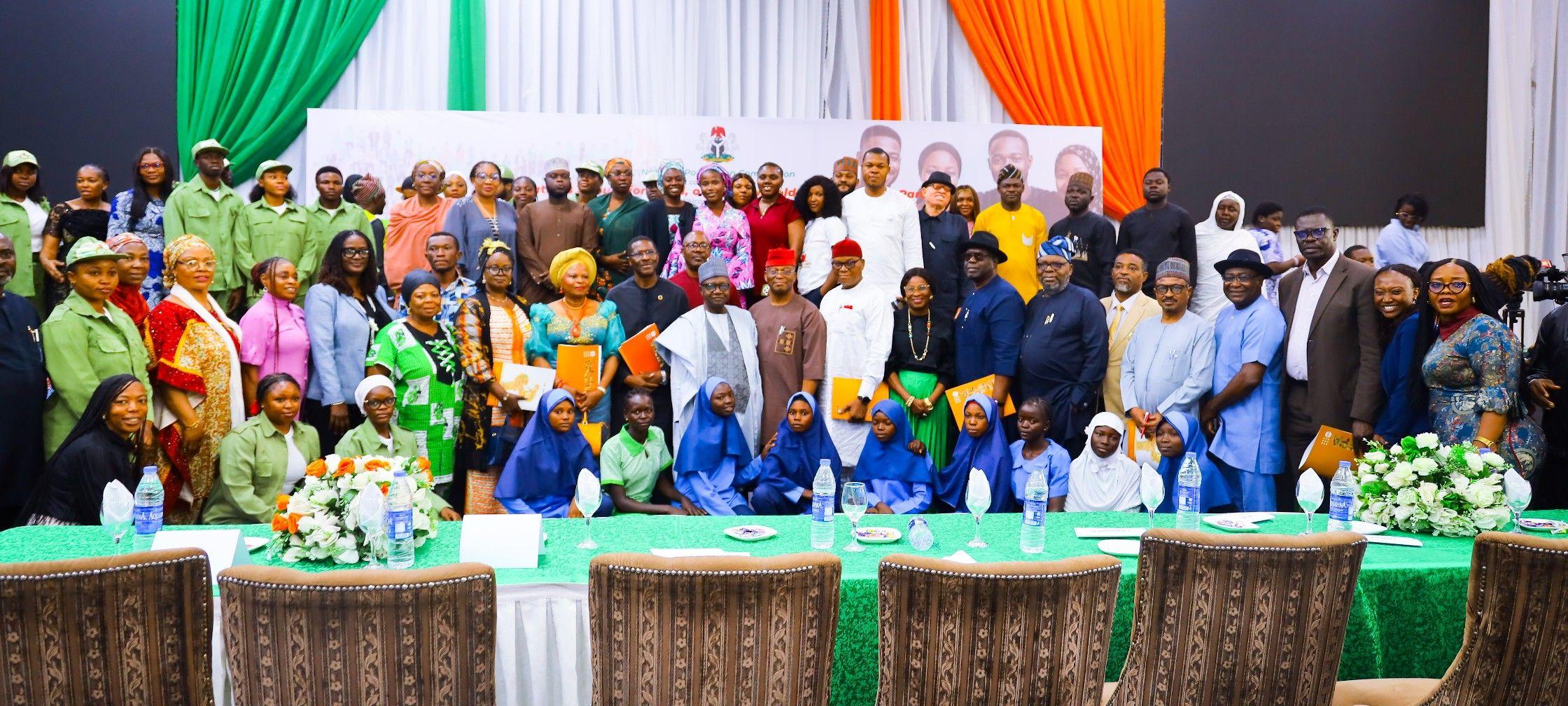
This pressing challenge took center stage on July 11 for World Population Day 2026.
Under the theme, “Realizing the hopes and aspirations of young people – today and for the future,” stakeholders renewed calls for policies that prioritize the needs and untapped potential of the youth.
As Persecondnews reports, the annual event also serves as a crucial reminder that reliable demographic data is essential for effective governance. Without it, planning for healthcare, education, housing, and employment becomes nearly impossible.
Globally, the world’s population is estimated at about 8.2 billion people, but future population growth is expected to be driven largely by sub-Saharan Africa.
According to demographic projections, the region’s population is expected to increase by 79 percent to about 2.2 billion by 2054 and could reach 3.3 billion by the end of the century, accounting for more than one-fifth of global population growth.
Nine African countries, including Angola, the Democratic Republic of the Congo, Niger, Somalia, Chad, Zambia, Uganda, Mali and South Sudan, are projected to, at least, double their populations between 2024 and 2054.
Nigeria and the Democratic Republic of the Congo are also expected to surpass the United States in population rankings before the end of the century, while Tanzania could join the world’s ten most populous countries.
Persecondnews gathered that Nigeria’s population is estimated at about 242.4 million people, making it Africa’s most populous nation and one of the world’s fastest-growing countries.
Against this backdrop, First Lady Senator Oluremi Tinubu has urged Nigerians to register and obtain a National Identity Number (NIN), saying accurate population data remains indispensable for effective national planning.
In her World Population Day message on Saturday , the First Lady said reliable demographic information would enable governments to provide essential services more efficiently and respond to the needs of Nigeria’s growing population.
She reaffirmed Nigeria’s commitment to ensuring that every citizen, particularly women and young people, has access to quality healthcare, education and opportunities to fulfil their potential.
According to her, as the country’s population continues to grow, greater investment must be be made in Nigeria’s greatest asset is its people.
She said collective action would empower families, promote healthy lives, support young people and ensure sustainable development for future generations.
The First Lady’s position echoes the central message of this year’s World Population Day, which places young people at the heart of development planning.
Beyond Nigeria, the United Nations said Africa’s greatest asset is not the size of its population but its people.
With the world’s youngest population, the UN said the continent has a unique opportunity to shape the future through education, innovation, entrepreneurship and productive employment.
It, however, stressed that this opportunity would only be realised through deliberate investments in quality healthcare, food security, skills development, social protection and accountable leadership.
The organisation added that population growth should never be viewed as a challenge in isolation.
Instead, it said, the focus should be on creating societies where every child can learn, every young person can find opportunities, every woman can participate fully in development and every community can build a sustainable future.
Adding his voice to the global observance, United Nations Secretary-General António Guterres said World Population Day is a celebration of the hopes and aspirations of young people and the immense potential they possess to build a better future.
Guterres noted that today’s young people are inheriting a world shaped by conflict, inequality, climate change and rapidly evolving technologies, yet continue to demonstrate resilience through innovation, leadership and fresh ideas.
He said the energy and creativity of young people, combined with the wisdom and experience of older generations, can help deliver solutions to many of the world’s pressing challenges.
According to him, this year’s theme is a reminder that every young person deserves the freedom, opportunities and support to shape their own lives and contribute meaningfully to their communities.
The UN chief stressed that this includes the right to make informed decisions about their bodies, lives and futures, in line with internationally agreed commitments on youth development and population.
He also acknowledged the growing role of young people as leaders, innovators and advocates for change, urging governments to match their commitment with greater investments in education, sexual and reproductive healthcare, decent jobs and meaningful participation in decision-making.
Guterres called on governments and stakeholders to ensure that rights, opportunities and choices remain within the reach of everyone, saying such investments are critical to building a more peaceful, just and inclusive world.
While government officials and the United Nations emphasised policy reforms, some Nigerians who spoke with Persecondnews said the country’s growing population should be matched with greater investment in young people.
Peter Oche, an economist, who spoke with Persecondnews, said Nigeria’s expanding population presents both opportunities and risks.
“A growing population can expand the labour force and consumer market, but without equivalent investment in infrastructure and job creation, it can increase unemployment and poverty.”
For new graduate, Emmanuel John, he said many young Nigerians are eager to contribute but need better opportunities.
“We have the energy and the willingness to work. What we need are policies that create jobs and help young people build careers instead of remaining unemployed.”
A National Youth Service Corps member, Joy Ogbe, also told Persecondnews that many young Nigerians are eager to contribute to national development but often lack the opportunities to do so.
“Young people don’t just want to be counted, we want access to quality education, jobs and healthcare. If those opportunities are available, we can make a meaningful contribution to Nigeria’s development,” she said.
Similarly, community school teacher Nanma Lambert, said in an interview with Persecondnews that accurate population data is essential for planning health services.
“An accurate population figures will help governments know where to build health centres, deploy workers and provide vaccines. Good data ultimately means better healthcare for everyone,” she said.
For Nigeria, where millions of young people will shape the country’s future over the coming decades, experts say the challenge is no longer simply managing population growth but ensuring that growth translates into prosperity through sustained investment in human capital.
World Population Day is observed every July 11 to raise awareness about global population issues, including reproductive health, gender equality, poverty, sustainable development and the need to invest in young people.
This year’s theme, “Realizing the hopes and aspirations of young people – today and for the future,” highlights the critical role young people play in shaping a more inclusive and sustainable future.