

Opinion
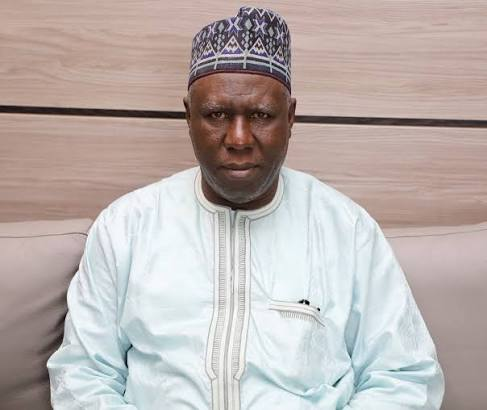
By Ahmad Sajoh
Introduction:
ON Wednesday the 8th of July, 2026 the 19 Northern State Governors took a bold step by inaugurating a Board of Trustee for the Arewa Security Trust Fund with a pledge to make monthly Contributions to the Fund. Essentially the Board is intended to draw out a road map for Arewa to exit the current state where it bleeds profusely with the blood flowing all over the Country. Looking at the Profile of the esteemed Members of the Board one is tempted to feel comfortable. Almost all the members are seasoned personalities with vast experience in variety of fields including governance, armed services, academia, police and policing. That naturally makes the Board a round peg in a round hole.
However, this write-up is not intended to advertise their Manifest Capabilities which is quite apparent. Rather it is intended to appeal to their Consciences as beneficiaries of an Arewa that was good to all its peoples. An Arewa that was peaceful, caring and driven by values that were honest and upright.
Perhaps the admonishment of His Eminence Sultan Sa’ad Abubakar III should be the major guide to the Board. The most important tasks before every person in the North today are the restoration of our values, the rediscovery of our Moral Compass and the rebuilding of our unity anchored on effective diversity management.
It is therefore in consideration of the fact that the restoration of Peace and Security in the North goes beyond just boots on ground or use of Sophisticated technological gadgets that I pen this Agenda for the Board. Boots and Technology are key to defeating the criminals parading our forests and fringes of our communities.
However, the seeds for the current insecurity ravaging the North were planted long ago and will continue to geminate and bear negative fruits unless we uproot the seeds from the roots. Here I will like to identify a few negative trends responsible for the bleeding of the North. These must be squarely address if we must defeat this monster responsible for the bleeding of Arewa
The Fulani Challenge:
Historically the Fulani in Northern Nigeria is divided into two, the Nomadic Fulani loosely referred to as Fulanin Daji and the Fulani who reside in the townships or Fulanin Gida. While the Fulanin Daji remained mostly detached from modernity, the Fulanin Gida became elevated to elite and leadership status. Rather than use their privileged positions to bring their normadic cousins to modernity and make them appreciate social changes, the elite Fulani expanded the wedge between them and the Fulanin Daji.
Thus, while the Fulani elites united with other elite groups to run the country, their cousins remained in the bush oblivious or ignorant of certain realities of life. Such realities include the fact that no one continues to exist on this earth without a designated homeland.
Secondly nomadism cannot perpetuate ad infinitum.
While Nigerian Population continues to increase exponentially, the land area available cannot increase even by an inch. So, if in the past there was a vast space for nomadic mobility, today such opportunity shrinks every day.
At independence in 1960 the population of Nigeria was around 50 million inhabitants. Today we are over 220 million people. Emergence of new cities, housing needs, farmlands, social infrastructure and several other factors have forced available land for nomadism to shrink seriously.
Being educated and privileged, the Fulanin Gida should have guided their cousins to gradually prepare and adjust to these changes. But the nomadic fulani were ignored. Naturally these became challenges which were wrongly addressed by them forcefully oftentimes through criminality.
Then came pressures related to multiple taxation on the nomadic fulani from different groups including governments, community leaders, youth groups and sundry tax agents both legal and illegal. They bore these with patience though most times with resentments. They became the most overtaxed group in Nigeria and yet the most underserved with no stake in any of the modern amenities provided by government.
Additionally, due to shrinking space their Cattle routes became occupied which is definitely unavoidable. More people meant more food needs and hence more farms even where the land was fallow in the past. At the end the clash between farmers and herders became more frequent and often times more deadly.
They looked up to their cousins in government or positions of privilege to speak for them regarding some of these concerns, but alas the elites looked the other ways.
Then a bigger problem emerged, which is Cattle rustling on a large scale. Cattle rustling has always been a factor in the North. But the scale was small and like the famer/herder clashes, there existed established mechanisms for addressing them.
But once large-scale cattle rustling became a factor, existing mechanisms for resolutions through the Ardo became insufficient. Most worrisome was that such large-scale theft were carried out with the active connivance of some city elites and even some traditional authorities as we saw in some locations in the states. At this point it has become a social cancer.
Yet the Fulani elites being comfortably settled in the cozy atmosphere of the cities and enjoying the privilege of leadership never saw a reason to connect and champion the cause of their bush cousins. The only feeble attempt made to claim to speak for the nomadic Fulani was by some social merchants who formed all manner of groups purportedly speaking for the Fulani.
These groups have practically no connection with the nomadic folk. They are just players within the transactional political space in Nigeria. Some of them are either in cohorts with politicians or fraudulent business elites. Naturally they had no credible contacts with the nomadic Fulani and so cannot and do not in all sincerity speak for them. If the Board wants to speak to the Fulani in the bush all those groups such as the Miyetti Allah of this world should not be trusted.
Consequently, when all else failed these nomadic Fulani, they resorted to all manner of criminalities which cannot be and should not be condoned under whatever guise. Incidentally there exist at this point in time a nexus of evil forces operating in the Northern space which was taken advantage of by such criminal minds. And because no one spoke for them when it was necessary, no one dares speak to them now that they have gone rogue. Being nomadic, they kept migrating with their deadly criminal trade all over the country.
Unfortunately for the elite Fulani the stigmatization of all Fulanis and the collective quilt verdict passed on all the Fulani did not exonerate the comfortable Fulani Gida who are nestled in their city comfort zones. They still bear the consequences within the public space regardless of their disconnect with the criminal elements.
The first task before the BOT on the Fulani phenomenon is to connect the two Fulani groups and design a template to end nomadism. This is an imperative not just a simple necessity. No group remains detached from governance and still feels obligated to obey the laws of the land. They must be resettled on a homeland, served by government like every citizen and be forced to operate within extant laws of the land.
The most appropriate group to lead this new awareness are the Fulani Gida. The Board should insist on that and a template should be designed and implemented with a clear goal of achieving this all-important goal.
Hausa Challenge:
While the Fulani are the nomadic cattle rarer of Northern Nigeria, the Hausa are the Business nomads of Arewa. Over the years the Hausa has moved all over the communities of the north down to the south as traders through vast and elaborate trade caravans. These caravans follow designated trade routes. These trade routes by Hausa traders have a very long history dating back to pre- colonial days. The development of “Zango” or resting place for trade caravans in the North which was slightly corrupted to “Sango” in Yoruba land stems from this migratory movement. The settlements grew over time and lived side by side with other communities within the vicinity that interacted with them. Sometimes such community members move from their homelands located far away in order to interact with the traders or buy goods from them. With time settlements grew in the place.
What then is the challenge in that? While the Hausa started a symbiotic relationship with the communities they meet in their sojourn along the trade routes, some concepts such as the word “Arne” began to make the relationship go sour. I am told by some respondents in a survey we had in the then Gongola state that the other groups also had developed derogatory word to describe the hausa traders such as “Ambakpa”. Gradually such terms and their connotations began to create friction within the hitherto peaceful communities living a symbiotic relationship. As time passed this began to create distinct peoples and tendencies within same communities often more antagonistic than cooperative.
As if to add salt to a troubling situation, the land issue entered the mix. Genuine land ownership transaction began to be rejected by successive heirs of the land titles. This created the settler/indigene dichotomy. Politics also entered the mix making it more complicated.
The ruling elite realized that micro-nationalism is a short-cut to political leadership. They began to promote a reverse discrimination that rejected each group as unwanted within communities where they had lived for more than a generation. Naturally each side resisted the status of strangers. The Board must face this reality and restore trust within such communities on acceptable terms anchored on fairness and justice.
The Almajiri timebomb:
This is the biggest challenge for Arewa, but the easiest to address. The term Almajiri is derived from the root word “Almuhajir” or the immigrant. In the past Islamic knowledge was not readily available in all communities. There was therefore a need to immigrate to another location to secure quality Islamic knowledge. It was a similar situation with the early boarding schools in the North.
Today that situation no longer exists. Anyone going far away from home to attend a boarding school is doing so out of choice and at a cost. The Almajiri situation should have been reformed along the same lines. Every child should seek for knowledge from a pool of readily available resources close to his parents. It should be a parental responsibility to cater for a child in search of knowledge. It should not be abandoned and offloaded unto society.
Government can subsidize or support the process like it is done in the formal school system, but it should not jettison the central role of parents in child upbringing.
While efforts were being made to mainstream the knowledge based almajiri system by the government, something more dangerous and despicable has emerged under the guise of almajirinci. In today’s almajiri world, a man often barely knowledgeable takes a group of young people barely old enough to cater for themselves to distant towns and sends them out to find food and money for daily returns to the supposed mallam. Recently I gathered 18 of such urchins in Yola, none could recite Suratul Fatiha the most important chapter of the Quran. None of them knew the basic steps in performing the Islamic prayer. But they told me that the basic balance given to their master on daily basis cannot be waived no matter the difficulty it takes to obtain money from alms begging or menial jobs.
Almost all of them could not recall where they came from. Two of them were not even handed over to the so-called Mallam by their parents. They were simply thrown to the streets by their parents and they followed other children to the man’s place and increased his daily returns.
Where is the danger in all of this? The danger is that when you have a group of street urchins sleeping on pavements under the sun or under the rains and when they get sick no one takes them to the hospital, when they get hungry they cannot eat except by the benevolence of others when they beg for food, then you have a clear danger on your hands. They know no parental love, no uncles, no aunties, no siblings, no cousins, no empathy, no compassion and their humanity are erased on a daily basis.
Tell me how such a person will care about or have compassion for anyone. Today they have become a ready pool for evil forces to recruit their foot soldiers from. Most of them have a manifest grudge against society because of the treatment they receive while growing up.
The Board must advise Northern governors to make it mandatory for parents to be responsible for their offsprings. No one should be blackmailed by those who are relying on wrongful religious doctrines to perpetuate a system that has become a threat to the entire society.
No child should grow without knowledge, care and compassion. When the brain is empty it can absorb any satanic doctrine including the one that says kill in the name of God. When a person grows with a diminished humanity, the human person or human lives have no value in his eyes or on his mind. Let the Board be the solution we have long awaited to end this almajiri menace.
The Daba Phenomenon and it’s variants:
Arewa cannot be peaceful unless our political class stop using thugs in the guise of “yan daba”, Kalare, Shilas or any criminal group used to intimidate political opponents. I believe most members are elder statesmen who are detached from politics. Please look at this situation very dispassionately and address it as a core mandate. At the root of this “daba” phenomenon is drug abuse in Northern Nigeria.
Politicians are active in providing these young peoples with drugs to use in order to carry out their criminal mandates. We cannot overlook drug abuse and end urban miscreants who terrorize our towns and cities. The Board has a duty to clear our cities of such menace so that we do not end up clearing the bushes of criminal elements only to have our cities become increasingly unsafe.
The Nexus of Evil Forces:
At the onset of the security challenges in Northern Nigeria, the operations of these criminal groups used to be in silos. Increasingly, they are building synergies. This advice is to help the Board design a wholistic template that addresses emerging trends within the axis of evil. Boko Haram or ISWAP with their affiliation to ISIS and years in the trenches fighting the Nigerian state function as the “Arms Training” wing of the axis of evil. They are supported in that wise by the “Ansaru” who are affiliated to Alqa’ida.
The Kidnapping gangs, Cattle Rustlers and Bandits connected to mining are responsible for funds mobilization and the procurement of arms and ammunitions which are freely available in North Africa and the Magreb. The different groups operating as killer Militias in the middle belt either as Fulani marauders or Ethnic Militias are clients to the more established groups such as ISWAP and the bandits in the Northwest. In order to restore peace in Arewa the Board should treat all the groups as what I call “the Nexus of Evil” *. An effective template is one which cuts-off their recruitment sources, blocks their supply chains and disrupts their Synergy.
Building Hegemonies:
One crisis brewing in Northern Nigeria is what the current elite all over the country has developed. That is the establishment of family hegemonies within the leadership and governance structure. Fathers now ensure that only their children inherit their leadership positions or get choice appointments. This is another timebomb.
Educated children of ordinary people who knew the current elite became leaders not due to their parent’s influence but due to a system that works for everyone are growing angry and restless. We must caution ourselves. Arewa must create opportunities for all.
Boko Haram got its name from frustrated graduates who felt their certificates were valueless. We shouldn’t create another Boko Haram.
Now we have started hearing murmurs from children of ordinary people about these hegemonic transitions.
More so that many of the favoured children of the ruling elite are arrogant, feel entitled and disrespectful of others. In the past one of our biggest virtues was modesty. Today we have lost our modesty. We must be careful.
Conclusion :
Let me end this discourse by informing the Board that I am hopeful that Arewa will soon stop bleeding. I am optimistic. But we cannot do so by pretending that those who took over Swats of ungoverned spaces in the bush are the only problem we have. Our problem is more within us than out there. We can remove the weed from the insecurity farmland, but if the crops are themselves harmful, then removing the weed only makes them germinate better.
The task before the Board therefore is not just to root out insecurity in the bush, but to develop a Social Contract with “Yan Arewa” so that the solution to the problem is co-owned. As you provide support for the Jackboots that will route the evil forces from our forests, as you acquire the technology to expose their presence anywhere on our land, please do remember to design a template to win over the people on your side. Both your Co-chairmen understand that battles are only won effectively if the hearts and minds of the people requiring Peace are also won.
***Ahmad Sajoh, fnipr, a former commissioner for information and strategy, was also former member of the Adamawa state security council 2015-2019 and can be reached on *[email protected].
A.I
July 14, 2026
Tags: Ahmad Sajoh Arewa