

Arthur Eriye
As election calculations gather momentum, businesses, fund managers and foreign investors are already adjusting their strategies, with implications for growth, jobs and the naira.
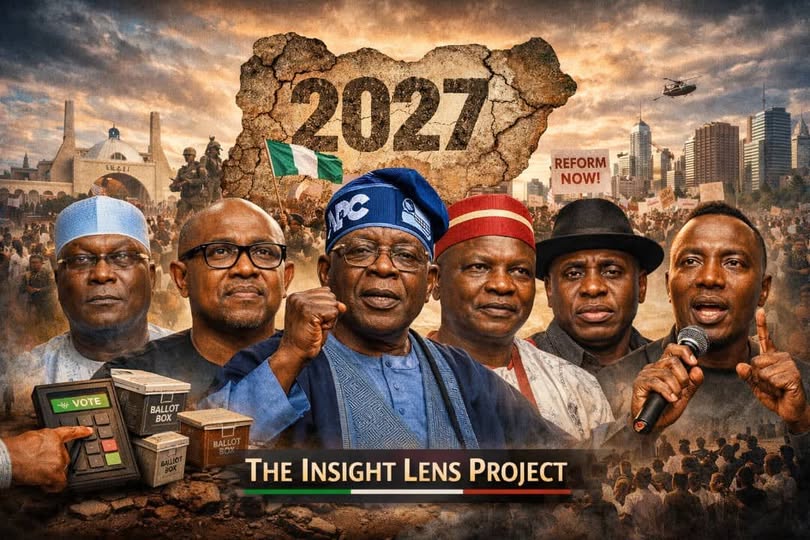
Nigeria’s upcoming general election is approaching in less than a year, prompting many investors to start their countdown. As politicians engage in alliances, defections, and legal disputes, corporate boardrooms and investment committees are discreetly performing their own evaluations—determining if this is the appropriate moment to invest billions of naira and dollars into Africa’s largest economy.
The issue at hand is not the decline of Nigeria’s economy. In fact, numerous significant macroeconomic indicators have shown considerable improvement. External reserves have risen to over $52 billion, marking their highest point in years, which enhances import coverage and strengthens confidence in the Central Bank’s capacity to maintain foreign exchange liquidity.
Crude oil production has rebounded to approximately 1.8 million barrels per day (including condensates), and the naira has exhibited increased stability in recent months following extensive foreign exchange reforms. Although inflation remains high, it has started to decrease from its recent peak, and GDP growth is projected by the IMF and World Bank to stay above 3.5 percent in the medium term.
READ ALSO: SMEs under pressure as high interest rates stall investment, job creation
However, in spite of these positive indicators, investors are increasingly posing a different question: Will the reforms implemented today endure through the political landscape of 2027? For global investors, elections are seldom merely political events. They serve as evaluations of policy continuity. Investors seek guarantees that reforms related to exchange rates, tax adjustments, fiscal responsibility, infrastructure initiatives, and market liberalization will not be discarded following a shift in political leadership.
History explains the caution.
In the lead-up to the 2015 general election, the uncertainty regarding the transfer of power led to diminished investor confidence, a decrease in capital inflows, and heightened pressure on the naira. A comparable trend was observed prior to the 2019 elections, as numerous investors postponed long-term investments. Similarly, the approach to the 2023 elections witnessed foreign investors largely refraining from participation due to worries about foreign exchange shortages, inflation, and policy unpredictability.
Data from the National Bureau of Statistics (NBS) highlight this trend. Nigeria’s total capital importation decreased from over $23.9 billion in 2019 to merely $5.3 billion in 2023, reflecting not only global economic conditions but also domestic policy uncertainty. While inflows have seen improvement following the introduction of foreign exchange reforms, they continue to fall significantly short of pre-pandemic levels, emphasizing the ongoing efforts needed to restore investor confidence.
READ ALSO: Dollar demand rises as naira faces fresh pressure amid inflation concerns
Foreign Direct Investment—the most stable form of capital because it finances factories, infrastructure and productive assets—has been particularly weak. Portfolio investors have generally preferred short-term government securities, which can be exited quickly if political risks intensify.
Domestic investors are behaving cautiously as well.
Instead of completely cancelling investments, numerous Nigerian companies are opting to shorten their investment timelines. These businesses are focusing on projects that can yield returns within a one to three-year period, while deferring capital-intensive investments in sectors such as manufacturing, heavy industry, and real estate until there is greater clarity regarding the political landscape.
Several investment bankers have noted that discussions around financing are increasingly incorporating political scenarios, in addition to considerations of inflation, interest rates, and exchange rates. For lenders, the implications of political uncertainty manifest as elevated risk premiums and more cautious lending practices.
The Nigerian Exchange has illustrated the rapid impact of political expectations on market behavior. Historically, equity markets have reacted not only to economic indicators but also to anticipations concerning election results, fiscal policies, and regulatory trends. Foreign portfolio investors are particularly vigilant in monitoring these indicators before deciding to increase their investments in Nigerian assets.
At the same time, Nigeria’s sovereign borrowing costs continue to reflect both global and domestic risks. Investors acquiring Eurobonds are increasingly evaluating governance, fiscal sustainability, and electoral stability, alongside traditional macroeconomic fundamentals.
READ ALSO: Dollar demand rises as naira faces fresh pressure amid inflation concerns
Political developments have accelerated earlier than many analysts expected.
Negotiations among coalitions, defections within major political parties, legal conflicts regarding party leadership, and considerations of succession are currently at the forefront of political discussions. Although these events do not immediately impact economic fundamentals, they influence perceptions regarding the consistency of future policies.
Economists contend that credibility has emerged as Nigeria’s most significant economic asset.
The government’s market-driven reforms—including the elimination of subsidies, liberalization of exchange rates, and tax reforms—have garnered cautious backing from multilateral organizations and international investors. Nevertheless, the ability to maintain these reforms beyond a single political term is crucial for determining whether long-term investments will increase.
International examples bolster this perspective.
Nations like Indonesia, India, and Vietnam have successfully attracted ongoing foreign investment not merely due to their economic reforms, but because investors were confident that these reforms would endure through electoral changes. For investors, predictability often holds greater importance than the specific political party in power.
Nigeria has an opportunity to build similar confidence.
The recovery in oil production has strengthened export earnings. Improved foreign reserves have enhanced external buffers. The naira has become relatively more stable compared to the extreme volatility experienced in 2024. Banking sector recapitalisation is expected to strengthen financial intermediation, while ongoing infrastructure investments in roads, ports, gas and power could improve long-term competitiveness.
Yet political stability remains the missing variable.
Without confidence that economic reforms will remain intact after 2027, investors may continue adopting a wait-and-see approach, limiting the pace of capital inflows despite improving fundamentals.
Analysts say the next 18 months will therefore be as much about political signalling as economic performance. Every policy announcement, every coalition, every court ruling and every major political realignment will be scrutinised by investors searching for evidence that Nigeria’s reform agenda has institutional backing rather than being tied to individual political actors.
Ultimately, capital rarely waits for election day.
Investment choices are currently being made. Approvals or deferrals for factory expansions are taking place at this moment. Foreign investments are influencing country allocations right now. Multinational companies are determining the locations for their next facilities at this time.
Consequently, for Nigeria, the significant challenge goes beyond merely gaining the trust of voters in 2027. It involves securing the confidence of investors well in advance of the first vote being cast.
In the context of today’s highly competitive global economy, political factors are already affecting capital pricing—and the decisions made in the coming year could significantly influence Nigeria’s investment environment, potentially more so than the election itself.